Neuroplasticity and Athletic Resilience: How Mental Training Reshapes the Brain
Your brain reshapes itself through training, not just physically but mentally-neuroplasticity lets athletes build resilience by strengthening neural pathways via visualization, mindfulness, and cognitive drills. Mental reps activate the same circuits as real movements, sharpening precision and reaction time. Regular mindfulness improves emotional control and focus under pressure, while dual-task exercises boost adaptability. These techniques don’t just support performance-they rewire your brain for consistency. Discover how elite performers turn mental training into competitive edge.
Notable Insights
- Mental training strengthens neural pathways, enhancing athletic resilience through neuroplastic adaptation.
- Visualization activates motor circuits, simulating real performance and reinforcing muscle memory.
- Mindfulness improves emotional regulation, helping athletes maintain focus under pressure.
- Cognitive conditioning builds mental toughness by reinforcing attention and goal-directed behavior.
- Neurofeedback and dual-task drills optimize brain function, boosting coordination and mental endurance.
What Is Neuroplasticity and Why It Matters for Athletes?
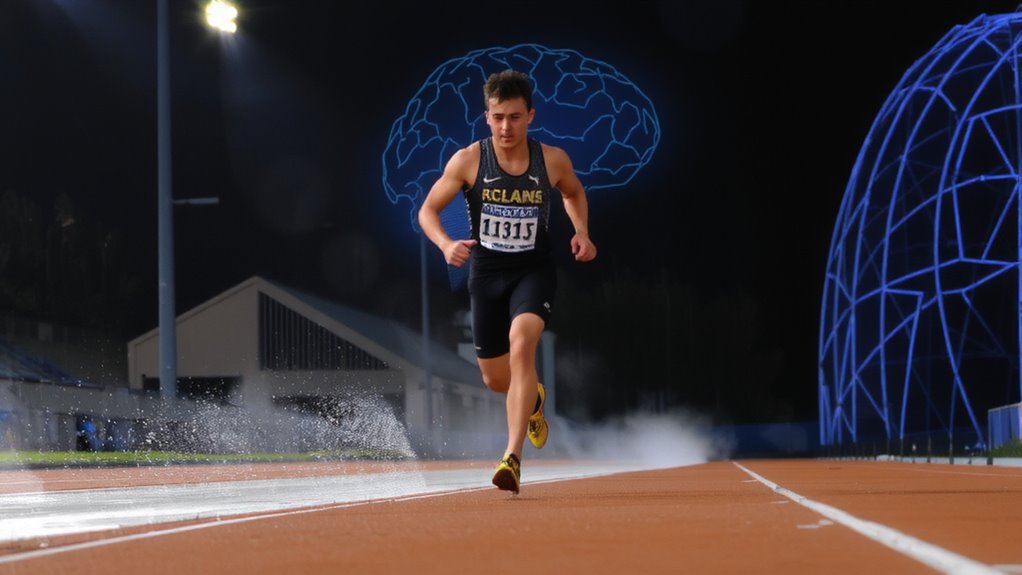
Think of your brain as a dynamic circuit board, constantly rewiring itself based on experience-this is neuroplasticity. For athletes, this brain adaptation isn’t just theoretical; it’s foundational. Every sprint, lift, or tactical decision strengthens specific neural pathways, boosting neural efficiency over time. Your brain learns to fire signals faster and more accurately, refining movement and reaction speed. Unlike static recovery tools, neuroplasticity evolves with you-responding to training load, rest quality, and mental engagement. While fitness gear like compression sleeves or foam rollers supports physical recovery, only mental and neurological training enables long-term performance gains. Equipment aids short-term relief, but neuroplasticity builds sustainable resilience. You’re not just recovering-you’re retraining your mind-body connection. This adaptability means setbacks, like injuries, don’t have to derail progress. With focused practice, your brain rebuilds pathways, maintaining skill and coordination. Ultimately, harnessing neuroplasticity gives you a competitive edge no gadget can replicate.
How Visualization Trains the Brain for Peak Performance
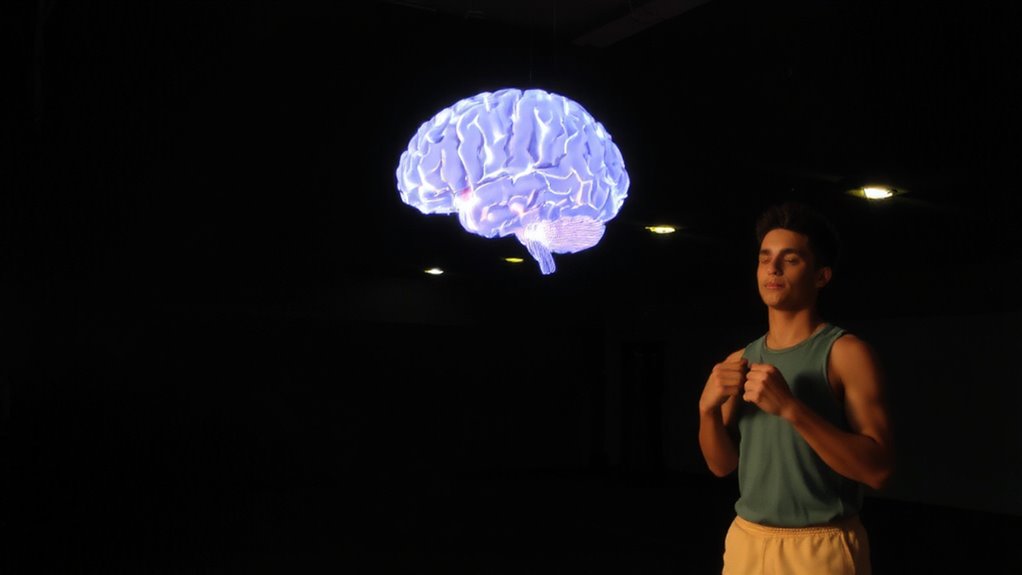
While you can’t be on the field every hour of the day, your brain doesn’t need physical movement to practice-visualization bridges that gap by activating the same neural networks used in actual performance. When you use mental imagery, you’re not just dreaming; you’re engaging in neural simulation, a process where your brain rehearses movements as if they were real. Studies show that consistent visualization strengthens motor pathways, improving coordination and reaction time. You’re fundamentally training your brain to respond faster and more accurately under real conditions. It’s not magic-it’s neuroplasticity in action. Elite athletes often spend as much time mentally rehearsing as they do physically, because the brain can’t always distinguish between doing and imagining. When combined with physical training, mental imagery enhances muscle memory and precision. So whether you’re recovering or refining technique, neural simulation through visualization isn’t a substitute for practice-it’s a powerful complement that keeps your brain in peak form.
Mindfulness Builds Resilience Under Pressure

Pressure doesn’t just test your body-it targets your focus, your decisions, your composure. That’s where mindfulness steps in. When you practice mindfulness, you’re training your brain to stay present, not reactive. This enhances emotional regulation, letting you manage frustration or anxiety before they spiral. Over time, this builds stress adaptation, meaning your nervous system learns to return to balance faster after intense moments. Studies show athletes who meditate just 10 minutes daily show thicker prefrontal cortices-areas linked to attention and self-control. It’s not about eliminating pressure but reshaping how your brain responds. You stay calmer, think clearer, and make better choices mid-competition. Unlike physical training, mindfulness strengthens resilience from the inside out, with no gear or recovery time needed-just consistent practice. It’s mental conditioning that sticks with you, on and off the field.
Train Your Brain: Cognitive Conditioning for Mental Toughness
Mental toughness isn’t just forged in grueling workouts or high-stakes moments-it’s built through deliberate cognitive conditioning. You strengthen resilience by training your brain like a muscle, using goal setting to clarify intent and lock in motivation. Specific, measurable goals create neural pathways that reinforce persistence, making effort feel purposeful. Pair that with focus training-learning to direct attention amid distraction-and you sharpen mental control under pressure. Think of it as mental reps: each time you push through fatigue while maintaining precision, you rewire your brain for calm, consistent performance. This isn’t just mindset-it’s neuroplasticity in action. Over time, these practices reduce cognitive leakage, helping you stay locked on cues that matter. Cognitive conditioning doesn’t replace physical training; it enhances it, turning discipline into automaticity. You don’t wait for toughness-you build it, rep by rep, thought by thought.
How Top Athletes Rewire Their Brains for Success
When you study the routines of elite athletes, it becomes clear their edge isn’t just in physical conditioning but in how they harness neuroplasticity to shape their mental performance. Through deliberate practice, they rewire their brains to enhance focus, resilience, and response under pressure. Key to this transformation are techniques like breath control and emotional regulation, which stabilize neural activity and improve decision-making in high-stakes moments.
| Technique | Brain Change | Performance Benefit |
|---|---|---|
| Visualization | Strengthens motor pathways | Sharper skill execution |
| Breath control | Calms amygdala, boosts prefrontal activity | Improved composure under stress |
| Mindfulness | Increases gray matter density | Enhanced emotional regulation |
| Goal rehearsal | Reinforces synaptic connectivity | Greater motivation and clarity |
You can develop these same neural patterns-consistency rewires your brain just as effectively.
Try These 5 Brain-Boosting Exercises Today
You’ve seen how elite performers shape their minds as deliberately as their bodies, using neuroplasticity to turn routines into results. Now it’s your turn-start with these five brain-boosting exercises. First, try neurofeedback training: real-time brainwave monitoring helps you learn self-regulation, sharpening focus and emotional control. Apps like Peak or Lumosity offer cognitive drills that adapt to your level, building mental endurance. Daily mindfulness meditation, even for 10 minutes, reduces mental noise and supports brainwave optimization. Add bilateral stimulation through rhythmic movement-jumping jacks or skipping ropes-to enhance neural connectivity. Finally, integrate dual-task training, like reciting sequences while balancing, to challenge coordination and cognition. These exercises aren’t just for pros; they’re accessible, science-backed tools. Used consistently, they promote lasting neural adaptation. Pair them with quality recovery gear-cooling towels, foam rollers-to maximize physical and mental resilience. Your brain’s plasticity is waiting. For optimal recovery, choose a high-density foam roller based on your muscle group and pressure needs.
On a final note
You’ve seen how neuroplasticity reshapes the brain through deliberate mental training. Visualization, mindfulness, and cognitive conditioning aren’t just theory-they’re proven tools top athletes use to build resilience and enhance performance. These brain-boosting exercises rewire neural pathways, improving focus, recovery, and adaptability under pressure. By consistently applying these techniques, you strengthen mental toughness with measurable results. Just like physical training, mental practice demands discipline, but the payoff-peak performance under stress-is well worth the investment.