Strategies for Enhancing Central Nervous System Recovery Through the Use of Biofeedback
You can speed up central nervous system recovery by using biofeedback to monitor real-time data like brainwaves, heart rate, and muscle activity. Devices like EEG headbands and HRV monitors help retrain neural patterns, especially when matched to your specific condition-like using EMG for muscle tension. Set measurable goals, train daily with personalized feedback, and combine sessions with therapy for stronger neuroplastic gains. A calm, optimized environment sharpens results. There’s a more detailed path forward worth exploring.
Notable Insights
- Use EEG biofeedback to retrain brain activity in conditions like anxiety, insomnia, and post-injury cognitive dysfunction.
- Apply EMG biofeedback to reduce chronic muscle tension and spasms through real-time muscular monitoring.
- Track measurable CNS recovery goals including HRV trends, sleep efficiency, and cognitive task accuracy.
- Engage in daily personalized biofeedback training with medical-grade HRV, EEG, or EMG devices for optimal neuroplasticity.
- Integrate biofeedback with physical and cognitive therapies in a calm, ergonomically optimized environment to enhance CNS healing.
How Biofeedback Aids Central Nervous System Healing
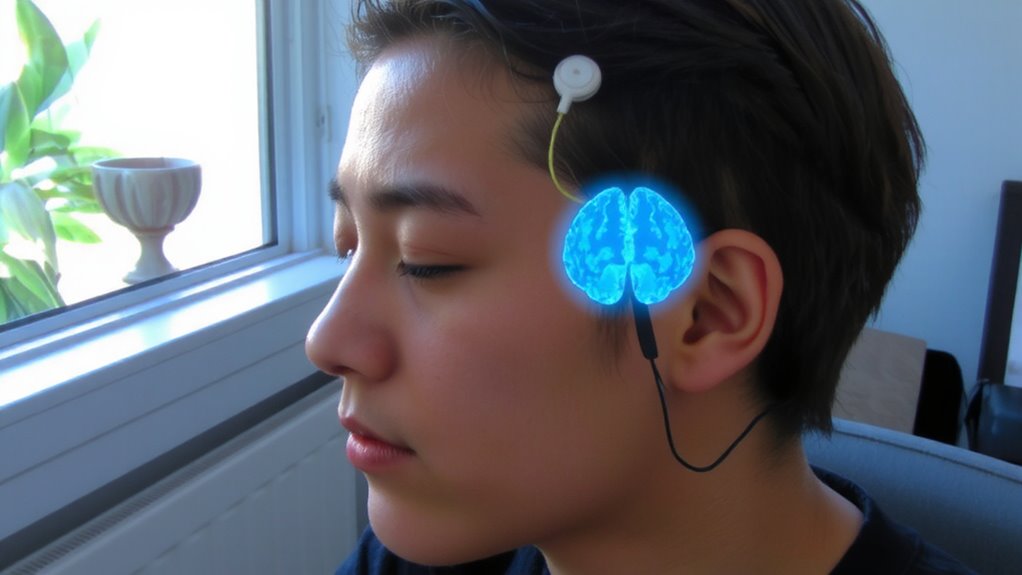
While your central nervous system (CNS) works constantly to regulate bodily functions, biofeedback gives you real-time insight into its activity, making recovery more intentional and effective. You’re able to observe shifts in heart rate, muscle tension, and brainwave patterns, allowing you to adjust breathing or focus to promote autonomic regulation. This isn’t just passive monitoring-your active participation fosters neuroplasticity enhancement, strengthening the brain’s ability to reorganize and form new neural connections after injury or strain. Devices like EEG headbands or HRV monitors offer precise data, turning abstract stress responses into tangible feedback. Over time, consistent use trains your CNS to recover faster and maintain equilibrium. Unlike generic fitness gear that tracks steps or heart rate alone, quality biofeedback tools support deeper physiological awareness, helping you optimize recovery with evidence-based precision. They’re not flashy-but they’re functional, insightful, and increasingly essential for holistic CNS healing.
Match Your Condition to the Best Biofeedback Type
You’ve seen how biofeedback sharpens your body’s recovery by turning invisible CNS activity into actionable data-now it’s time to match your specific symptoms or recovery goals to the right modality. If you’re dealing with anxiety, insomnia, or post-injury cognitive fog, brainwave monitoring through EEG biofeedback can help retrain neural patterns for better regulation. It’s especially effective when your CNS is stuck in overdrive. For chronic pain, spasms, or tension-related setbacks, muscle relaxation using EMG biofeedback gives you real-time insight into muscular activity, letting you consciously release holding patterns. You’ll notice improvements in coordination and reduced fatigue over consistent sessions. Combining the right gear-like portable EEG headsets or wearable EMG sensors-with targeted exercises increases precision in recovery. Not all devices are equal; look for medical-grade accuracy and clinician-supported protocols. Matching your condition to the correct biofeedback type isn’t just smart-it’s essential for effective, lasting CNS healing.
Set Measurable Goals for CNS Recovery
How do you know if your CNS is truly recovering? You track measurable outcomes tied to neural adaptation and stress modulation. Setting clear, time-bound goals helps you assess progress and adjust strategies effectively. Without benchmarks, biofeedback becomes guesswork-precision is key. Below are critical metrics to monitor:
| Goal Type | Measurement Focus |
|---|---|
| Neural adaptation | Reaction time improvement |
| Stress modulation | HRV trend over 2 weeks |
| Sleep efficiency | Deep sleep % via wearables |
| Cognitive recovery | Daily focus task accuracy |
These targets align with physiological changes, giving you objective insight. Neural adaptation isn’t instant-it builds with consistent feedback and rest. Stress modulation improves when your autonomic shifts toward parasympathetic dominance, reflected in steady HRV gains. Wearables help track this, but data means little without goals. Define what recovery looks like, then validate it. That’s how you guarantee CNS restoration is real, not just felt.
Train Daily With a Personalized Biofeedback Plan
Tracking your CNS recovery isn’t where the process ends-it’s the foundation for what comes next: building a daily biofeedback routine tailored to your physiology. You’ll start seeing real gains when you train consistently with personalized feedback loops. Devices measuring HRV, EEG, or EMG let you track patterns and respond in real time, turning each session into a tool for neuroplasticity enhancement. This isn’t just about recovery-it’s about rewiring your brain for better function. Daily use strengthens stress resilience by teaching your body to recalibrate after strain. Think of it like fitness gear calibrated for the brain: the right sensors, used right, make all the difference. Accuracy matters-consumer-grade wearables help, but medical-grade tools deliver sharper insights. Stick with it daily, and you’ll notice improved focus, mood, and autonomic balance. Consistency turns data into progress.
Combine Biofeedback With Physical and Cognitive Therapy
While biofeedback lays the groundwork for understanding your nervous system’s response to stress and exertion, combining it with physical and cognitive therapy sharpens its impact, creating a synergistic approach to CNS recovery. You’re not just monitoring signals-you’re actively shaping neuroplasticity enhancement and improving sensory integration. Physical therapy rebuilds functional movement, while cognitive exercises retrain attention and executive function, both amplified by real-time biofeedback data.
| Therapy Type | Primary Benefit |
|---|---|
| Biofeedback | Real-time autonomic regulation |
| Physical Therapy | Motor relearning and strength restoration |
| Cognitive Therapy | Focus, memory, and emotional control |
| Combined Approach | Enhanced neuroplasticity enhancement |
| Integrated Sessions | Improved sensory integration |
This trio doesn’t just support recovery-it optimizes it. You’ll see clearer progress, faster adaptation, and more sustainable outcomes when these methods work in concert.
Create a Calm Environment for Better Results
Since your nervous system responds deeply to external stimuli, setting up a calm environment isn’t just comforting-it’s a functional necessity for effective biofeedback and CNS recovery. You’ll get better results when distractions are minimized and your body feels safe. Start by securing a quiet space, free from sudden noises or interruptions-this helps maintain focus and stabilizes physiological readings. Pair that with soothing lighting, like dimmable warm LEDs, to reduce visual stress and support parasympathetic activation. Harsh overhead lights can trigger arousal, undermining your session. Consider using blackout curtains, noise-canceling headphones, or white noise machines to enhance consistency. The right gear, like ergonomic mats or supportive chairs, also improves comfort without distraction. Over time, conditioning your environment strengthens the mind-body feedback loop. A well-designed space doesn’t just support recovery-it actively enhances biofeedback precision and CNS resilience through optimized sensory input.
Track Progress Monthly and Adjust Your Approach
How do you know if your recovery efforts are actually working? Long term tracking gives you the answer. Monthly assessments help spot trends in your CNS recovery, letting you make informed, personalized adjustments. Without consistent data, you’re guessing-not progressing. Biofeedback devices provide real metrics: heart rate variability, muscle tension, sleep quality, and stress markers. Track these each month to see what’s improving and what’s not.
| Metric | Target for Improvement |
|---|---|
| HRV | Increase by 10% monthly |
| Sleep Efficiency | Reach 85% or higher |
| Muscle Tension | Decrease baseline levels |
| Stress Response Time | Shorten by 15% |
Use this data to refine your routines, gear choices, and rest periods. Personalized adjustments keep your recovery strategy effective, adaptive, and sustainable.
On a final note
You’ve seen how biofeedback sharpens CNS recovery by training your nervous system with real-time data. When matched to your condition and paired with physical or cognitive therapy, it delivers measurable gains. Daily practice in a calm space boosts effectiveness, and monthly tracking lets you refine your approach. Though not a standalone fix, biofeedback enhances recovery precision-especially when supported by quality gear like reliable EEG sensors or EMG monitors. It’s practical, science-backed, and fits well within a disciplined recovery plan.