Modified Crow Pose Regression Steps for Wrists Recovering From Gymnastics Rings
Start with block-supported crow pose to reduce wrist extension and shift weight toward your forearms. Use yoga wedges or folded mats if blocks aren’t available. Practice isometric holds with knees supported, elbows tucked, and gaze forward to build stability. Gradually progress by lowering support height and increasing hold time only when pain-free. Prioritize core engagement and proper alignment over depth. Choose padded mats or silicone wrist supports for added joint protection-they help long-term recovery. Smart regressions now mean stronger, safer gains later.
Notable Insights
- Shift weight to forearms in knee-supported crow to minimize wrist load during recovery from gymnastics rings.
- Use yoga wedges or folded mats under hands to reduce wrist extension and compression during modified crow.
- Perform isometric holds with elbows tucked and gaze forward to rebuild wrist and core coordination safely.
- Progress gradually using elevated surfaces or blocks, decreasing height as wrist strength and tolerance improve.
- Prioritize wrist mobility drills and padded support post-practice to maintain joint health and prevent re-injury.
How to Modify Crow Pose With Wrist Pain
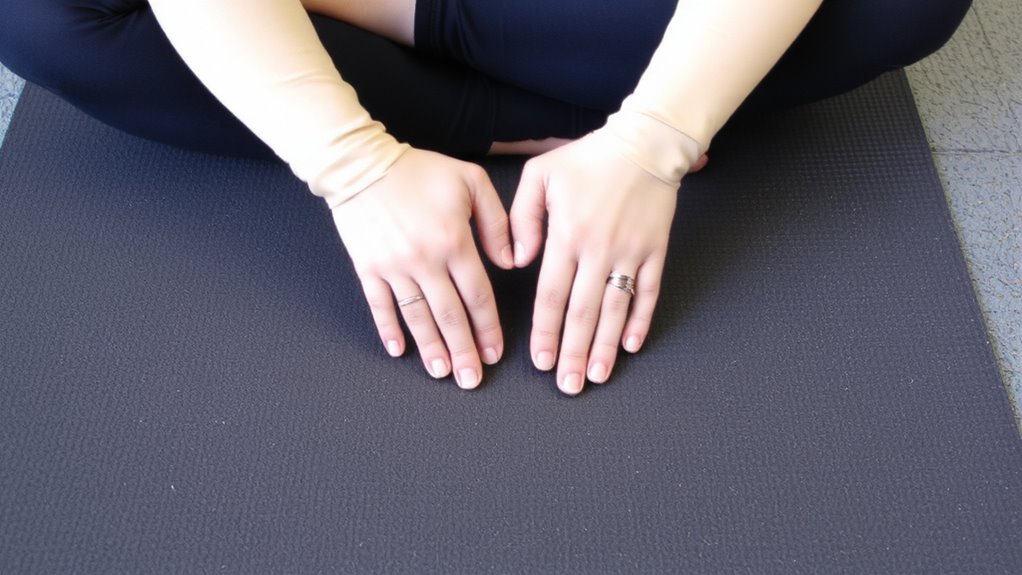
Wrist discomfort doesn’t have to mean giving up on crow pose-it just means adapting. You can shift weight to your forearms by moving into a modified version that prioritizes wrist alignment and forearm strength. Try using yoga wedges or folded mats under your hands to reduce wrist extension, decreasing pressure while maintaining stability. Forearm strength becomes even more critical here-strong forearms help transfer load away from tender joints and improve control during the lift. Isometric holds in a knee-supported crow, with elbows tucked and gaze forward, build this strength safely. You’ll notice better balance and confidence within weeks. Some recovery-specific yoga props, like padded wrist supports, also help, though their long-term use may reduce natural joint resilience. Focus instead on gradual exposure and form precision. The goal isn’t just temporary relief, but sustainable practice built on aligned mechanics and conditioned muscle.
Why Wrist Strain Makes Crow Pose Hard
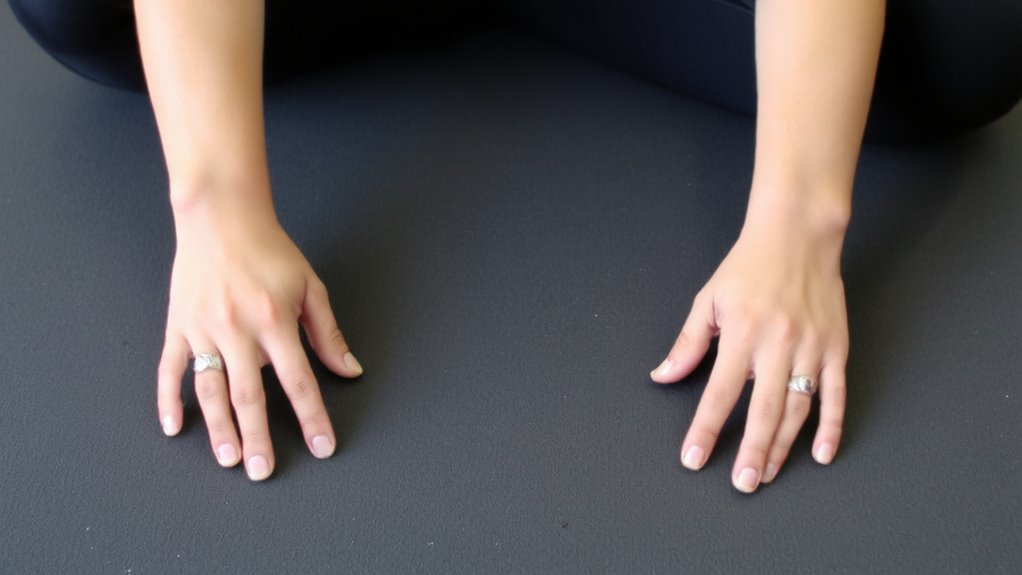
Nearly 80% of people attempting crow pose report some level of wrist discomfort, and for good reason-this balance-intensive asana demands more than just core strength. You’re placing up to 70% of your body weight on your hands, which strains already compromised wrists, especially after gymnastics rings training. Wrist instability becomes a real issue, reducing your control and increasing the risk of collapse during the pose. That shaky, wobbly feeling? It’s not just weakness-it’s your joints struggling to maintain alignment under load. Plus, prolonged flexion can lead to nerve compression, particularly in the median nerve, causing tingling or numbness in your fingers. This isn’t just uncomfortable-it’s a warning sign. If your wrists lack mobility or are healing, forcing crow pose delays recovery and compromises form. Proper alignment and joint integrity matter more than achieving the full pose too soon. Let function guide progression, not ego.
Supported Crow Pose Variations With Less Pressure
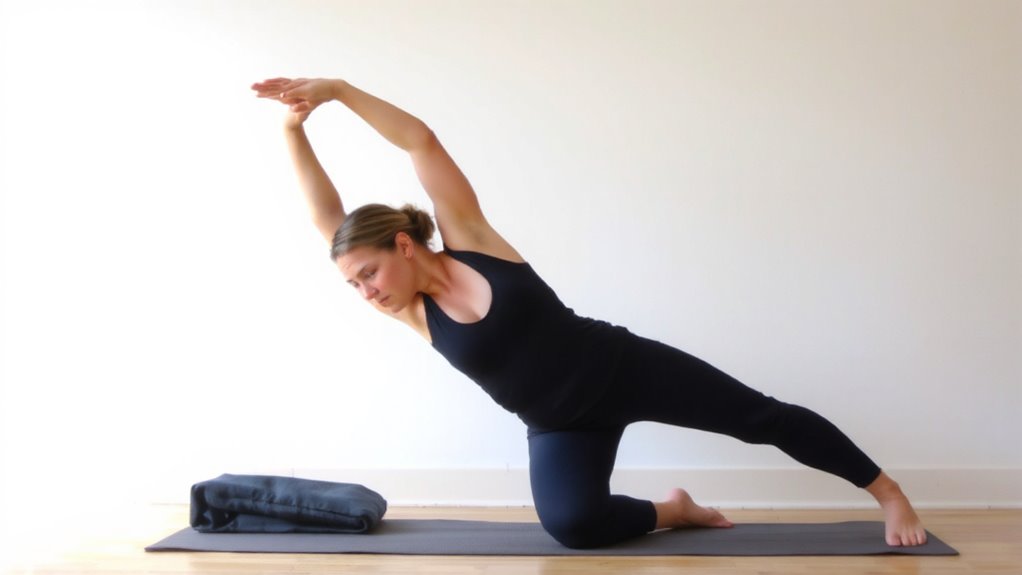
A smart way to ease into crow pose while protecting healing wrists is by using supportive props that redistribute your body’s weight more evenly. These arm balance alternatives reduce joint stress while letting you maintain core engagement techniques critical for progression. Consider using yoga blocks or a folded mat under your hands to decrease wrist angle and pressure. Elevated surfaces help simulate the lean needed without full compression.
| Variation | Support Needed | Benefit |
|---|---|---|
| Block-Supported Crow | Yoga blocks under hands | Reduces wrist flexion |
| Wall-Assisted Crow | Back to wall | Improves balance confidence |
| Chair-Assisted Lift | Stable chair | Emphasizes core over arm strength |
These modifications offer functional training with lower risk, making them practical fitness recovery tools. Each maintains skill integrity while prioritizing joint health. With consistent use, you preserve neuromuscular patterning safely.
How to Progress Back to Full Crow Pose
Once you’ve built stability through supported variations, you can gradually shift back to full Crow Pose by focusing on controlled progression and proper mechanics. Start by reducing support slowly-use yoga blocks less or tap the floor lightly with fingertips to re-engage wrist tolerance. Balance drills like lifting one hand at a time help retrain coordination and confidence. You’ll need consistent strength building, especially in the forearms and core, to safely hold your weight. Try short holds with quick releases to gauge readiness without overloading healing tissue. Quality matters more than duration-prioritize clean form over longer holds. As grip and wrist stability improve, integrate full weight in brief pulses. Monitor for discomfort, not just pain-subtle strain signals can indicate insufficient recovery. Progression isn’t linear; plateaus are normal. Use a non-slip mat for reliable feedback during these shift phases.
How to Practice Crow Pose Pain-Free Long Term
Sustaining a pain-free practice in Crow Pose hinges on consistent attention to alignment, equipment, and recovery cues. You must maintain proper wrist positioning-stacked under shoulders with fingers spread wide-to disperse pressure evenly. Using padded yoga mats or silicone hand supports can greatly reduce joint stress, especially during long holds. Breath control isn’t just calming; it stabilizes your rhythm and prevents tension buildup in the forearms. Pair this with active core engagement to lighten the load on your wrists, shifting some weight posteriorly. Avoid collapsing into the shoulder girdle-keep your elbows hugged in, gaze forward. Over time, consistent form checks and mindful repetitions reduce injury risk. Recovery isn’t passive; integrate wrist mobility drills and forearm stretches post-practice. Listening to your body’s feedback guarantees longevity. This approach, blending technique and smart gear use, supports sustainable progress without sacrificing joint health.
On a final note
You can rebuild wrist strength safely by modifying crow pose during recovery. Using yoga wedges or folded mats reduces strain, letting you maintain form without pain. These supports shift weight slightly, easing pressure on healing tissues. Over time, as mobility and strength return, you’ll need less assistance. Consistent, mindful practice with the right gear supports long-term joint health and prevents setbacks, making your return to rings training both smart and sustainable.