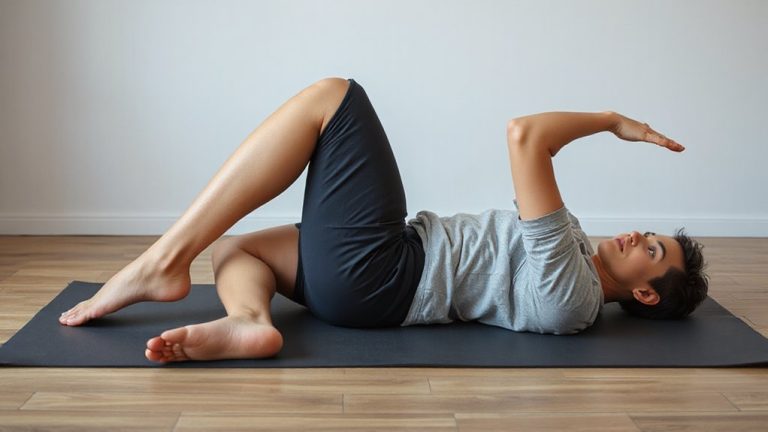
How to Use Restorative Yoga Poses to Accelerate Post-Workout Muscle Repair
You can use restorative yoga poses to speed up post-workout muscle repair by enhancing blood flow and lowering cortisol through deep relaxation. These poses activate your parasympathetic nervous system more effectively than many high-intensity recovery gadgets. Hold each pose for 5–10 minutes with minimal props like a mat and bolster to optimize recovery. Consistent practice reduces soreness and improves flexibility. There’s more to discover about tailoring these practices anywhere you are.
Notable Insights
- Restorative yoga enhances muscle repair by boosting circulation to deliver oxygen and nutrients efficiently.
- Activate the parasympathetic nervous system to reduce cortisol and speed up recovery after intense workouts.
- Hold each restorative pose for 5–10 minutes to release deep tension and support nervous system balance.
- Use minimal props like bolsters, blankets, or towels to maintain proper alignment and maximize relaxation benefits.
- Adapt poses with chairs or pillows for effective recovery in offices, gyms, or while traveling.
Why Restorative Yoga Speeds Up Muscle Recovery
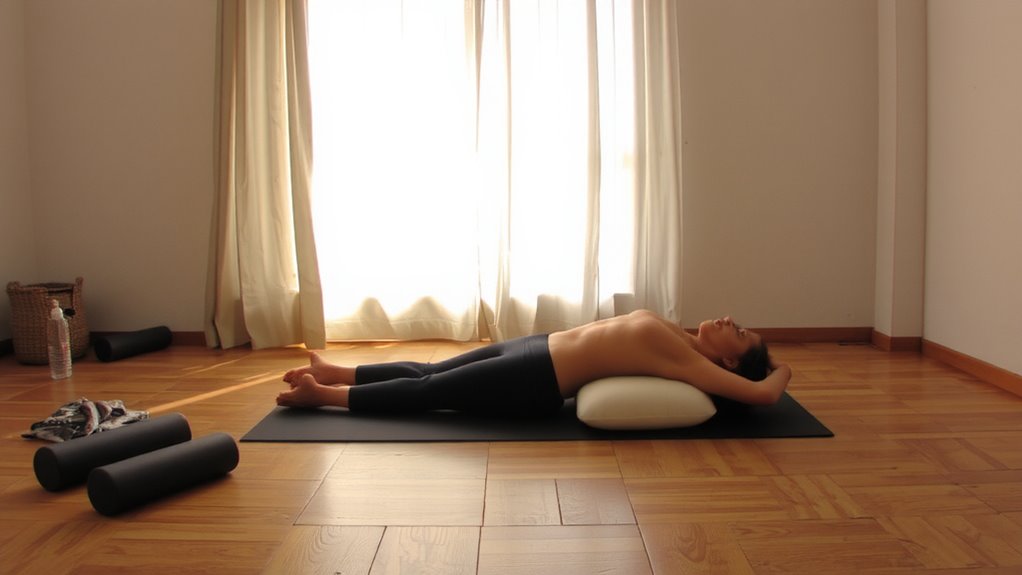
While your body heals from intense training, restorative yoga can markedly accelerate muscle recovery by enhancing circulation and reducing physiological stress. You experience increased circulation as gentle poses encourage blood flow to fatigued muscles, delivering oxygen and nutrients essential for repair. This isn’t just passive stretching-it’s a targeted recovery tool backed by physiological response. Holding supported postures for several minutes activates your parasympathetic nervous system, promoting nervous system balance and lowering cortisol levels. Unlike high-intensity recovery gadgets or expensive fitness gear, restorative yoga requires minimal equipment and offers measurable results. Studies show regular practice reduces muscle soreness and improves recovery speed. It’s not about exertion; it’s about intelligent restoration. When you prioritize nervous system balance and increased circulation, you’re not just recovering-you’re optimizing your body’s readiness for the next workout, making restorative yoga a practical, effective component of any serious training regimen.
Create a Recovery-Friendly Space With Minimal Props
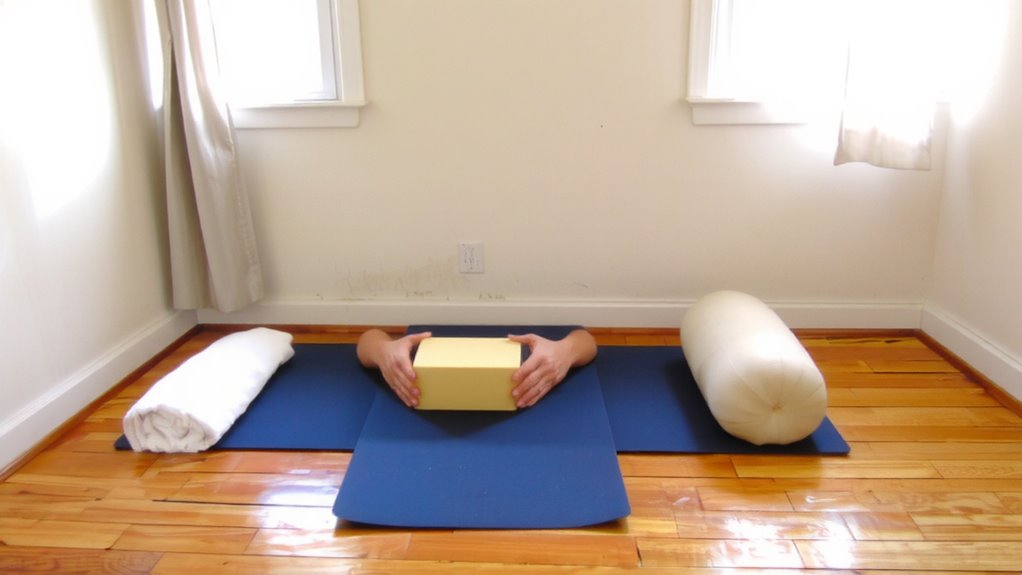
You don’t need an entire studio setup to benefit from restorative yoga-just a few well-chosen props can transform any quiet corner into a recovery-friendly space. A yoga mat offers essential cushioning, while a single bolster or folded blanket supports the spine or hips in passive poses. A standard pillow or rolled towel can replace expensive neck props without sacrificing comfort. Minimal gear doesn’t mean compromised quality; in fact, simplicity aids silence cultivation by reducing distractions. Pair this streamlined setup with candlelight ambiance to gently signal your nervous system that it’s time to unwind. The warm, flickering light lowers mental arousal, enhancing relaxation. These practical, low-cost elements perform reliably across sessions, making consistency easier. Thoughtful prop selection supports both physical comfort and psychological ease, maximizing the recovery benefits of restorative practice. Over time, this efficient space becomes a dependable sanctuary for muscle repair and mental restoration. For consistent comfort and grip, consider choosing a high-quality yoga mat based on material and thickness.
Best Restorative Yoga Poses for Post-Workout Recovery
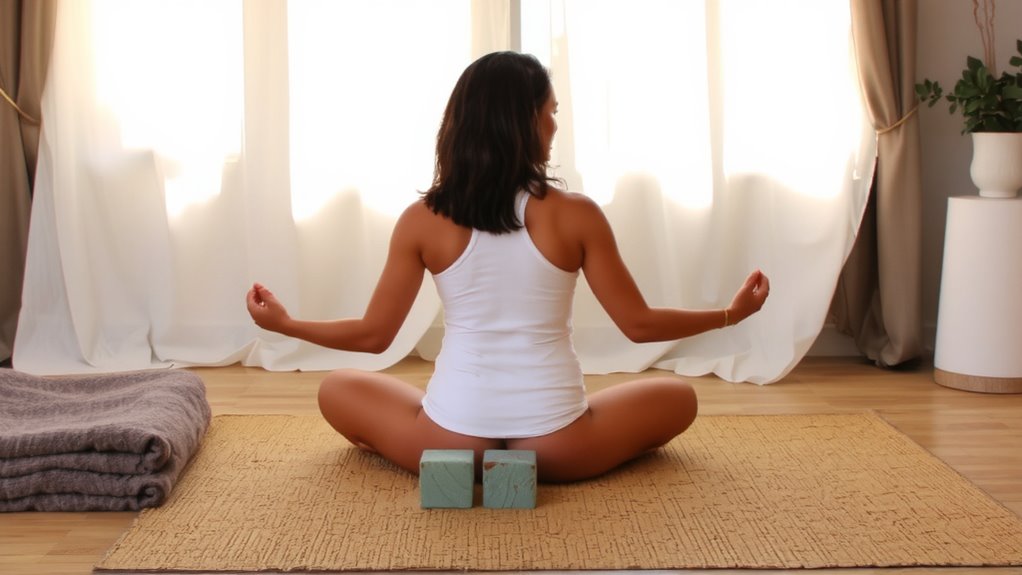
Since your muscles need time to rebuild after intense effort, incorporating restorative yoga poses can greatly accelerate recovery by reducing tension and improving circulation. Poses like Child’s Pose, Legs-Up-the-Wall, and Supported Bridge offer gentle stretches that release tight hips and lower back without straining fatigued tissue. These postures emphasize mindful alignment, helping you maintain proper spinal positioning and avoid compensatory patterns. Using minimal props-like a folded blanket or bolster-enhances comfort and effectiveness, allowing deeper relaxation. Passive inversion poses, such as Reclined Bound Angle, encourage lymphatic drainage and reduce inflammation. You’ll notice quicker relief in sore areas when alignment supports natural recovery. Though fitness gear like foam rollers may aid recovery, it doesn’t match the sustained relief of properly aligned restorative poses that promote nervous system balance. Gentle stretches in these forms outperform aggressive mobility tools, making them essential for recovery-focused routines.
How Long to Hold Restorative Yoga Poses for Recovery
Holding restorative yoga poses long enough allows your body to shift from the heightened state of post-exercise stress into a parasympathetic mode, where true recovery begins. For ideal results, aim for a pose duration of 5 to 10 minutes-long enough to release deep muscular tension without overstraining. This extended timing benefits both your nervous system and muscle tissue by promoting circulation and reducing cortisol levels. While recovery gear like foam rollers offers immediate relief, sustained pose duration delivers longer-term repair through physiological calm. Most practitioners notice improved flexibility and reduced soreness when consistently holding poses beyond the typical 2-minute mark. Your body needs time to fully relax into each position, so patience is key. Though timing benefits vary by individual, research supports longer holds for post-workout recovery. Stick to 5 minutes minimum for effective restoration-less won’t yield the same repair depth.
Breathe Deeply to Speed Up Healing
Why do some recover faster after intense workouts? They harness breath awareness to boost oxygen flow and accelerate healing. When you breathe deeply in restorative poses, you’re not just relaxing-you’re actively supporting muscle repair. Slow, intentional inhales and full exhales increase circulation, delivering oxygen-rich blood to fatigued tissues. This improved oxygen flow reduces inflammation and clears metabolic waste like lactic acid more efficiently. Breath awareness also activates your parasympathetic nervous system, signaling your body it’s safe to repair. Unlike fitness gear that tracks performance, your breath is a free, built-in recovery tool-no app or sensor needed. Studies show controlled breathing lowers cortisol, which can otherwise slow healing. In practice, pairing deep diaphragmatic breaths with restorative yoga yields faster recovery times than passive rest alone. You don’t need extra equipment-just focus, consistency, and deliberate breath to turn downtime into active recovery.
Adjust Restorative Poses for Any Location
You can adapt restorative yoga poses to nearly any environment without sacrificing effectiveness, and doing so makes recovery more accessible-whether you’re at home, in a hotel room, or even at the office. With smart travel adaptations and office modifications, you maintain consistent muscle repair routines regardless of surroundings. Simple shifts in props or posture alignment preserve the therapeutic benefits vital for fitness recovery.
| Location | Pose | Adaptation |
|---|---|---|
| Office | Seated Forward Bend | Use chair, keep spine long |
| Hotel Room | Legs-Up-The-Wall | Swap bolster for pillows |
| Gym | Supported Child’s Pose | Towel代替 block for support |
Travel adaptations often rely on portable, lightweight gear, while office modifications prioritize discretion and space efficiency. Both approaches prove that practicality and performance aren’t mutually exclusive when recovering intelligently across environments.
On a final note
You’ll recover faster by combining restorative yoga with quality recovery gear. These poses reduce muscle tension and boost circulation, speeding up repair after intense workouts. Holding each pose for 3–5 minutes lets your nervous system shift into healing mode. Deep, diaphragmatic breathing enhances oxygen flow, supporting tissue recovery. Even with minimal props-like pillows or folded towels-you can maintain proper alignment. When practiced consistently, this method proves more effective than passive rest, offering measurable gains in flexibility, soreness reduction, and overall performance.