Core Bracing Strategies During Heavy Deadlifts to Prevent Disc Herniation
You’re risking disc herniation if you’re not bracing your core correctly during heavy deadlifts. Use the Valsalva maneuver: inhale deeply into your belly, then brace hard as if expecting a punch-this builds intra-abdominal pressure that stabilizes your spine like an internal weight belt. Keep your entire body tight, avoid chest puffing, and never gasp mid-lift. Proper bracing isn’t optional-it’s essential spinal armor, and mastering it changes everything. There’s more to get right.
Notable Insights
- Engage in diaphragmatic breathing to create intra-abdominal pressure, stabilizing the spine during heavy deadlifts.
- Perform the Valsalva maneuver by holding your breath after a deep inhale to maintain spinal rigidity.
- Brace your core 360 degrees as if preparing to take a punch, ensuring full abdominal tension.
- Establish full-body tension by activating quads, glutes, lats, and grip before initiating the lift.
- Avoid mid-lift gasping or chest puffing, which reduce core pressure and increase disc herniation risk.
Use Proper Core Bracing to Protect Your Spine
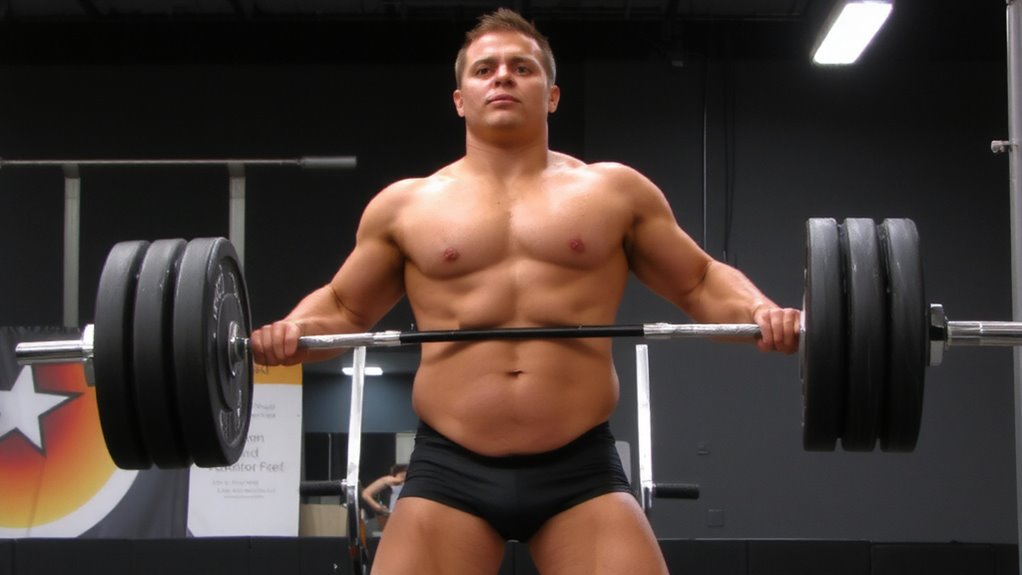
Stability starts with your core-especially when deadlifting. You need proper bracing to maintain spine alignment and prevent shearing forces on your discs. Without it, even moderate loads can lead to injury over time. Breathing control plays a key role: inhaling deeply into your diaphragm tightens the abdominal wall, creating intra-abdominal pressure that supports your lumbar spine. Think of your core as a weightlifting belt-only internal. It’s not just about strength; it’s about timing and coordination. Fitness recovery isn’t just post-workout-avoiding damage during the lift is preventative recovery. Some lifting gear claims to enhance bracing, but nothing replaces learned neuromuscular control. Over-reliance on supportive gear may actually weaken natural stabilization patterns. Master the skill first. Then, use equipment-like belts-as a supplement, not a substitute. Consistent attention to form, breathing control, and spine alignment builds sustainable performance.
Brace With the Valsalva Maneuver (Safely)
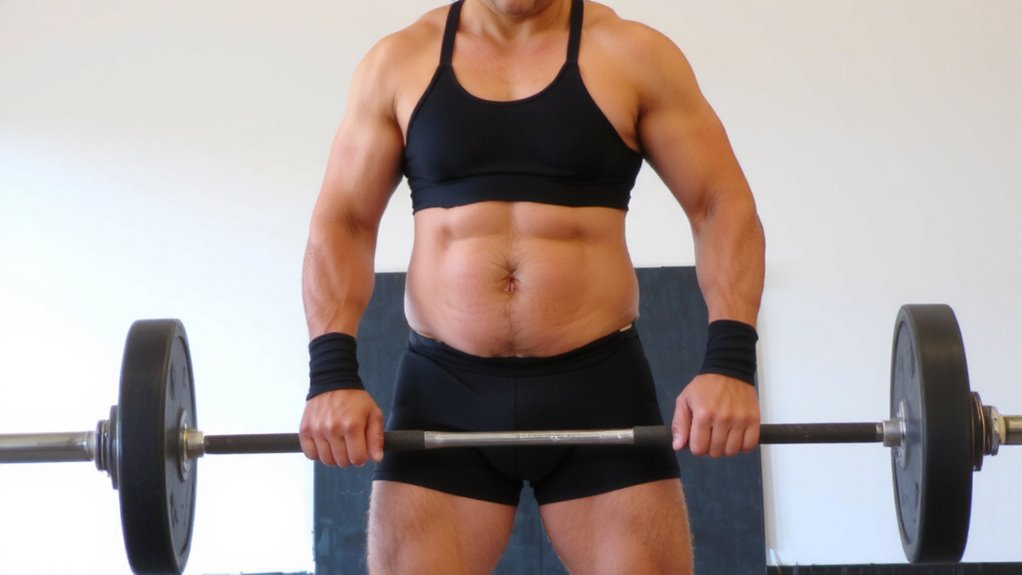
While you might associate holding your breath with danger, doing so strategically through the Valsalva maneuver is actually a cornerstone of safe heavy lifting-especially during deadlifts. When you brace properly, you lock in breath control by inhaling deeply before lifting, then bearing down against your closed airway. This stabilizes your spine, reducing shear forces on the discs. Valsalva safety isn’t about straining recklessly-it’s about controlled pressure that supports your core without spiking blood pressure dangerously. Used correctly, it enhances intra-abdominal pressure safely and efficiently. You’ll maintain rigidity through the lift, protecting your lower back under heavy loads. Just remember to exhale *after* the sticking point, not during. Breath control isn’t optional here-it’s essential for spinal integrity. Over time, this technique becomes intuitive, improving both performance and valsalva safety. It’s not about brute force; it’s smart mechanics that keep you lifting longer and healthier.
Create Intra-Abdominal Pressure Step by Step
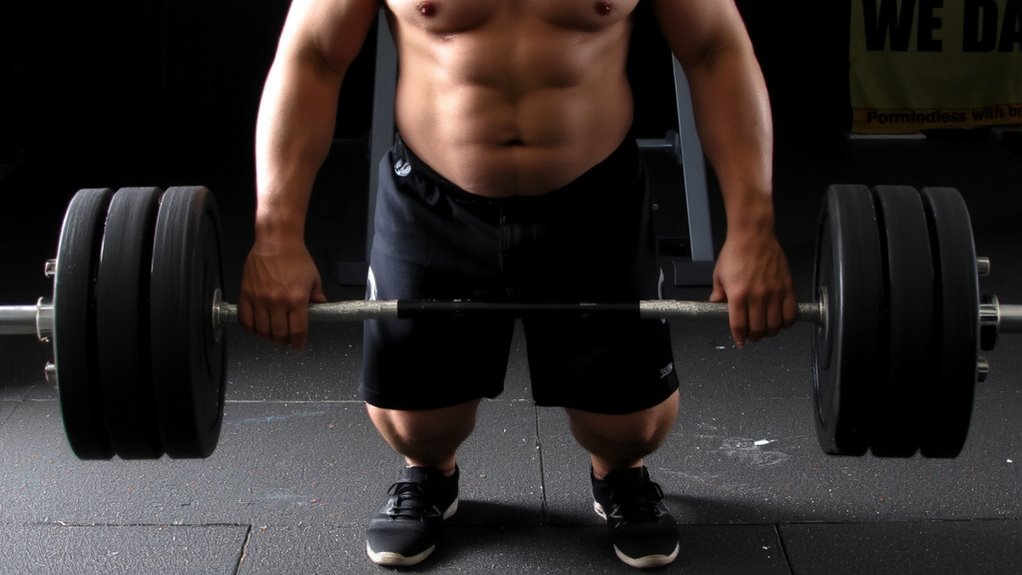
Since intra-abdominal pressure is the key to a rock-solid core during heavy deadlifts, you’ll want to nail the sequence that builds it effectively. Start by inhaling deeply into your diaphragm-don’t puff your chest, but expand your belly against your belt. This isn’t just breathing techniques for show; it’s strategic pressurization. Hold that breath and brace as if you’re about to take a punch, driving your abs outward while keeping the air locked in. That’s abdominal engagement done right: 360-degree tension, not just sucking in. Think of your core like a fully inflated tire-rigid, stable, ready to bear load. Proper execution creates a stiff trunk, reducing shear forces on your spine. You’re not just lifting safer-you’re lifting stronger. Do it consistently, and you’ll notice better control, less fatigue, and fewer aches post-set.
Tighten Your Entire Body Before Lifting
You need to lock in full-body tension before you even think about moving the bar. Every link in the chain-from your grip strength to your foot positioning-must be solid to protect your spine and maximize force transfer. Squeeze the bar hard; strong grip strength activates your forearms, upper back, and lats, creating a stable lever. Your feet should be flat, shoulder-width apart, with toes slightly out-this foot positioning gives you a powerful base and helps drive through the heels. Engage your quads, squeeze your glutes, and keep your lats tight as you set your back. Don’t just brace your core-tense everything. This full-body co-contraction supports joint alignment and reduces shear forces on the discs. When done right, the lift feels controlled, powerful, and safe, minimizing disc herniation risk while letting you handle heavier loads with better technique.
Avoid These Deadlift Bracing Mistakes
What good is a solid deadlift setup if your bracing strategy is quietly undermining it? You might think you’re protecting your spine, but poor posture and improper breathing can sabotage everything. Holding your breath at the wrong time or gasping mid-lift disrupts intra-abdominal pressure, leaving your discs vulnerable. Don’t just puff your chest-breathe deep into your belly, brace your entire core, then *lift*. Slouching shoulders or overextending your lower back shifts stress exactly where you don’t want it. That slight rounding? It’s not “just form”-it’s a risk multiplier under heavy load. Your core isn’t just abs; it’s the coordinated tension of your diaphragm, obliques, spinal erectors, and pelvic floor. Skip one, and the chain breaks. You can have the best lifting belt on the market, but if your bracing mechanics are off, gear won’t save you. Fix the basics first-breathing and alignment-then let equipment support, not compensate.
On a final note
You’ve learned that proper bracing-using the Valsalva maneuver and building intra-abdominal pressure-protects your spine during heavy deadlifts. Tightening your entire body stabilizes the core, reducing herniation risk. Avoid common mistakes like holding your breath too long or under-bracing. Effective technique, paired with quality lifting gear like supportive belts, enhances performance and joint safety. These strategies aren’t just theory-they’re proven, practical tools that, when applied consistently, improve lifting longevity and spinal health.