Backstroke Variations That Decompress Vertebrae While Improving Lung Capacity
You can use backstroke variations to gently decompress your vertebrae while boosting lung capacity. Maintaining a neutral spine and engaging your core reduces spinal strain, while rhythmic breathing enhances oxygen efficiency. Try slow, controlled strokes or bilateral breathing to improve respiratory control. Adding resistance paddles or float-assisted drills increases aerobic demand without joint stress. These techniques support spinal health and lung function, especially when performed consistently-explore how small adjustments can amplify recovery and fitness results.
Notable Insights
- Slow, controlled backstroke variations lengthen the spine and enhance vertebrae decompression with rhythmic breathing.
- Neutral spine alignment during backstroke prevents compression while promoting optimal lung expansion and oxygen intake.
- Bilateral breathing in backstroke balances lung usage and supports spinal symmetry for decompression and respiratory efficiency.
- Using resistance paddles increases aerobic demand while maintaining spinal elongation through full stroke mechanics.
- Noodle-assisted backstroke reduces spinal twist and allows focused breath control for safer decompression and lung training.
Why Backstroke Variations Help Your Lungs and Spine
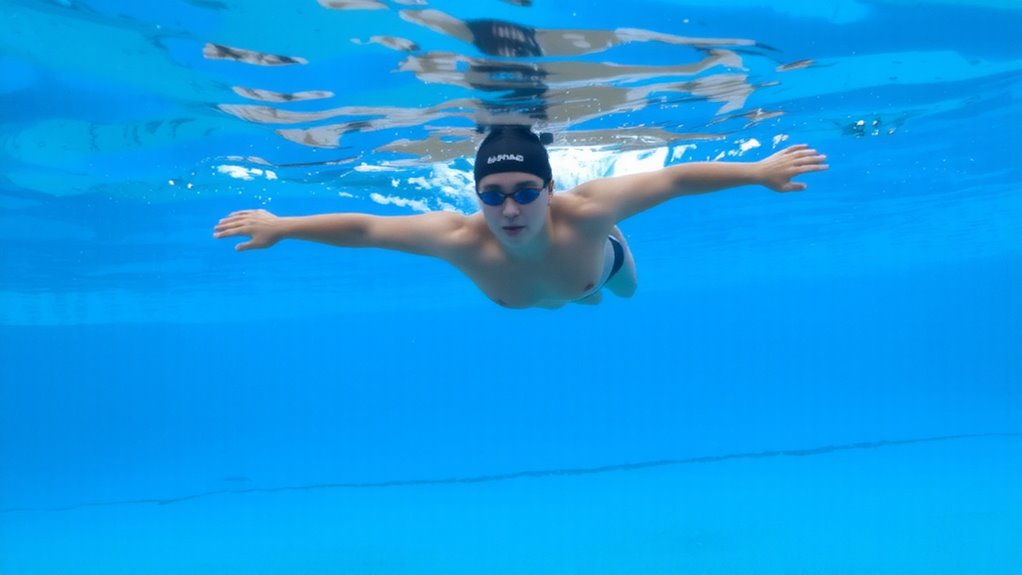
Breathing isn’t just about oxygen-it’s about timing, expansion, and spinal alignment, all of which backstroke variations actively improve. When you engage in different backstroke forms, you lengthen your spine and create space between vertebrae, promoting better spinal alignment over time. This decompression reduces strain and supports natural posture-key for recovery and long-term spine health. At the same time, rhythmic breathing patterns enhance oxygen efficiency, allowing your lungs to fill more completely with each inhale. You’re not just moving water-you’re training your respiratory system to deliver oxygen more effectively, which aids endurance and recovery. Unlike high-impact cardio, backstroke variations offer joint-friendly resistance, making them ideal when paired with recovery-focused fitness gear like buoyancy aids or posture support swim tools. The combination builds resilience without overloading the body, balancing performance with restoration in a way few drills can match.
Use Proper Form to Protect Your Spine While Swimming
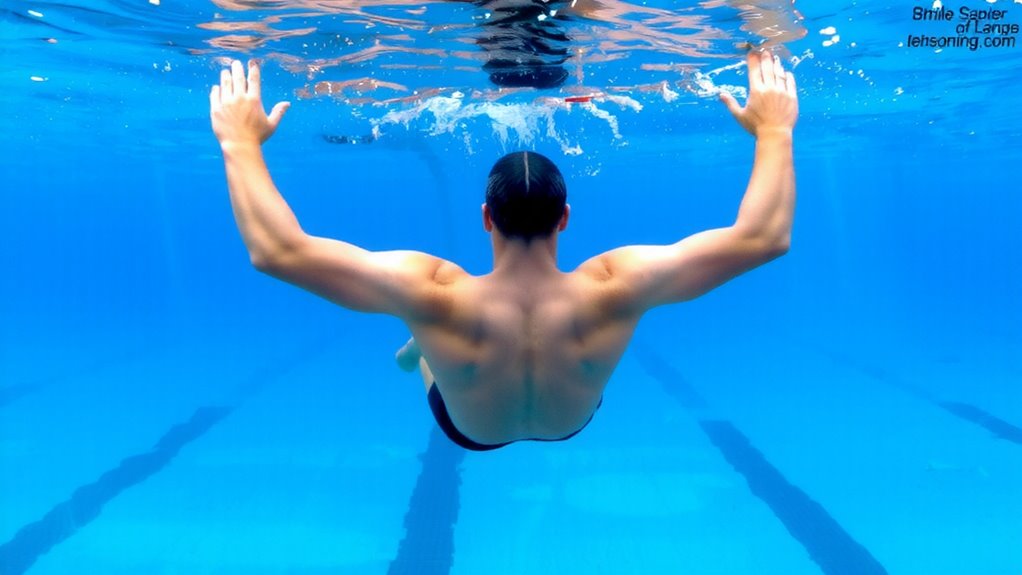
While mastering the rhythm of your stroke, you’ll find that maintaining a neutral spine isn’t just about comfort-it’s essential for injury prevention and long-term joint health. Proper spinal alignment reduces unnecessary strain on your vertebrae, especially during repetitive motion. You should keep your head in line with your spine, avoiding upward tilting that compresses cervical discs. Engaging your core slightly helps stabilize your back and promotes efficient movement. Stroke symmetry is equally important-uneven arm pulls or flutter kicks create imbalances that compromise form and increase wear on joints. Balanced, controlled motions guarantee even muscle recruitment and reduce spinal torsion. Using a buoy between your legs can refine technique by isolating upper-body movement, letting you focus on alignment. While fitness gear like snorkels or support buoys can assist, they’re no substitute for disciplined form. Consistent attention to technique enhances spinal decompression and supports recovery with every lap.
3 Backstroke Variations That Increase Lung Capacity
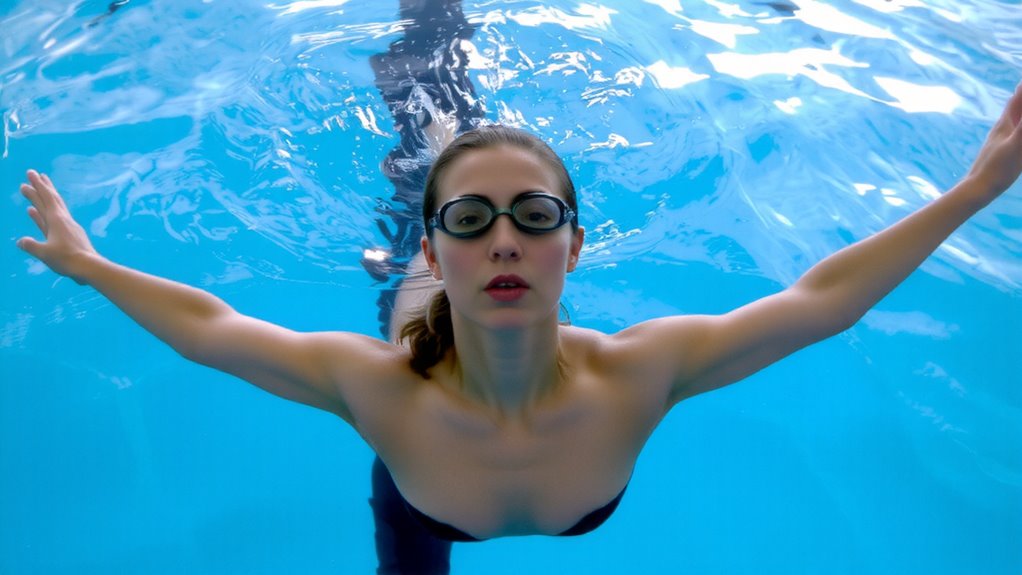
How can you make your backstroke do more than just move you across the pool? By tweaking your technique to boost lung capacity. Focus on breath control-inhale deeply during arm recovery and exhale slowly underwater. This rhythm enhances oxygen uptake and builds aerobic endurance over time. Try variations like slow, exaggerated strokes or adding fins to increase respiratory demand. These adjustments force your lungs to work more efficiently, improving stamina.
| Variation | Impact on Lung Capacity |
|---|---|
| Slow, controlled strokes | Increases breath control |
| Adding resistance paddles | Enhances aerobic endurance |
| Bilateral breathing pattern | Balances lung use |
| High-cadence sprints | Boosts oxygen consumption |
| Extended float phases | Trains diaphragm strength |
Consistent practice with purpose turns routine swimming into a powerful respiratory workout.
Breathe Better With Backstroke-Timing Techniques
Isn’t it curious how a few subtle shifts in stroke timing can transform your breathing efficiency? When you sync your breathing rhythm with precise timing cues in backstroke, each inhalation becomes smoother and more controlled. By delaying your breath just after one arm enters the water and the other recovers, you create a stable window to breathe without rushing. This coordination reduces air swallowing and promotes fuller lung expansion. Timing cues-like the splash of hand entry or shoulder rotation-act as natural prompts, helping you maintain consistent respiration. A well-timed stroke cycle supports steady oxygen flow, easing strain on your respiratory muscles. Over time, this refined breathing rhythm enhances aerobic capacity and aids recovery between intense sets. Unlike passive breathing, this technique demands awareness but delivers measurable gains in endurance and lung function. Used consistently, it becomes automatic-and far more effective.
Adapted Backstroke Variations for Pain and Limited Mobility
You’ve already seen how refining your backstroke timing can improve breathing efficiency and lung function, but what if joint pain or limited mobility makes the standard stroke difficult to perform? Water support reduces body weight load, offering joint relief so you can move with less discomfort. Adapted backstroke variations-like bent-knee flutter kicks or one-arm only strokes-let you maintain aerobic conditioning and spinal decompression even with physical limitations. Using buoyancy belts or pool noodles enhances stability, allowing focus on form without strain. These modifications aren’t just easier-they’re strategic tools for fitness recovery. Below are key variations and their benefits:
| Variation | Water Support Level | Joint Relief Benefit |
|---|---|---|
| Bent-Knee Kicking | High | Reduces hip strain |
| One-Arm Stroke | Moderate | Eases shoulder load |
| Noodle-Assisted | Very High | Minimizes spine twist |
| Slow-Stroke Tempo | Moderate | Lowers joint impact |
| Wall-Push Offs | Low to Moderate | Controls movement range |
On a final note
You’re getting more than just a workout with these backstroke variations-they’re smart recovery tools too. By decompressing your spine and boosting lung capacity, they support both joint health and endurance. Paired with quality swim gear like ergonomic fins or resistance paddles, your form improves and strain decreases. These adaptations aren’t just for elite swimmers; they’re practical, scalable, and effective for long-term fitness recovery.