Tandem Walking Drills on Uneven Surfaces to Improve Dynamic Ankle Proprioception
You improve dynamic ankle proprioception by doing tandem walking drills on uneven surfaces like sand, gravel, or foam. These surfaces increase joint feedback and neuromuscular engagement, enhancing balance and stability. Heel-to-toe strides challenge coordination while activating small stabilizing muscles. For best results, maintain proper form and consider minimalist shoes to amplify surface feel-though stability footwear helps protect joints. Consistent practice boosts injury resilience, and small tweaks can yield noticeable gains over time.
Notable Insights
- Perform tandem walking drills on uneven surfaces like sand or gravel to enhance dynamic ankle proprioception.
- Focus on precise heel-to-toe alignment to optimize joint position awareness during each step.
- Use short, controlled strides to maintain balance and maximize neuromuscular engagement.
- Challenge proprioception further by adding cognitive distractions or visual occlusion during the drill.
- Practice 2–3 times weekly on variable terrain to build functional ankle stability and prevent injury.
Do Tandem Walking Drills for Ankle Stability
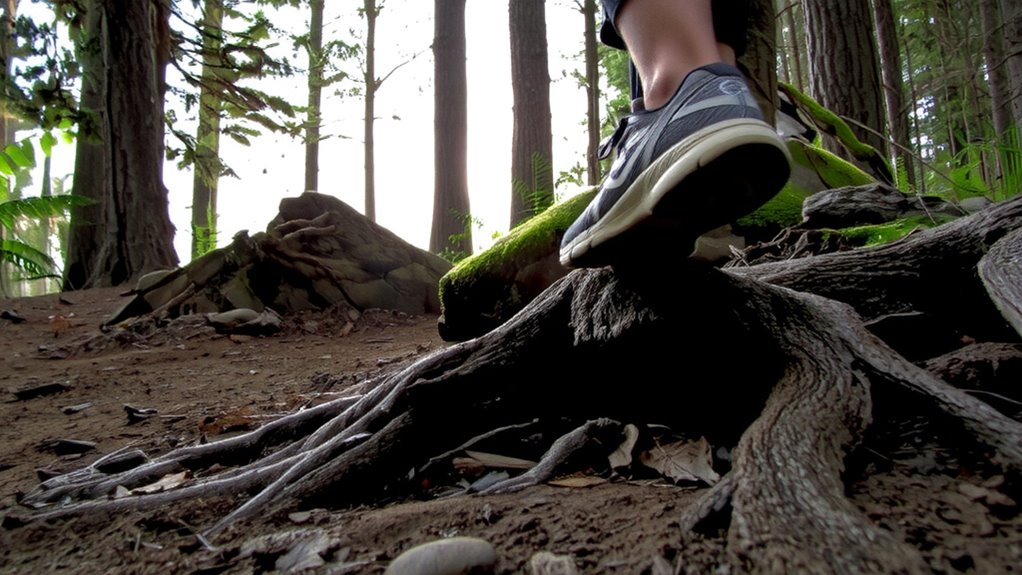
Why not start with a simple yet effective way to boost your ankle stability? Tandem walking drills do just that-sharpening neuromuscular control while building foundational ankle strength. You simply walk heel-to-toe in a straight line, challenging your balance with every step. This movement activates small stabilizing muscles often neglected in traditional workouts. Over time, you’ll notice improved coordination between your brain and lower limbs, a hallmark of strong neuromuscular control. Unlike bulky fitness gear that limits natural motion, this drill requires no equipment, making it practical and efficient. It’s especially useful during fitness recovery, providing low-impact stimulation to healing tissues without strain. Studies support its role in preventing re-injury, particularly when done consistently. Tandem walking integrates seamlessly into warm-ups or cool-downs, demanding only your attention and space. For durable ankle strength and better movement precision, it’s a proven, no-frills choice.
Choose Surfaces That Boost Proprioception
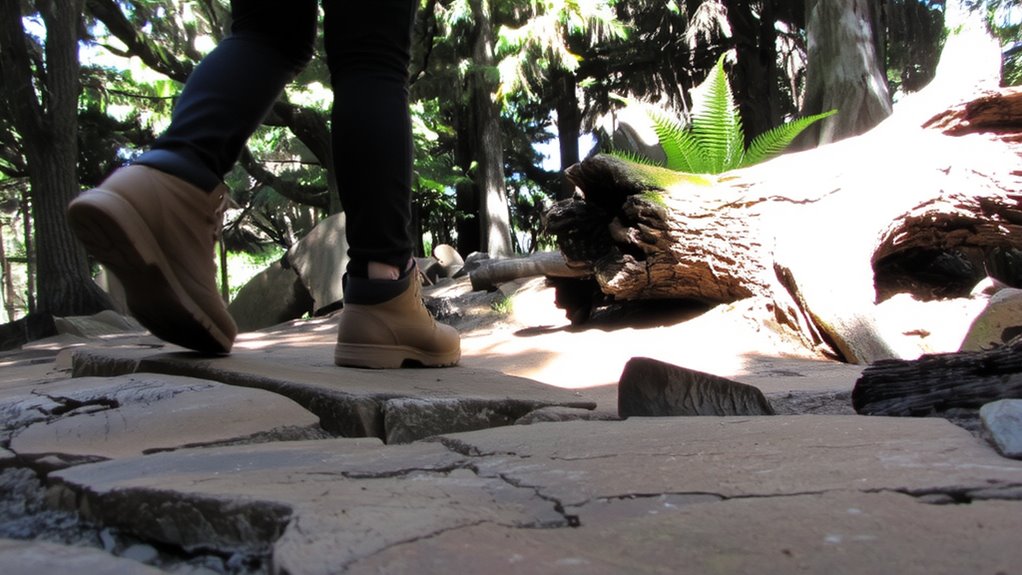
You’ve already started building stability with tandem walking drills, but now it’s time to up the challenge by changing where you walk. Uneven surfaces force your ankle to adapt, improving dynamic proprioception far better than flat ground. Surfaces like foam pads and sand dunes create instability that activates small neuromuscular pathways critical for joint awareness. Below is a comparison of effective surfaces:
| Surface | Instability Level | Proprioceptive Benefit |
|---|---|---|
| Grass | Low-Moderate | Mild engagement |
| Foam pads | High | Strong joint feedback |
| Sand dunes | Variable | Excellent adaptation |
| Gravel | Moderate | Good balance demand |
Foam pads offer consistent instability, making them ideal for structured training. Sand dunes, while less predictable, mimic real-world terrain challenges, enhancing functional readiness. Both are effective, but sand dunes provide broader sensory input, essential for sport-specific recovery and resilience.
Level Up With Advanced Balance Challenges
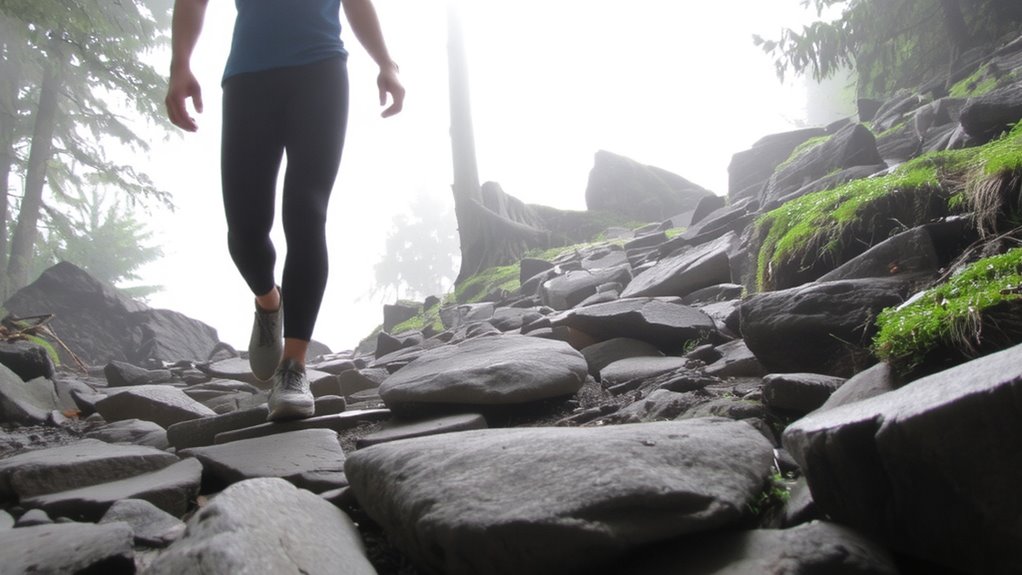
How much more can your balance improve once the basics no longer challenge you? It’s time to level up with advanced balance challenges that push your dynamic ankle proprioception further. Introduce cognitive distraction by counting backward or naming animals while walking-this forces your neuromuscular system to adapt under mental load, mimicking real-world demands. Pair this with visual occlusion: close your eyes or use a blindfold briefly during tandem steps. Removing visual input heightens reliance on joint position sense, sharpening proprioceptive accuracy. These drills, though demanding, yield measurable gains in stability and coordination. Performance improves not just on uneven terrain but in sports and daily movement. The right recovery gear, like compression sleeves or foam rollers, supports adaptation by reducing fatigue. Consistent progression through these advanced techniques builds resilient, responsive ankles-without overcomplicating your routine.
Reduce Sprain Risk Through Consistent Practice
Building on the heightened demands of advanced balance drills, you’re not just improving coordination-you’re actively conditioning your ankles to handle unexpected stresses. Consistent practice of tandem walking on uneven surfaces directly boosts ankle strength and sharpens neuromuscular control, both critical for injury prevention. These drills train your muscles, tendons, and nervous system to communicate faster, allowing quicker corrections when you step awkwardly. Over time, this adaptability reduces your risk of sprains, especially during dynamic movements. You don’t need special gear-just stable shoes with good lateral support to maintain proper form and protect joints during training. Recovery is quicker when imbalances are caught early, and regular proprioceptive work helps identify weaknesses before they lead to injury. Unlike passive recovery tools, these active drills build functional resilience. For long-term joint health and performance, integrating them two to three times per week yields measurable improvements in stability and response time. Consistency, not intensity, is what truly protects your ankles.
Walk Heel-To-Toe: Master the Technique
While precision matters in most balance drills, it’s absolutely critical in heel-to-toe walking, where alignment directly influences proprioceptive feedback. You must focus on heel alignment-each step should place the heel just ahead of the toe of the opposite foot, creating a straight, controlled line. Proper heel alignment enhances joint position awareness, sharpening the ankle’s response to subtle shifts. Stride control is equally essential; short, deliberate steps prevent overreaching and maintain stability, especially on uneven terrain. Rushing breaks form and reduces neuromuscular engagement, diminishing training effectiveness. You’ll notice improved coordination and confidence after consistent practice, particularly when integrating this drill into dynamic warm-ups or recovery sessions. Fitness gear like minimalist shoes can amplify surface feedback, boosting proprioception. However, technique outweighs equipment-master stride control and alignment first.
On a final note
You’ve seen how tandem walking on uneven surfaces sharpens dynamic ankle proprioception. These drills challenge balance, boost neuromuscular control, and, over time, reduce sprain risk. Combined with proper recovery gear-like compression sleeves and supportive footwear-your gains in stability are both measurable and maintainable. Consistency turns this simple practice into long-term joint resilience. For those serious about injury prevention, it’s not just effective-it’s essential.