Thoracic Mobility Drills With Standing Rotational Reaches
You’re targeting thoracic mobility effectively with standing rotational reaches by rotating your torso while keeping hips stable and spine tall. Engage your core, avoid arm overrotation, and focus on controlled motion to enhance spinal articulation. This drill counters sitting-related stiffness and boosts neuromuscular control. Pair it with proper breathing and alignment for best results. There’s more to refining this movement for long-term back health.
Notable Insights
- Stand with feet shoulder-width apart and arms parallel to the floor to initiate proper alignment.
- Engage the core and maintain a tall spine to isolate thoracic rotation.
- Rotate the torso slowly while keeping hips stable to enhance segmental spinal control.
- Exhale during rotation and inhale during return to synchronize breath with movement.
- Use controlled tempo without momentum to improve neuromuscular coordination and joint mobility.
How to Do Standing Rotational Reaches
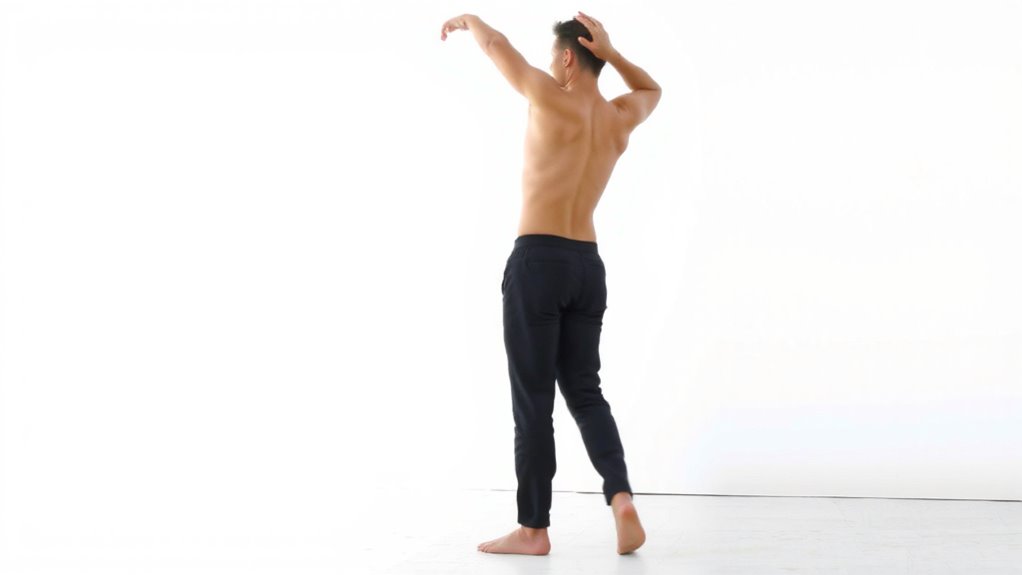
While you’re standing with your feet shoulder-width apart, start by engaging your core and lifting your arms out to the sides until they’re parallel to the floor, because proper form is essential to get the most out of standing rotational reaches. Rotate your torso slowly to one side, keeping your hips stable-this guarantees proper alignment and isolates thoracic movement. Your spine should remain tall, shoulders relaxed, and neck neutral throughout. Pair each movement with controlled breathing: inhale as you center, exhale as you twist. This rhythm supports spinal engagement and reduces compensatory motion. Done correctly, the drill enhances mobility without straining joints, making it ideal for recovery phases. Fitness gear like foam rollers can complement the exercise, but success depends more on technique than equipment. Consistent practice improves posture and movement efficiency, particularly for those with sedentary lifestyles. The drill’s simplicity allows integration into warm-ups or cooldowns, offering measurable gains in spinal agility over time.
Fix These Common Rotational Reach Mistakes
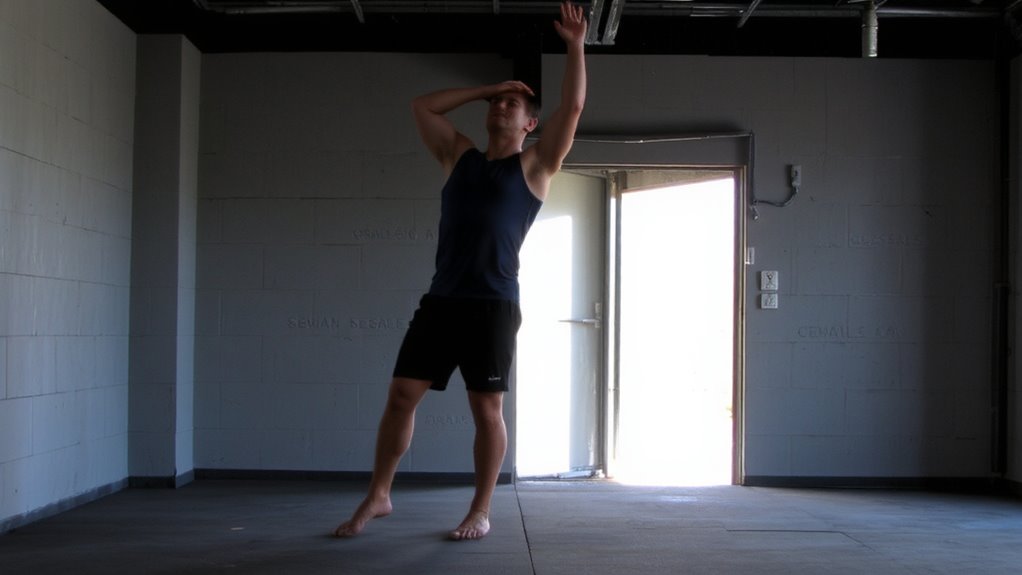
You’re already familiar with the basics of standing rotational reaches, but even small errors can undermine their effectiveness and lead to suboptimal mobility gains. Proper alignment and joint stability are essential-without them, you risk compensating with the lower back or shoulders.
| Mistake | Correction |
|---|---|
| Rounded spine | Maintain a tall thoracic spine |
| Leaning sideways | Engage core for joint stability |
| Overrotating arms | Focus on trunk rotation, not reach distance |
You’re likely overemphasizing range over control. Instead, prioritize proper alignment: keep ribs down, shoulders relaxed, and feet grounded. This guarantees the mobility work targets the thoracic spine, not the lumbar or cervical regions. Small adjustments yield better joint stability and long-term flexibility.
How to Level Up Your Standing Rotational Reaches

How do you turn a simple rotational reach into a truly transformative mobility drill? You focus on dynamic alignment and rotational breathing. As you reach, maintain a neutral spine-hips stable, shoulders stacked-so movement comes from your thoracic spine, not your lower back. This dynamic alignment enhances joint precision and reduces strain. Pair each reach with rotational breathing: inhale as you prepare, exhale deeply as you rotate, letting the breath drive the motion. This synchronicity activates deeper core stabilizers and improves neuromuscular control. Use controlled tempo, not momentum, ensuring quality over reps. A well-designed drill like this doesn’t just increase range-it trains your body to move efficiently under load. Over time, you’ll notice better posture, reduced stiffness, and improved performance in compound lifts. It’s not flashy, but with consistent form and mindful progression, this upgrade builds lasting thoracic resilience and functional mobility that translates to real-world strength and recovery.
Best Times to Do Rotational Reaches
After a warm-up or between strength sets works best for rotational reaches, since your nervous system’s primed and your muscles are already active. Doing them during morning routines jump-starts mobility, helping you feel looser throughout the day-especially if you sit a lot. They’re low-effort but effective, priming your thoracic spine without fatigue. You’ll notice better posture and reduced stiffness within a week. During a post workout cooldown, they help reset movement patterns and support recovery by encouraging blood flow. Unlike static stretches, rotational reaches keep things dynamic, which aligns well with modern recovery protocols. While not a replacement for dedicated mobility work, they complement gear like foam rollers or massage balls when used consistently. For ideal carryover, pair them with proper breathing and control. They won’t bulk you up, but they’ll improve movement quality, especially when integrated strategically.
How Standing Rotational Reaches Unlock Mid-Back Mobility
Why does standing upright and reaching across your body feel so liberating if you’ve been hunched over a desk all day? Because standing rotational reaches restore spinal alignment by gently untwisting stiff thoracic vertebrae. You’re not just stretching-you’re retraining your posture. This motion encourages balanced muscle activation across the mid-back, especially in the rhomboids, lats, and rotators that desk work dulls. As you rotate, your spine articulates segment by segment, improving joint mobility and reducing stiffness. Unlike passive stretches, this drill actively engages stabilizers, promoting control and proprioception. Proper form matters: keep hips stable, initiate movement from the mid-back, and avoid shrugging. You’ll feel a deep, satisfying release-not just in muscles, but in the way your spine moves. It’s simple, effective, and essential for anyone fighting sedentary strain. For enhanced results, pair this drill with targeted back stretching equipment designed to alleviate mid-back tension.
On a final note
You’ll find standing rotational reaches effective for boosting thoracic mobility when performed with control and proper alignment. They’re low-risk, require no gear, and integrate well into warm-ups or recovery routines. While not a substitute for loaded movement, they enhance spinal awareness and mid-back range of motion. Paired with thoughtful progression and form checks, these drills support long-term joint health and functional movement-making them a practical, accessible tool in any recovery-focused fitness plan.