Using a Foam Roller for Thoracic Extension Over the Mid-Back
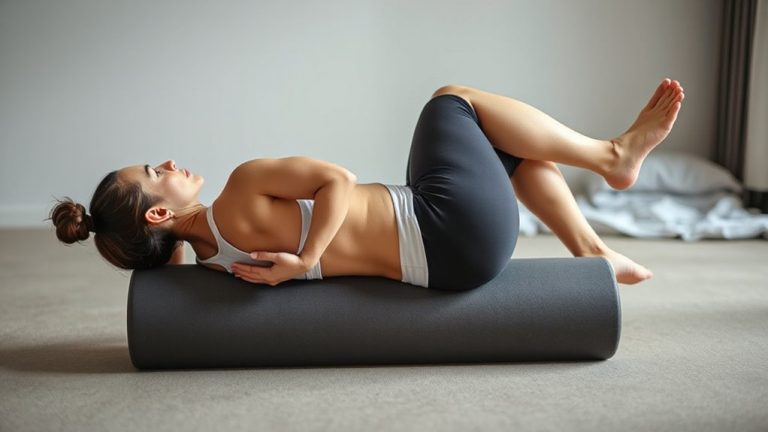
You should use a high-density foam roller (36–40 lbs per cubic foot) for thoracic extension to guarantee proper support and durability. Position it horizontally under your mid-back, just below the shoulder blades, and lie back with hands supporting your head. Keep your feet flat, core engaged, and avoid arching your lower back. Roll slowly upward, staying within the rib cage, to enhance spinal mobility and posture-consistency improves long-term alignment and eases strain. You’ll notice better movement and comfort over time, especially when combining rolling with targeted stretches.
Notable Insights
- Position the foam roller horizontally under the mid-back, just below the shoulder blades for targeted thoracic extension.
- Support your head with interlaced hands and keep elbows wide to maintain cervical alignment during the roll.
- Engage your core and keep feet flat to stabilize the spine and prevent lumbar compensation.
- Roll slowly upward toward the upper thoracic spine, avoiding the lower back and neck regions.
- Perform 8–10 controlled rolls with deep breathing to enhance segmental mobility and reduce mid-back rigidity.
Why Thoracic Mobility Relieves Back Pain
Why does back pain so often persist despite endless core exercises and stretching? Because the root cause might not be weak abs or tight hamstrings-it could be poor thoracic mobility restricting your spinal alignment. When your mid-back stays stiff, your body compensates, forcing your lower back and neck to handle more movement than they should. This imbalance increases strain and undermines muscle relaxation where you need it most. Improving thoracic mobility resets this dysfunction, allowing natural motion to return to the right segments. Foam rolling the thoracic spine encourages segmental movement, reduces rigidity, and supports better posture during daily activities and lifts. You’ll notice improved breathing, decreased tension, and less nagging discomfort. Fitness recovery isn’t just about endurance-it’s about restoring motion where it’s lost. Simple, consistent use of proper recovery gear like foam rollers can markedly enhance spinal health and overall performance. For best results, select a roller with the appropriate density and texture to match your needs, such as those found in the best foam rollers guide.
Best Foam Roller for Thoracic Extension
A high-density foam roller is your best ally when targeting thoracic extension, especially one that balances firmness with enough give to avoid bruising sensitive spine structures. You’ll want ideal foam density-typically 36–40 pounds per cubic foot-because it supports controlled spinal articulation without collapsing under body weight. Too soft, and you won’t get adequate mobilization; too hard, and you risk discomfort or irritation along the vertebrae. For roller length, a 36-inch model offers greater stability and full scapular support, though a 12- to 18-inch version works well if space or portability is a concern. High-density EPP or polyethylene foam maintains shape over time and resists compression, essential for consistent performance. Avoid low-density rollers-they degrade quickly and provide poor feedback. Choose durable materials with a non-slip surface to enhance safety during movement. Proper care extends lifespan and hygiene.
How to Perform Thoracic Extension on a Foam Roller
Proper form is non-negotiable when performing thoracic extension on a foam roller, and getting it right starts with positioning. Sit on the floor, place the roller horizontally under your mid-back, just below the shoulder blades, and gently lie back. Support your head with your hands, elbows wide, and keep your feet flat to stabilize. Engage your core and slowly roll upward a few inches, targeting the upper thoracic spine-avoid the lower back. Use a foam density that offers firm support without causing discomfort; high-density EVA or polyethylene rollers work best. Maintain a slow, controlled rolling tempo to maximize mobility and prevent strain. Each movement should be deliberate, allowing the spine to articulate over the roller. Perform 8–10 slow rolls, breathing deeply to encourage relaxation. This technique enhances spinal extension, particularly when recovery and posture are priorities.
Mistakes to Avoid Foam Rolling Your Upper Back
You’ve already set yourself up for success by positioning the foam roller correctly and moving with control through the thoracic spine, but even with good form, certain missteps can undermine your results or increase injury risk. One common error is allowing your lower back to arch, which creates improper alignment and shifts stress away from the thoracic region. This not only reduces effectiveness but also increases overextension risk in the lumbar spine. Avoid rolling above the mid-trapezius or below the bottom of the rib cage-targeting the neck or lower back leads to joint irritation and compensatory movement. Keep your core gently engaged and hands supporting your head to maintain neutral cervical posture. Using excessive pressure or speed diminishes tissue feedback and control, making corrective benefits minimal. Proper technique guarantees safe, targeted release, letting the foam roller function as intended for recovery and mobility. For deeper tissue penetration and enhanced myofascial release, consider using a vibrating foam roller.
Stretches That Boost Thoracic Mobility After Rolling
How much better would your posture feel if you followed up foam rolling with stretches that actually target thoracic mobility? After loosening tight segments, dynamic stretches enhance spinal articulation by promoting segmental movement across vertebrae. Try the seated thoracic rotation: sit tall, cross one arm behind your back, and rotate your upper spine toward the opposite elbow. This stretch improves thoracic rotation while reinforcing alignment. Another effective option is the quadruped thoracic twist-on hands and knees, slide one hand along the floor while rotating your mid-back upward. These moves aren’t just about flexibility; they restore functional range, counteracting slouched positions from daily life. When paired with rolling, they boost neuromuscular feedback, making your recovery routine more effective. The right stretches amplify your foam roller’s benefits, turning temporary release into lasting mobility gains-especially when done consistently and with control.
Pre-Workout or Recovery? When to Foam Roll Your Mid-Back?
When should you grab that foam roller for your mid-back-before lifting weights or after? Both timings offer distinct benefits, but pre-workout rolling gives you an edge in mobility and activation. Using the roller before exercise helps release tight muscles, improves spinal extension, and primes your thoracic spine for better movement patterns-key timing benefits for overhead presses or squats. Rolling frequency matters: aim for 2–3 times weekly, adjusting based on activity level and recovery needs. Post-workout rolling can aid relaxation and reduce residual tension, but it doesn’t enhance performance like pre-session use. For most, integrating foam rolling into warm-ups delivers superior functional outcomes. While recovery use has merit, especially after heavy upper-body days, the real performance boost comes from strategic, pre-activity rolling. Consistency in rolling frequency and proper timing benefits joint mechanics and workout efficiency over time.
Signs Your Thoracic Spine Is Getting More Mobile
Improved thoracic mobility isn’t always obvious at first, but certain physical cues make the progress hard to ignore. You’ll notice increased flexibility when reaching overhead or rotating during lifts-movements once restricted now feel smoother and fuller. Reduced stiffness becomes apparent in daily tasks, like turning to check a blind spot or bending backward without hesitation. You might even feel less tension between your shoulder blades after long periods of sitting. These changes suggest your mid-back is responding well to foam rolling. The right technique, consistent use, and proper gear-like a firm foam roller with a textured surface-support lasting gains. While results vary, most people see improvements within a few weeks. Don’t expect overnight transformation, but do expect measurable shifts in posture and comfort. Tracking these subtle yet meaningful signs helps gauge effectiveness and keeps your recovery routine on target.
On a final note
You’ve likely found that regular thoracic foam rolling improves spinal mobility and eases mid-back stiffness. A firm, medium-density roller works best-soft ones lack support, while overly dense models can bruise. When used correctly, it enhances posture and movement efficiency. Just remember: control matters more than pressure. Paired with targeted stretches, foam rolling becomes a smart recovery tool, not a quick fix. It’s practical, evidence-backed, and worth integrating-especially if you sit often.