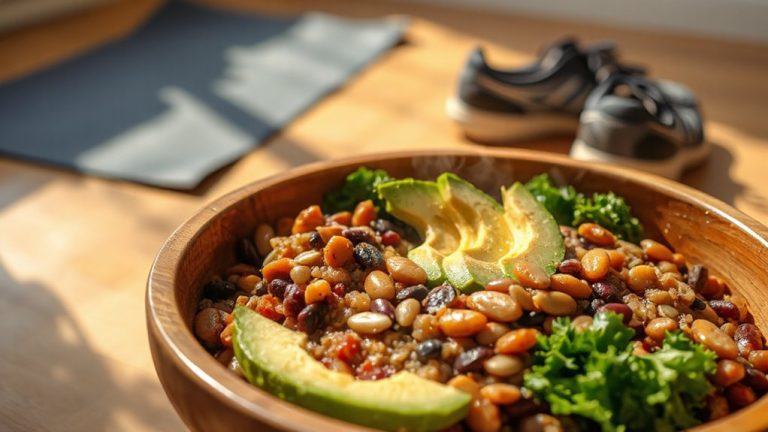
Understanding the Complex Relationship Between Macronutrients and Muscle Recovery After Intense Training Sessions
You need protein to repair muscle micro-tears and fuel synthesis, with leucine in fast-absorbing whey jumpstarting recovery post-workout. Carbs replenish glycogen fast, especially when paired with protein to boost insulin and nutrient uptake. Omega-3 fats reduce inflammation and support long-term recovery, while smart meal timing maximizes these effects. Aim for a 3:1 carb-to-protein ratio post-exercise and choose whole foods to enhance gut and hormonal health-there’s more to uncover about fine-tuning your recovery.
Notable Insights
- Protein provides essential amino acids that repair muscle micro-tears and stimulate synthesis, especially when rich in leucine and consumed post-workout.
- Carbohydrates replenish depleted glycogen stores most effectively within 30 to 60 minutes after intense exercise, enhancing recovery.
- Omega-3 fatty acids reduce exercise-induced inflammation and support long-term recovery through improved cell function and hormone regulation.
- Consuming protein and carbs together post-workout boosts insulin, accelerating nutrient uptake into muscle cells for faster repair.
- A post-exercise 3:1 ratio of carbs to protein optimizes recovery, while healthy fats support hormone balance in subsequent meals.
Rebuild Muscle Faster With Protein
Recovery isn’t just about rest-it’s about giving your body the right tools to repair and grow. You need protein because it supplies the essential amino acid building blocks that directly fuel muscle synthesis. After intense training, your muscle fibers undergo micro-tears, and without adequate amino acids, recovery slows dramatically. Leucine, in particular, triggers the metabolic pathway responsible for initiating repair. Whey protein is often preferred post-workout due to its fast absorption and high branched-chain amino acid content, making it effective at jumpstarting muscle synthesis. While whole foods matter, protein supplements offer convenience and precise dosing, especially when recovery time is tight. High-quality fitness gear-like supportive recovery apparel-can aid circulation, but it won’t replace proper nutrition. Combine smart supplementation with effective training, and you’ll optimize recovery not just in comfort, but in measurable performance gains over time.
Refuel Energy With Post-Workout Carbs
While protein grabs the spotlight, you can’t afford to overlook carbs when refueling after a tough session-your muscles run on glycogen, and intense exercise depletes it fast. Maximum glycogen replenishment hinges on consuming carbs soon after training, ideally within the 30- to 60-minute window when your muscles are most receptive. Pairing carbohydrates with protein enhances the insulin response, which drives nutrients into muscle cells more efficiently. Fast-digesting carbs like bananas, white rice, or sports drinks work well because they spike insulin moderately, accelerating recovery without excessive fat storage. Ignoring carbs may leave you feeling flat in subsequent workouts, undermining your training gains. Though fitness gear like compression wear or smart trackers can monitor output, they don’t replace proper refueling. Your recovery depends more on what you eat than what you wear, and strategic carb intake guarantees you’re ready for the next session with full energy stores and improved performance resilience across training cycles.
Control Inflammation Using Recovery Fats
A smart recovery plan doesn’t just rely on protein shakes or high-tech foam rollers-it also hinges on the fats you eat, especially those that actively temper exercise-induced inflammation. You need fats that work-like those delivering Omega 3 benefits, known to reduce inflammatory markers such as CRP and interleukin-6 after intense sessions. Fatty fish, flaxseeds, and walnuts provide EPA and DHA, which your body uses to resolve inflammation more efficiently. Don’t overlook fat soluble vitamins either-vitamins A, D, E, and K require dietary fat for absorption and play roles in immune function and tissue repair. The right fats enhance cell membrane fluidity, support hormone balance, and improve recovery outcomes. Unlike quick fixes, these nutrients function subtly but cumulatively, making consistency key. Skimping on recovery fats limits your adaptation, no matter how advanced your fitness gear. Prioritize whole food sources for lasting, systemic results.
Time Your Meals for Maximum Recovery
Since your body’s ability to rebuild muscle hinges on nutrient availability during critical windows, timing your meals can make or break your recovery-especially after taxing workouts. Strategic meal timing guarantees your muscles get amino acids and glucose when they’re most receptive, typically within 30 to 90 minutes post-exercise. This window is key for jumpstarting repair and replenishing glycogen. Leveraging nutrient synergy-pairing protein with carbohydrates-enhances insulin response, driving nutrients into muscle cells more efficiently. Skipping this opportunity slows recovery and limits gains. While fitness gear like compression wear may support circulation, it’s meal timing that delivers measurable physiological benefits. Consistency matters: a well-timed post-workout meal followed by balanced intake every few hours sustains protein synthesis. Unlike gadgets with debatable efficacy, thoughtful nutrient scheduling is backed by solid research. It’s not just what you eat-it’s when you eat it that shapes recovery success.
Optimal Macronutrient Ratios & Food Choices
You’ve nailed the timing-now let’s get your macros right. For ideal recovery, aim for a 3:1 ratio of carbs to protein post-workout-this fuels glycogen restoration and supports muscle repair. Include healthy fats in later meals, as they’re essential for hormone balance and sustained energy. Choose whole foods: sweet potatoes, oats, eggs, salmon, and Greek yogurt. These not only deliver quality macronutrients but also support gut health through fiber and probiotics, enhancing nutrient absorption. Avoid processed options-they can disrupt inflammation markers and slow recovery. Consider how your fitness gear impacts effort; moisture-wicking fabrics help regulate temperature, indirectly supporting metabolic efficiency. Remember, consistent food choices influence more than muscle-they shape internal systems. A balanced macro intake doesn’t just refuel; it fine-tunes hormone balance and strengthens gut health, both critical for long-term performance and recovery resilience.
On a final note
You’ve pushed hard, and now your body needs the right fuel. Protein rebuilds muscle fibers, carbs replenish glycogen, and healthy fats curb inflammation. Timing matters-eating within 45 minutes boosts recovery. A 3:1 carb-to-protein ratio works well for most. Whole foods outperform supplements, though convenient options help on busy days. Recovery isn’t just nutrition; quality gear like compression wear may aid circulation, but nothing replaces smart macronutrient choices.