Applying Ice Massage to Localized Tendinopathies for Precise Inflammation Control
You’re applying ice massage directly to inflamed tendons, not just cooling the surface. Gentle circular motions with a frozen cup for 5–7 minutes delivers vasoconstriction and mechanical stimulation, reducing pain and swelling in conditions like tennis elbow or Achilles tendinopathy. Doing it 2–3 times daily post-activity optimizes results without delaying healing. Move continuously-staying too long or pressing too hard risks nerve irritation. You’re targeting precisely, not numbing. There’s more to how this fits into a full recovery strategy.
Notable Insights
- Ice massage delivers targeted vasoconstriction to reduce inflammation in specific tendons without overcooling surrounding tissue.
- Apply ice in circular motions for 5–7 minutes daily to achieve optimal pain relief and anti-inflammatory effects.
- Use a frozen water cup or smooth tool to avoid nerve damage from excessive pressure or sharp edges.
- Focus precisely on tender points in conditions like tennis elbow, Achilles, or patellar tendinopathy for effective symptom control.
- Perform 2–3 sessions daily, especially after activity, to manage inflammation while supporting ongoing tissue repair.
How Ice Massage Relieves Tendon Pain
While ice massage might seem like a simple remedy, it’s actually a targeted recovery tool that can make a real difference when you’re dealing with tendon pain. When you apply cold therapy directly through ice massage, you’re not just numbing the area-you’re triggering vasoconstriction, which reduces blood flow and curbs localized inflammation. This precision approach means you avoid the blanket effect of standard ice packs, focusing only on the affected tendon. That targeted action enhances pain reduction markedly, especially in chronic tendinopathies where inflammation and nerve sensitivity coexist. Unlike passive cold therapy methods, ice massage combines thermal and mechanical stimulation, increasing its effectiveness. You’ll often notice relief within minutes, making it a practical addition to your recovery routine. Fitness recovery tools come and go, but ice massage remains a clinically supported, low-cost option with measurable impact-especially when pain reduction and tissue response are priorities.
How to Ice Massage Your Injury in 5 Minutes
You’ve seen how ice massage targets tendon pain by combining cold therapy with direct mechanical stimulation, and now it’s time to put that knowledge into practice. Grab a frozen water cup or a dedicated ice massage tool-simple gear works best. Peel back the top to expose ice, then apply gentle pressure in small circles directly over the tender area for five minutes. The cold therapy numbs nerve endings, reducing pain signals almost immediately. This brief exposure lowers tissue temperature enough to constrict blood vessels and limit inflammation, without risking skin damage. You’ll notice pain relief within the first two minutes, peaking near the end. Consistency matters: daily sessions yield better results than sporadic use. Unlike bulky gel packs, targeted ice massage delivers precise cooling and movement-based stimulation critical for tendon recovery. It’s efficient, effective, and requires minimal equipment-ideal for most recovery routines. For those also using percussive therapy, consider pairing this with the best massage guns for every need to enhance soft tissue recovery between sessions.
Ice Massage Techniques for Tennis Elbow, Achilles, and Knee Tendon Pain
Where should you focus when applying ice massage to stubborn tendinopathies? For tennis elbow, glide the ice in small circles over the outer forearm near the elbow’s bony bump-this spot often harbors trigger points that respond well to cold and pressure. You’ll want a focused trigger point focus to disrupt pain signals and support myofascial release in tight, inflamed bands. With Achilles tendinopathy, start just above the heel and move upward along the tendon, avoiding the bursa. The cold reduces irritation while the massage motion aids in breaking adhesions. For knee tendon pain-like patellar tendinopathy-target the area below the kneecap where the tendon attaches to the shin. Use slow, deliberate strokes to combine cryotherapy with mechanical stress, enhancing tissue response. This dual approach improves circulation post-treatment and supports long-term structural adaptation.
How Often Should You Ice? Timing That Speeds Recovery?
Applying ice massage correctly matters, but so does how often you do it-timing can make the difference between slowing progress and accelerating healing. For tendinopathies, the ideal frequency is typically 2–3 times daily, especially after activity that stresses the tendon. This rhythm helps manage inflammation without disrupting tissue repair. Each session should follow a proper duration of 5–7 minutes-long enough to reduce swelling and pain, short enough to avoid skin or tissue damage. Going longer won’t speed recovery and may hinder it. You’ll want consistency over intensity, focusing on regular, controlled applications. Think of it like precision tuning: you’re not just cooling tissue, you’re regulating the healing environment. When timed right, ice massage becomes a reliable tool in your recovery toolkit, supporting flexibility and reducing flare-ups. Stick to proven guidelines, and it’ll deliver measurable results.
Avoid These Ice Massage Mistakes That Cause Nerve Damage
Why do some people end up with numbness or tingling after an ice massage when the goal was pain relief? Because they’re unknowingly causing nerve compression or tissue overcooling. When you press too hard or leave ice in one spot too long, you restrict blood flow and compress superficial nerves-especially near elbows or knees. That numbness isn’t a sign it’s working; it’s a red flag. Tissue overcooling slows nerve conduction, leading to temporary damage that could’ve been avoided. You should never apply ice directly for more than 5–7 minutes per area, and always keep the cube moving. Don’t use frozen water bottles or gel packs with sharp edges-they increase compression risk. A proper ice massage uses controlled, circular motions, maintaining skin temperature just below therapeutic threshold without crossing into dangerous cooling. Your recovery depends on precision, not punishment.
Combine Ice Massage With Stretching and Load Management for Faster Healing
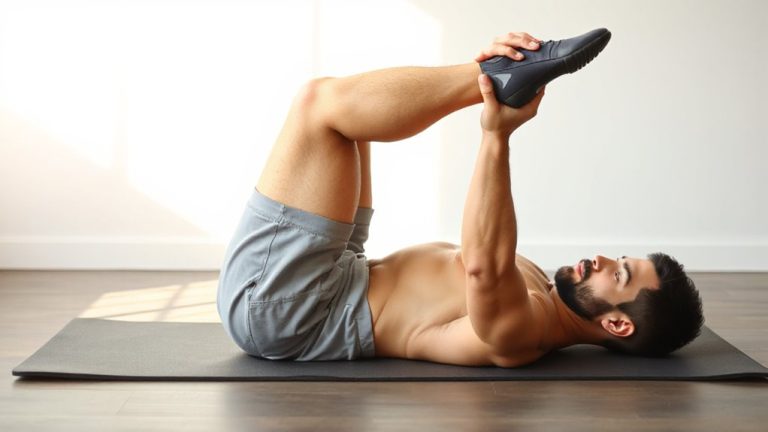
While ice massage can reduce inflammation and dull pain in tendinopathic tissues, you’ll get far better results if you pair it with stretching and smart load management-because healing isn’t just about cooling damaged fibers, it’s about reshaping how they handle stress. After ice massage, when tissues are more pliable, perform gentle myofascial release using tools like foam rollers or massage balls to improve mobility and reduce adhesions. Follow with controlled stretching to maintain tendon glide and joint range. Then, integrate eccentric strengthening-like slow heel drops for Achilles issues-to rebuild tendon resilience. This phased approach guarantees you’re not just managing symptoms but actively restoring function. Devices like vibration rollers or pressure-adjustable massage balls can enhance myofascial work, but consistency matters more than gear. You’ll see faster healing when you combine targeted cooling, load progression, and tissue remodeling-because tendons adapt best to balanced, graduated stress. For optimal results, choose a foam roller with the right density and texture to match your sensitivity and target area, such as a high-density roller for deeper tissue engagement.
On a final note
You’re using ice massage not just to dull pain, but to precisely control inflammation in tendons-key for lasting recovery. When done correctly, it boosts circulation after vasoconstriction, aiding tissue repair. Combined with stretching and load management, it becomes strategic, not just soothing. Avoid overuse, protect nerves, and time it post-activity. This method, though simple, outperforms generic icing in targeted rehab, making it a smart, equipment-light staple in any effective recovery routine.