How to Implement Isometric Holds in the Bottom of a Squat for Knee Stability
You build knee stability by holding the bottom of a squat for 20–30 seconds, keeping hips below knees, spine neutral, and feet firmly planted. Drive elbows inside thighs to maintain alignment, with knees tracking over toes. This strengthens quads, hamstrings, and glutes while enhancing neuromuscular control. Do 3–4 sets 2–3 times weekly after warmups or main lifts. Once you hold 45–60 seconds with ease, add light resistance. Proper form activates greater joint resilience-there’s more to discover about refining each phase.
Notable Insights
- Perform isometric holds at the bottom of a squat with hips below knees and a neutral spine to maximize knee stability.
- Drive elbows inside knees and keep feet firmly planted to maintain proper joint alignment during the hold.
- Hold for 20 to 30 seconds to optimally build connective tissue resilience and neuromuscular control.
- Progress to weighted variations only after mastering unweighted 45–60 second holds with perfect form.
- Integrate 3–4 sets, 2–3 times per week, post-warmup or after main lifts for best results.
Why Isometric Holds Boost Knee Stability
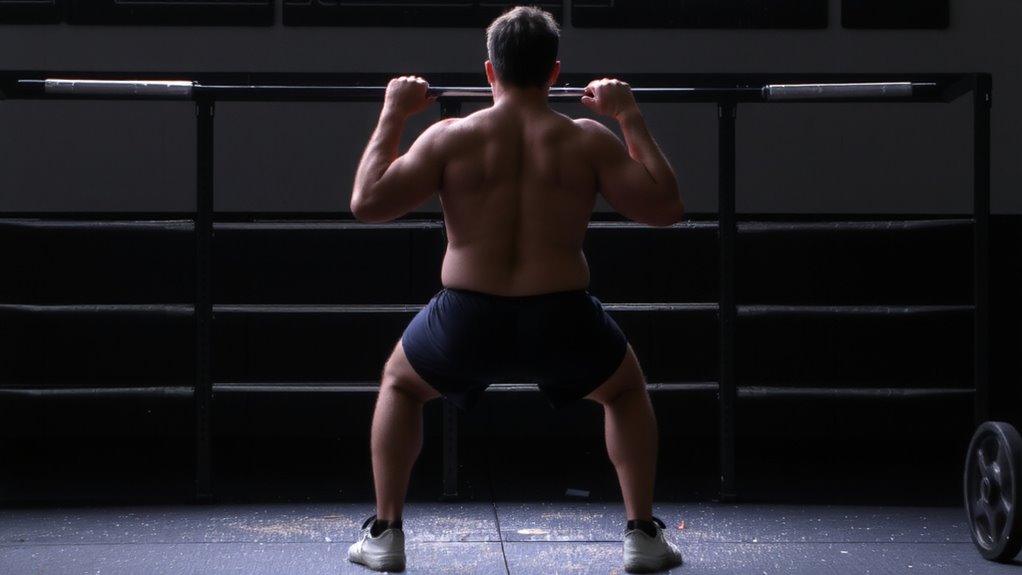
Strength, joint integrity, and neuromuscular control-these are the cornerstones of knee stability, especially under load. You build all three with isometric holds. These static contractions enhance muscle activation across the quadriceps, hamstrings, and glutes, forcing them to fire in sync without joint movement. That sustained tension improves endurance and coordination around the knee, which helps prevent unwanted shifts during dynamic movements. Importantly, maintaining proper joint alignment during the hold trains your body to recognize and enforce safe positioning under pressure. Unlike flimsy recovery tools, this method delivers functional strength gains rooted in real biomechanics. You’re not just holding-you’re teaching your nervous system to stabilize. Over time, consistent practice conditions your legs to handle heavier loads with less risk. Equipment might support recovery, but nothing replaces the neuromuscular education you gain here. The payoff? Resilient knees, sharper control, and confidence at the bottom of every squat.
How to Perform a Proper Bottom-of-Squat Hold
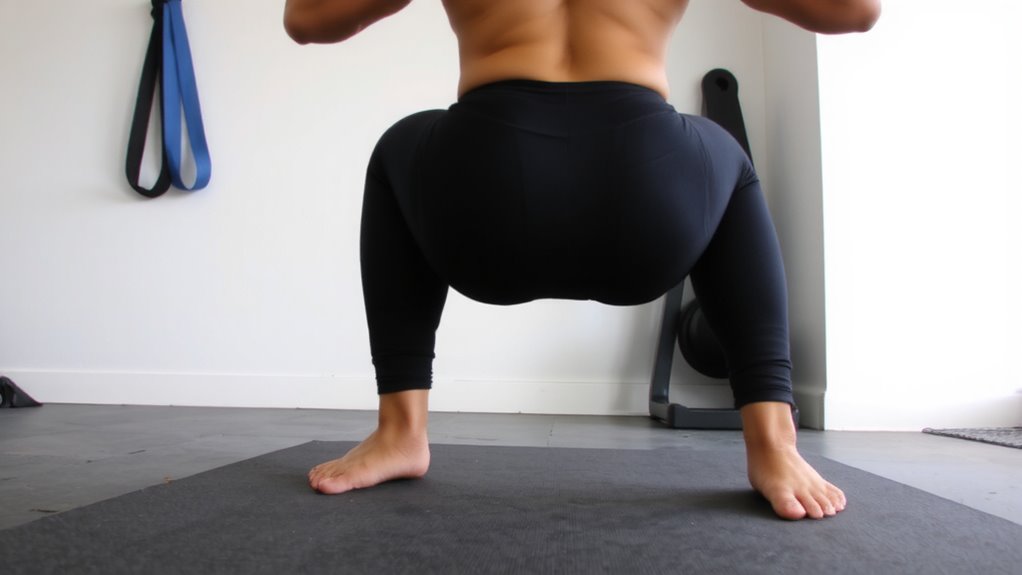
You’re already aware that isometric holds strengthen the neuromuscular pathways critical for knee stability, but putting that knowledge into action starts with proper execution at the lowest point of the squat. Begin by descending slowly until your hips are below your knees, maintaining a neutral spine. Drive your elbows inside your knees to create tension and support joint alignment-your knees should track over your toes without caving inward. Press your feet firmly into the ground to engage the quads, glutes, and adductors. Use controlled breathing techniques: inhale deeply before sinking down, then brace your core by holding your breath briefly during the hold. This intra-abdominal pressure supports your lower back and enhances stability. Keep your chest up and shoulders engaged to preserve form. Consistent focus on joint alignment and breathing techniques guarantees maximum benefit and minimizes strain. Proper footwear and a non-slip mat also help maintain positioning throughout the hold.
How Long to Hold for Optimal Joint Resilience
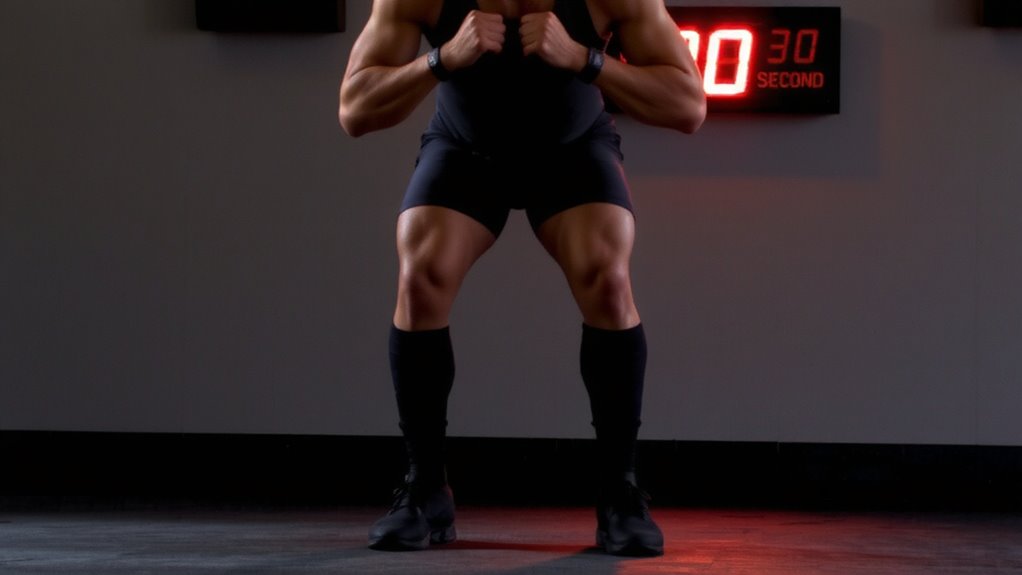
A 20- to 30-second hold at the bottom of the squat typically strikes the right balance between building joint resilience and avoiding excessive fatigue. This duration benefits both connective tissue and neuromuscular control, giving your ligaments and tendons enough time under tension to stimulate joint adaptation. Holding too briefly-under 15 seconds-may not offer sufficient stimulus, while exceeds of 40 seconds can introduce unnecessary strain without added gains. You’ll find that consistency matters more than pushing for longer holds; performing these drills 3–4 times weekly leads to measurable improvements in knee stability over time. The gradual exposure helps your joints adapt safely, especially if you’re returning from discomfort or inactivity. Use proper footwear with minimal heel lift to maintain natural alignment and enhance the hold’s effectiveness. Track progress by noting reductions in wobble and discomfort.
When to Add Resistance to Your Isometric Squat
When should you consider adding resistance to your isometric squat? Once you can comfortably hold the bottom position with proper form for 45–60 seconds, you’re ready for progressive overload. This principle drives adaptation, and without it, gains in strength and joint resilience plateau. Adding resistance-like a weighted vest, dumbbell, or barbell-increases demand on the quads, glutes, and stabilizing musculature, enhancing knee stability over time. Your equipment selection matters: choose tools that allow you to maintain alignment without compromising depth. A well-fitted weight vest offers even load distribution, while a kettlebell held in the goblet position can help counterbalance and encourage upright posture. Avoid rushing this progression; premature loading may reinforce faulty mechanics. Start light, assess control, and gradually increase based on performance. Good gear supports proper form, making it essential for sustainable strength development and effective fitness recovery. For adjustable resistance options, consider an adjustable kettlebell to efficiently scale load as you progress.
Best Variations for Building Strength and Control
Now that you’ve established a solid base with bodyweight holds and carefully introduced resistance, it’s time to explore variations that further challenge strength and control. Try the paused-depth barbell squat: descend slowly, hold at the bottom for 5–7 seconds, then drive up. This builds static tension effectively, reinforcing joint stability and motor control. The goblet squat variation also works well-holding a kettlebell or dumbbell close to your chest improves balance and increases time under tension. For greater neuromuscular demand, perform single-leg box holds: lower onto a bench, maintain a 90-degree knee angle, and focus on keeping your hips level. These variations enhance proprioception while minimizing shear forces. Consistent practice at paused depth strengthens connective tissues and improves overall knee resilience. Choose equipment with good grip and durability-kettlebells, resistance bands, or stable squat racks-to support progression safely.
Common Mistakes That Reduce Effectiveness
Though you might think simply holding the bottom position is enough, poor form during isometric squat holds can severely limit their benefits and increase joint stress. Poor alignment-like knees caving in or heels lifting-shifts load away from the targeted muscles and places excessive strain on ligaments, reducing knee stability over time. You’re not getting the full neuromuscular feedback if your body isn’t positioned correctly. Another common mistake is breath holding, which spikes intra-abdominal pressure and can lead to dizziness or compromised control. Instead, maintain steady, rhythmic breathing to support core engagement and endurance. Rounding the lower back or allowing the chest to drop also diminishes activation in the glutes and quads, weakening the exercise’s effectiveness. Focus on form precision, not just duration. These holds demand mindfulness-without it, you’re just wasting time and risking injury, not building resilience.
How to Program Isometric Holds Into Your Routine
You’ll often get the best results from isometric squat holds by integrating them strategically into your weekly routine, rather than treating them as an afterthought. Hold integration works best when scheduled post-warmup or after main lifts, letting you focus on form without fatigue. Aim for 3–4 sets of 20–30 second holds, 2–3 times per week-this hold frequency builds tissue resilience without overstressing joints. Pair them with compound movements like back squats for carryover. Use a box or bench to guarantee consistent depth. Over time, improved knee stability and motor control emerge, especially when paired with recovery tools like foam rollers or compression gear. Don’t overload volume; excessive hold frequency may hinder recovery, particularly if you’re already knee-dominant in training. Track progress by gradually increasing hold duration or intra-set tension. Thoughtful hold integration enhances joint integrity and movement efficiency-small time investment, meaningful return. A high-density foam roller can further aid in mitigating muscle tightness around the knees post-hold.
On a final note
You’ll build real knee stability by adding isometric holds at the squat’s bottom position, where control matters most. These pauses strengthen connective tissues, improve joint alignment, and boost neuromuscular coordination. When performed consistently with proper form, they enhance resilience better than dynamic reps alone. Pair them with supportive footwear and durable mats for ideal feedback and joint protection. Over time, this translates to stronger, more stable knees in both training and daily movement.