Pelvic Floor Awareness Drills With Transversus Abdominis Integration
You’re building pelvic floor awareness by syncing it with your transversus abdominis through breath and intentional activation. Inhale deeply, letting your diaphragm descend and pelvic floor relax; exhale gently, engaging your deep core and lifting the pelvic floor. This coordination supports spine stability and internal pressure management during movement. Proper timing matters more than strength-drills like supine Kegels and bridges reinforce this connection. Consistent practice sharpens neuromuscular control, turning isolated exercises into seamless, automatic support throughout daily life.
Notable Insights
- Engage the pelvic floor by lifting it upward while gently activating the transversus abdominis during exhalation.
- Coordinate diaphragmatic breathing with pelvic floor and core synergy to optimize intra-abdominal pressure management.
- Practice supine Kegels with transversus abdominis co-activation to reinforce neuromuscular timing and isolation.
- Perform bridges while integrating pelvic floor lifts and deep core engagement to enhance functional stability.
- Use seated pelvic lifts with breath-guided core activation to build awareness during daily sitting activities.
What Is the Pelvic Floor–Core Connection?
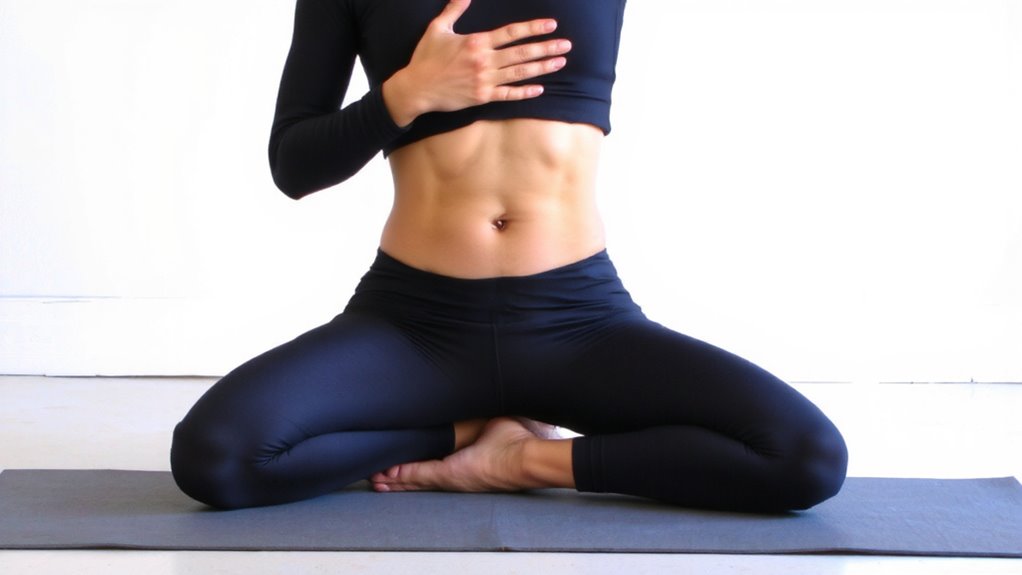
Function matters-especially when it comes to how your pelvic floor and core work together. You rely on this partnership daily, whether lifting, bending, or stabilizing during movement. Pelvic biomechanics aren’t just about anatomy-they reflect how forces travel through your body, affecting posture and injury risk. The transversus abdominis, your deepest abdominal layer, doesn’t act alone; it syncs with the pelvic floor to create core synergy. This coordination stabilizes your trunk, supports internal organs, and manages intra-abdominal pressure. Without it, you’re more prone to dysfunction, especially during fitness recovery. High-end recovery gear may claim to help, but true support starts within. Activating this connection correctly is key-equipment can’t replace proper neuromuscular timing. Think precision over padding. When designed well, fitness tools complement this synergy, but they shouldn’t compensate for poor mechanics. Your body’s internal support system is the real foundation.
How to Find and Engage Your Pelvic Floor
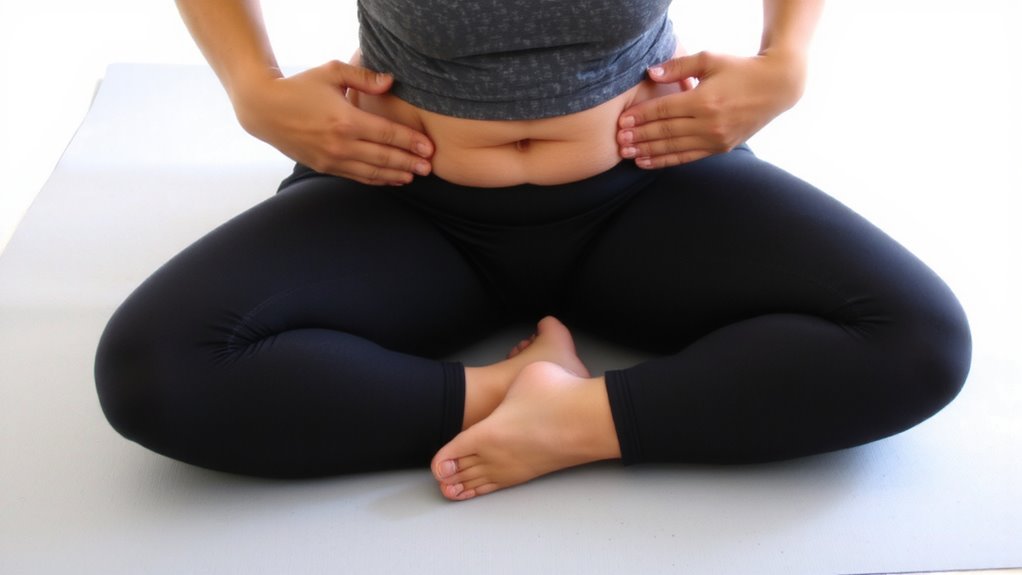
Where do you even begin when trying to engage something you can’t see or easily feel? Start by understanding your pelvic floor anatomy-it’s a hammock-like network of muscles stretching from your pubic bone to your tailbone. To engage it, visualize you’re stopping the flow of urine midstream; that’s the primary contraction you’re aiming for. Don’t actually do it while urinating, though-this is just a mental cue. Focus on lifting and tightening, not bearing down. Proper muscle coordination is key: you want a smooth, isolated squeeze without involving your glutes or thighs. At first, it might feel like guesswork, but consistent practice improves neuromuscular connection. These drills matter because without foundational awareness, advanced core integration is ineffective. You wouldn’t tune an engine without knowing how the parts move-same here. Build precision first.
Breathe and Engage: Sync With Transversus Abdominis

Think of your breath as the conductor of a finely tuned orchestra-each inhale and exhale guiding the pelvic floor and transversus abdominis into perfect alignment. You’re using diaphragmatic breathing not just to oxygenate, but to create intra-abdominal pressure that supports spinal stability. As you inhale deeply, your diaphragm descends, allowing the pelvic floor to relax downward; on the exhale, you gently engage the transversus abdominis, drawing the lower abdomen inward without holding your breath. This rhythm builds essential muscular coordination, linking deep core control with natural respiration. It’s not just about strength-it’s about timing and precision. When practiced consistently, this sync enhances postural control and functional movement. Tools like biofeedback belts or pressure mats can reinforce proper technique, though they’re not required. The real value lies in mindful repetition, turning isolated activation into integrated, automatic support during daily activity or fitness recovery.
Beginner Pelvic Floor Activation Exercises
You’ll want to start with simple pelvic floor activation exercises that build awareness and control without overloading your system. Focus on pelvic floor isolation to develop neuromuscular precision, avoiding compensation from glutes or abdominals. Begin with gentle kegels-subtle lifts, not clenches-to train endurance and coordination. Perform these in neutral spine positions, like lying on your back with knees bent. Consistency matters more than intensity.
| Exercise | Reps & Hold |
|---|---|
| Supine Gentle Kegel | 10 x 3–5 sec |
| Seated Pelvic Lift | 8 x 4 sec |
| Bridge with Activation | 6 x 5 sec |
| Quadruped Lift | 10 x 3 sec |
| Standing Floor Isolation | 10 x 3 sec |
These drills emphasize motor control, laying foundational strength critical for functional stability. Proper form guarantees maximum carryover to daily movement, reducing risk of strain.
Progress Into Functional Core Movements
Once you’ve built foundational awareness through isolated pelvic floor engagement, you’re ready to integrate those gains into dynamic, full-body movements that challenge your core like real-life activities do. This stage emphasizes functional integration, linking pelvic floor and transversus abdominis activation with locomotor patterns such as squats, lunges, or loaded carries. Movement progression should be gradual-start with bodyweight exercises and steadily introduce resistance to maintain control without compensation. Proper sequencing guarantees neuromuscular efficiency, reducing injury risk during higher-demand tasks. Training surfaces and recovery tools, like firm mats or foam rollers, support alignment and post-session recovery. Well-designed fitness gear enhances proprioception, aiding consistent form. Avoid rushing the process; sustainable core resilience emerges from mindful repetition, not intensity alone. Functional strength isn’t just about power-it’s stability under changing loads. Track your form, adjust as needed, and prioritize control to build a resilient, responsive core system. For added joint support during loaded squats, consider using best knee straps for squats to maintain proper alignment and reduce strain.
Avoid These Common Core Activation Mistakes
Even with solid progress in functional core integration, many still undermine their gains by repeating preventable activation errors. You might be clenching too hard, mistaking effort for effectiveness-especially with the pelvic floor. Pelvic floor overactivation is common, leading to tension, discomfort, and impaired coordination instead of support. It’s not about squeezing as hard as you can; it’s about subtle, rhythmic engagement that syncs with your breathing and movement. Another frequent issue is poor transversus timing. You’ll often see people holding their breath or bracing their abs too late-or too early-disrupting intra-abdominal pressure regulation. Proper timing guarantees the transversus abdominis engages just before limb movement, stabilizing the spine efficiently. Without this precision, even well-intentioned drills lose their benefit. Avoid these mistakes by focusing on quality over force, and coordination over intensity, allowing your core to function as the integrated system it’s meant to be.
Make Core Engagement a Daily Habit
A single mindful moment each day can anchor lifelong core resilience, especially when integrated with intention during routine activities. You don’t need long sessions-just consistent daily cues to activate your transversus abdominis and pelvic floor. Linking core engagement to everyday actions builds neuromuscular memory. Focus on mindful posture while standing, brushing your teeth, or waiting for your coffee. Over time, this awareness improves stability and reduces low back strain. Below are practical anchor points:
| Activity | Daily Cue |
|---|---|
| Standing | Engage core, align ears over hips |
| Sitting | Maintain mindful posture, avoid slouching |
| Lifting objects | Brace deep core before moving |
| Walking | Gently draw navel toward spine |
| Breathing | Coordinate exhale with activation |
These habits enhance functional fitness and support long-term spinal health.
On a final note
You’ve learned how pelvic floor awareness and transversus abdominis engagement work together to stabilize your core. When properly activated, these muscles improve posture, reduce injury risk, and enhance movement efficiency. Consistent practice guarantees functional strength carries over into daily activities. Though results aren’t immediate, disciplined use of these drills builds long-term resilience. Investing in quality recovery gear, like targeted massage tools or supportive activewear, can aid consistency and comfort, making integration into your routine more sustainable and effective over time.