Seated Spinal Twists With Head Support for Older Adults Managing Osteopenia
You can safely perform seated spinal twists with head support by using a sturdy, armless chair and maintaining a tall spine to protect your vertebrae. Gently twist using the chair back for support, initiating motion from your mid-back while keeping your neck aligned. Avoid forcing the movement or using slippery cushions that compromise stability. This controlled twist boosts spinal mobility and supports bone density when done consistently and mindfully - there’s more to discover about integrating it effectively into your daily movement routine.
Notable Insights
- Use a sturdy, armless chair at knee-height to ensure stability and proper spinal alignment during seated twists.
- Sit tall with ears over shoulders and use light head support to maintain cervical spine integrity.
- Initiate gentle twists from the mid-back, not the neck or hips, to protect vertebral joints.
- Inhale to lengthen the spine and exhale to deepen the twist slightly, avoiding forceful movements.
- Stop immediately if pain or dizziness occurs, as these are red flags for potential injury or blood pressure changes.
Set Up Your Chair and Head Support
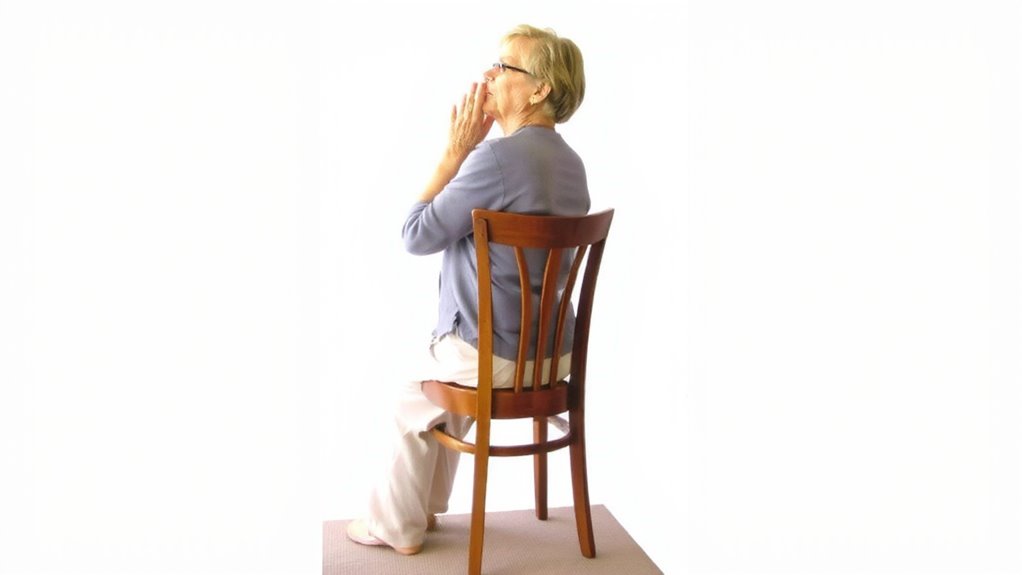
Begin by choosing a sturdy, arm gyless chair that’s about knee-height when you’re seated, since stability and proper alignment are key for safety and effectiveness during seated spinal twists. Chair stability isn’t just about preventing slips-it’s foundational for maintaining pelvic support while twisting. You’ll want a non-slip surface underneath, especially if the floor is hardwood or tile. Position the chair so you won’t bump into nearby furniture. For head alignment, sit tall with your ears stacked over your shoulders-no jutting forward or tilting down. This preserves cervical spine integrity, which is critical if you’re managing osteopenia. A well-aligned head reduces strain on the upper back and neck. While specialized fitness gear exists, like posture-correcting cushions, a simple, firm chair often performs better because it encourages natural spinal positioning without over-reliance on external aids. Check regularly for wear, like wobbly legs or frayed edges, to guarantee ongoing safety and effectiveness.
Do This Seated Spinal Twist With Support
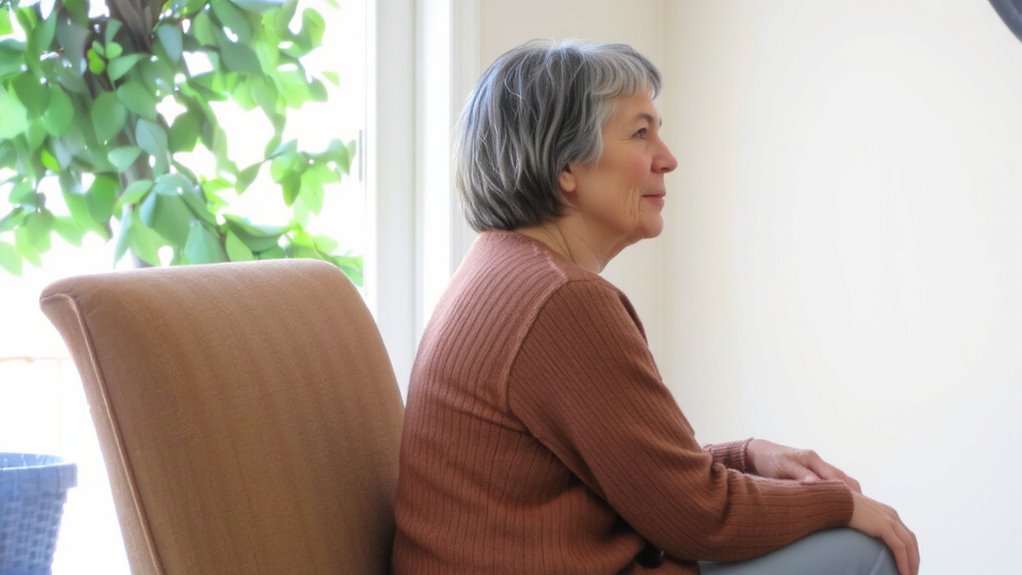
A properly supported seated spinal twist can greatly enhance spinal mobility and joint lubrication while minimizing risk, especially when you use a stable chair and engage core muscles to guide the movement. Begin by sitting tall-your posture alignment is critical to protect your spine and maximize benefit. Place both feet flat, inhale deeply, then gently twist your torso to one side while using your chair back for light support. Maintain breath focus throughout: inhale to lengthen, exhale to deepen the twist slightly. Keep your movements controlled and avoid forcing rotation. This supported variation reduces strain while still promoting flexibility. You’ll find that consistent practice improves balance and spinal health over time. Quality supportive gear, like a sturdy chair with back support, enhances safety and effectiveness. It’s not about intensity-it’s about consistent, mindful motion that supports long-term fitness recovery and joint function.
Avoid These Common Mistakes With Osteopenia
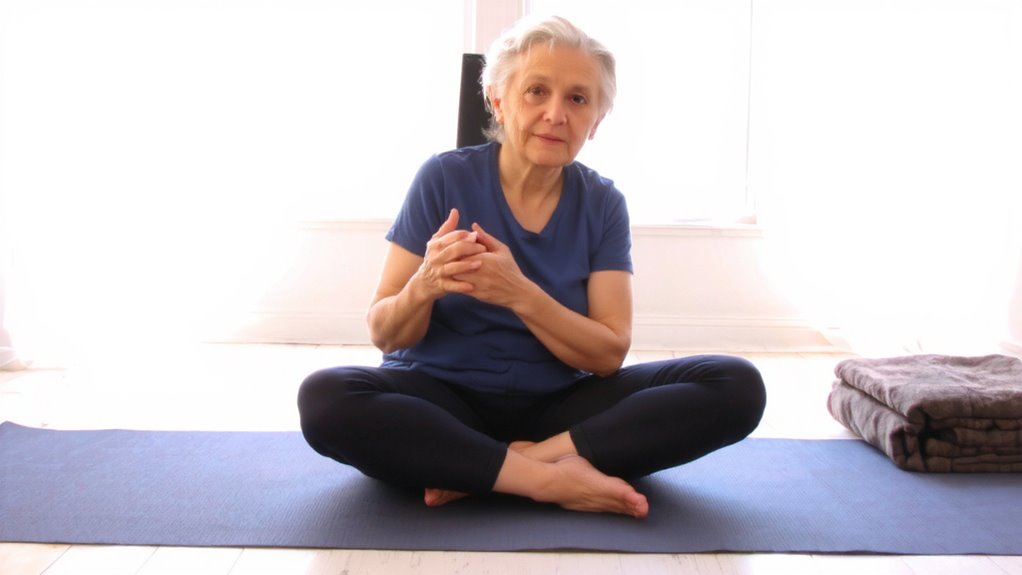
While improving spinal mobility is essential for older adults, especially those managing osteopenia, avoiding common missteps during seated twists can make the difference between safe progress and unintended strain. You might think turning deeper increases benefits, but forcing the twist often leads to poor posture and muscle strain. Keep your spine tall-don’t hunch or lean, as this compresses vertebrae and reduces control. Use a chair with firm support and avoid slippery cushions that destabilize your base. Your movement should come from the mid-back, not the neck or hips. Over-rotating or jerking into the twist compromises form and raises injury risk. Keep motions slow, controlled, and symmetrical. Head support helps maintain alignment, especially if neck tension tempts you to compensate. Consistent, mindful practice with proper gear-like non-slip mats and supportive seating-ensures safer, more effective sessions.
Stop If: Red Flags to Watch For
How do you know when a helpful stretch turns harmful? Pay close attention to your body’s signals during seated spinal twists. If you notice pain escalation beyond mild discomfort, stop immediately-sharp or worsening pain suggests strain or potential injury. Dizziness onset is another critical warning; it may indicate blood pressure shifts or overexertion, especially in older adults managing osteopenia. These red flags aren’t just discomforts-they’re protective responses. Continuing despite these symptoms increases fall risk and can compromise spinal integrity. Fitness recovery isn’t just about movement; it’s about intelligent restraint. High-quality support gear like stable head rests or non-slip cushions can help maintain form, but even the best equipment won’t override bodily limits. Recognize that effectiveness doesn’t require intensity. Responsiveness to pain escalation or dizziness onset guarantees safety and supports long-term mobility.
How This Twist Supports Bone Health
You’ve just learned when to stop the seated spinal twist-now let’s explore why it’s worth doing in the first place. This gentle rotation boosts spinal mobility by lubricating joints and maintaining flexibility in the vertebrae, which is essential as you age. When performed consistently, it contributes to improved posture and reduced stiffness, supporting everyday movement. Though it’s low-impact, the twist offers more than comfort-it plays a role in building bone density. Weight-bearing isn’t the only path to stronger bones; controlled rotational forces also stimulate bone remodeling, especially in the spine. You’re not just stretching-you’re reinforcing skeletal resilience. Used with head support, the exercise minimizes neck strain while maximizing benefit, making it ideal for managing osteopenia. Over time, this support helps sustain proper alignment and enhances exercise tolerance. It’s not about intensity; it’s about consistent, mindful movement that supports long-term bone health.
Add Seated Twists to Your Daily Routine
Often, integrating seated spinal twists into your daily routine takes just a few minutes but delivers measurable returns in mobility and skeletal support. Daily consistency amplifies benefits, gently stimulating spinal discs and enhancing joint mobility over time. You don’t need specialized fitness recovery gear-just a sturdy chair and optional lumbar support. Perform each twist slowly, using breath to deepen the movement without strain. This controlled motion maintains cartilage health and supports posture, especially if you sit for long periods. Over weeks, you’ll notice smoother rotation and reduced stiffness. While not a substitute for weight-bearing exercise, it complements overall bone-preserving strategies. Pair this habit with balanced nutrition and routine checkups to maximize skeletal resilience. The simplicity and low risk make seated twists sustainable. With regular practice, they become a functional ritual-small in effort, significant in long-term musculoskeletal payoff.
On a final note
You’ve likely found seated spinal twists with head support both safe and effective, especially with osteopenia. This modest movement boosts spinal mobility without straining fragile bones. When paired with stable gear-like a non-slip chair and firm cushion-it performs well over time. Recovery feels quicker, posture improves. Still, consistency matters more than intensity. Used wisely, this twist isn’t just gentle-it’s a smart, bone-conscious choice for daily fitness recovery.