Wuji Stance Alignment Checks for Foundational Postural Reset in Runners
You’re likely running with postural flaws that amplify joint stress and waste energy. The Wuji stance offers a foundational reset by aligning your spine, pelvis, and limbs into ideal balance. Stand barefoot, feet hip-width, knees soft, spine neutral, shoulders released. This 60-second check corrects hidden alignment issues better than posture braces. With daily practice, you’ll build intrinsic control, enhance recovery, and run with greater efficiency-discover how to make it stick and transform your form over time.
Notable Insights
- Perform a 60-second Wuji alignment check daily to reset posture and correct structural imbalances.
- Stand barefoot with hips-width feet, soft knees, and neutral spine for optimal alignment.
- Align head over shoulders and ears to maintain proper cervical spine positioning.
- Release shoulder tension by rolling them back and down to improve breathing and arm swing.
- Engage in mindful Wuji practice to enhance body awareness and sustain running form under fatigue.
Why Running Posture Prevents Injuries

Poor running posture isn’t just a form flaw-it’s a fast track to overuse injuries. You’re putting excess stress on joints and tendons with every stride if your alignment’s off. Proper posture boosts biomechanical efficiency, meaning your body uses less energy to move while reducing wear on muscles and connective tissues. When you maintain a neutral spine and balanced stance, forces distribute evenly, decreasing injury risk. More than just physical adjustment, this requires neural reprogramming-your brain learning new movement patterns to replace inefficient habits. Consistent posture cues train your nervous system to default to ideal alignment, even under fatigue. That’s especially important in long runs or recovery phases, where form often degrades. While fitness gear like posture braces may offer short-term feedback, they shouldn’t replace intrinsic control. Sustainable injury prevention comes from internal awareness, not external supports. True resilience is built through mindful running, where form and function align for lasting performance.
How Wuji Makes You a Smoother, Stronger Runner
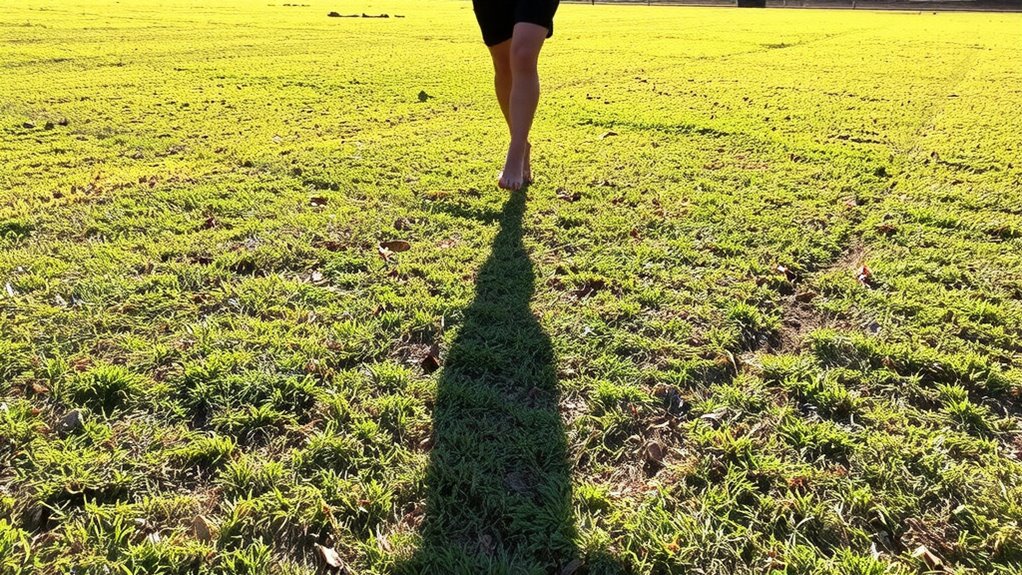
While most runners focus on mileage and pace, integrating the Wuji stance into your routine can markedly upgrade your movement quality and structural resilience. This foundational posture cultivates breath control and mental focus, helping you move with greater ease and power. By aligning your spine, grounding your stance, and relaxing unnecessary tension, you train your body to operate more efficiently-reducing wasted energy and improving stride fluidity.
| Benefit | How Wuji Delivers |
|---|---|
| Smoother stride | Enhances neuromuscular coordination through static alignment |
| Greater strength | Builds deep stabilizing muscles often underused in running |
| Improved recovery | Promotes parasympathetic state via breath control and mental focus |
You’re not just standing-you’re recalibrating. Over time, this practice increases body awareness, making each run feel more controlled and less strained. Your posture becomes adaptive, not rigid, allowing you to sustain form even when fatigued. With consistent Wuji practice, you’ll notice a stronger, more resilient running body.
3 Posture Mistakes That Hurt Your Stride
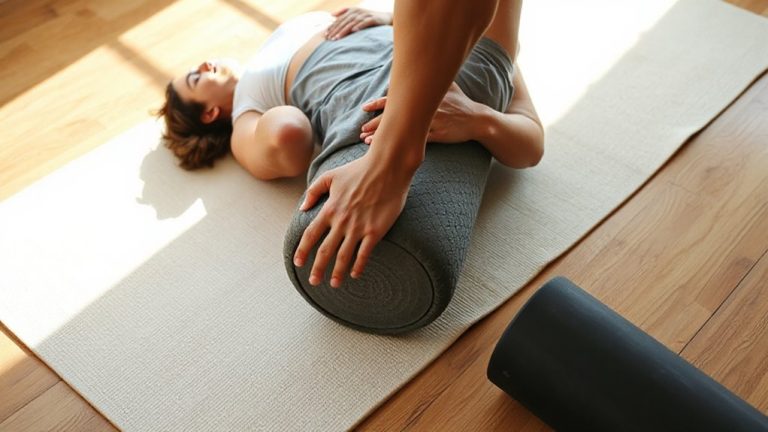
A common yet often overlooked issue among runners is the tendency to lean forward from the waist, not the ankles-a subtle distinction that considerably impacts stride efficiency. When you hunch at the waist, you encourage excessive pelvic tilt, which misaligns your center of gravity and increases joint stress. This faulty posture often travels upward, promoting shoulder tension that restricts arm swing and breathing. You’re not just wasting energy-you’re inviting overuse injuries. Many runners compensate with expensive gear, but no compression sleeve or smartwatch corrects poor alignment. Shoulder tension compounds fatigue, making recovery longer and less effective. Likewise, an anterior pelvic tilt alters hip mechanics, reducing glute activation and forcing quads to overwork. These posture flaws disrupt rhythm and diminish stride length over distance. Without addressing them, even the most advanced fitness recovery tools offer only temporary relief. Real improvement starts with body awareness, not gadgets. Incorporating dedicated back stretching equipment can support postural reset by releasing tension in overstressed spinal muscles.
How to Check Your Wuji Alignment in 60 Seconds
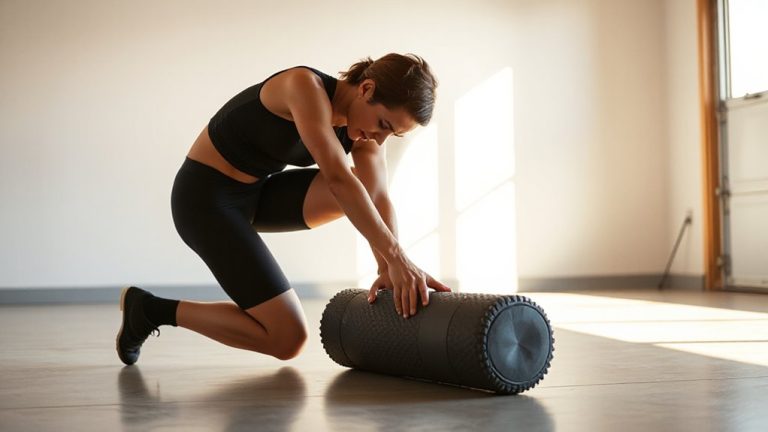
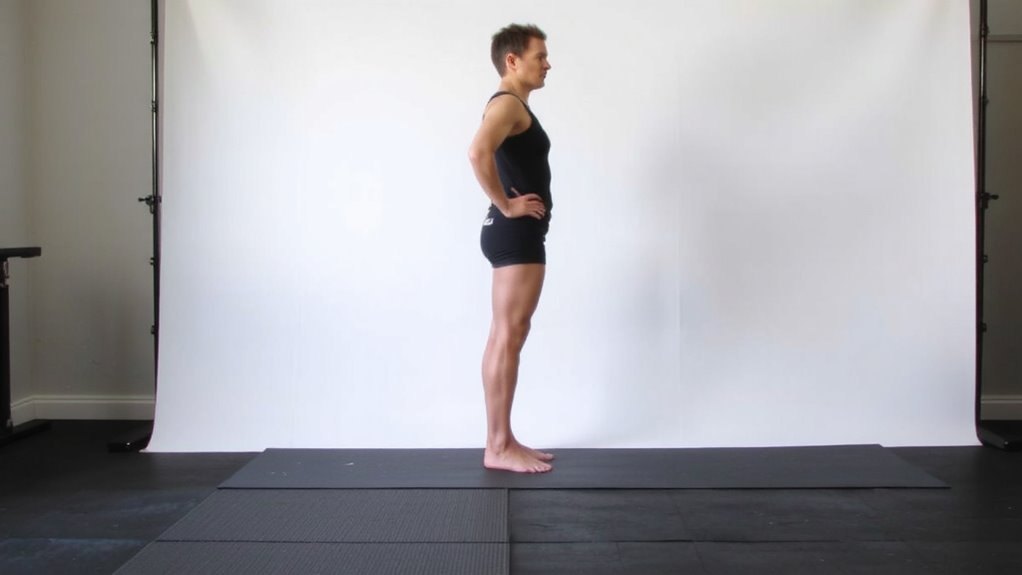
You can start fixing your running posture in less than a minute with a simple Wuji stance check-no gear required. Stand barefoot with feet hip-width apart, knees slightly bent, spine neutral. First, assess your pelvic tilt: a posterior tilt flattens your lower back and restricts motion, while an anterior tilt creates excessive arch-aim for balanced. Let your arms hang naturally; if you notice shoulder tension, gently roll them back and down to open the chest. Your head should sit directly over your spine, ears aligned with shoulders. Breathe deeply. This brief evaluation reveals postural flaws that undermine stride efficiency. Unlike recovery tools that promise quick fixes, Wuji alignment offers immediate, tangible feedback. It’s a foundational skill, not a passive solution. Performing it daily sharpens body awareness far more effectively than most fitness gear. Accuracy matters-you’re diagnosing your structure, not performing a ritual. In 60 seconds, you gain clarity no foam roller or massage gun can replicate.
Make Wuji Your Daily Running Reset
Because every run erodes posture just a little-tightening hips, rounding shoulders, shortening breath-coming back to Wuji daily isn’t just corrective, it’s preventive. Making Wuji your daily practice helps counteract the repetitive strain of running, restoring structural balance and joint alignment. You don’t need special gear-just five minutes and consistent mental focus. Stand centered, feet parallel, knees soft, spine stacked. Feel the ground, relax the jaw, settle the pelvis. Over time, this routine enhances body awareness, improves recovery, and reduces injury risk. Unlike foam rolling or stretching alone, Wuji integrates neuromuscular reset with breath regulation, offering a holistic recovery tool. Top runners use it not because it’s flashy, but because it works. It requires no app or device, just discipline. For lasting results, pair your daily practice with mindful observation-note changes in posture, tension, and breath. In fitness recovery, simplicity often outperforms complexity.
On a final note
You’re more stable and efficient when your posture resets align with functional movement patterns. Wuji stance checks enhance balance, reduce asymmetry, and support injury-resistant running mechanics. Used daily, this brief alignment practice improves body awareness and neuromuscular control. Paired with quality recovery gear-like graduated compression wear or targeted foam rollers-Wuji integration optimizes structural adaptation. It’s not just form work; it’s foundational maintenance that keeps high-mileage bodies resilient, responsive, and aligned with long-term performance goals.