Optimal Hydration Cutoff Times to Prevent Disrupted Sleep in Strength Athletes
You should stop drinking water 90 minutes before bed to minimize nighttime bathroom trips and support uninterrupted recovery. This cutoff lets your body process fluids, balance electrolytes, and reduce bladder pressure without disrupting sleep cycles. Strength athletes especially benefit, as proper hydration timing enhances muscle repair and reduces cramp risk. Adjust based on workout intensity, sweat loss, and body size-larger or heavier sweaters may need an earlier cutoff. Fine-tuning this window improves both sleep quality and next-day performance. Optimizing electrolyte intake earlier in the evening can make a noticeable difference in how often you wake-and how well you recover.
Notable Insights
- Stop drinking fluids 90 minutes before bed to minimize nighttime urination and support uninterrupted sleep.
- Adjust hydration cutoff time based on workout intensity, body size, and individual bladder sensitivity.
- Heavy sweaters or those with intense training may need to stop fluids up to two hours before bed.
- Monitor urine color by 7 PM to ensure proper hydration without late evening fluid overload.
- Use low-sugar electrolyte mixes and include magnesium to maintain balance and support muscle recovery.
Why Strength Athletes Can’t Ignore Bedtime Hydration
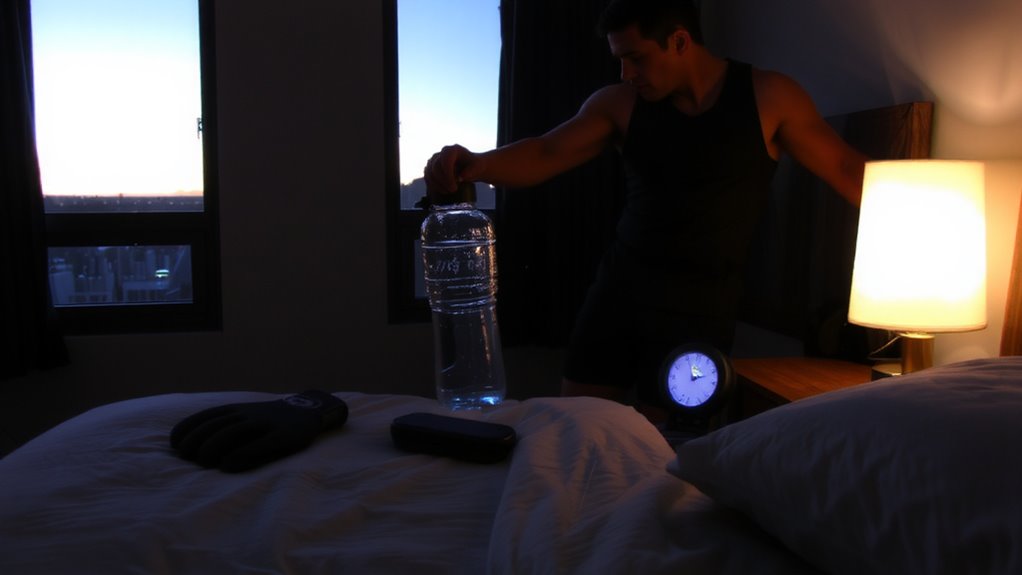
Ever wonder why your recovery stalls despite nailing your training and nutrition? Poor bedtime hydration habits might be sabotaging your sleep quality. Strength athletes push their bodies hard, and recovery hinges on more than just protein and rest-hydration plays a critical role. Dehydration increases the risk of nocturnal muscle cramps, disrupting sleep and impairing muscle repair. Even mild fluid imbalances can trigger involuntary contractions, especially in fatigued muscle groups. While proper hydration supports electrolyte balance and recovery, timing matters. Drinking too close to bedtime can cause discomfort or awakenings, but drastic fluid restriction backfires. Skimping on water may reduce cramping risk but compromises joint lubrication and cellular function overnight. Monitoring hydration status-through urine color and thirst cues-helps strike a balance. Don’t overlook this subtle lever; optimizing bedtime hydration enhances sleep quality, reduces cramps, and maximizes recovery-simple, yet often ignored.
When to Stop Drinking Water Before Bed: The 90-Minute Rule
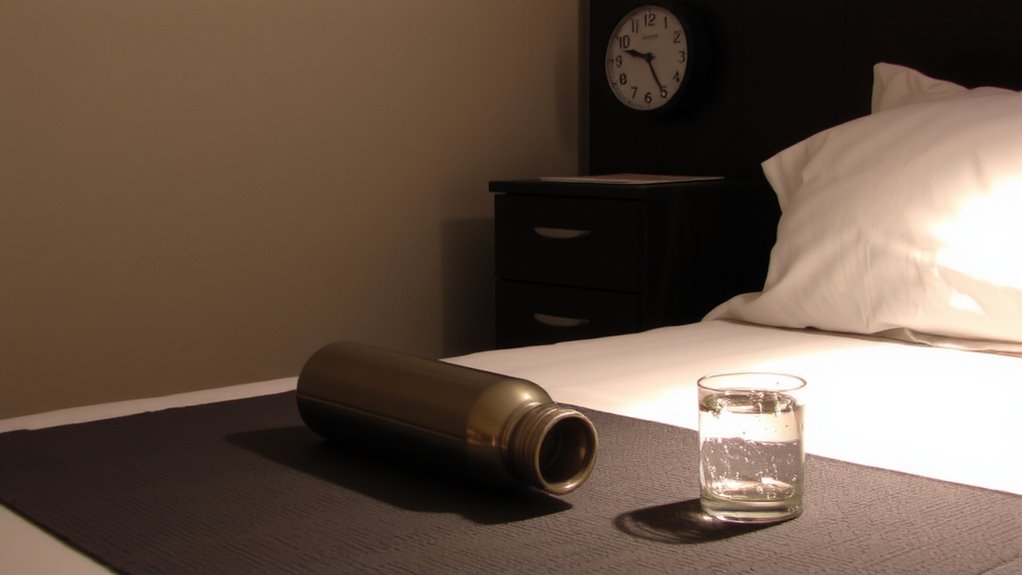
Stopping fluid intake 90 minutes before bed strikes a practical balance between hydration and sleep continuity for most athletes. This window allows your body to process liquids while reducing the risk of nocturnal awakenings due to bladder sensitivity. For strength athletes, minimizing sleep fragmentation is critical-each disruption hampers fitness recovery and hormonal regulation. The 90-minute rule helps maintain this balance without overly restricting hydration.
| Time Before Bed | Fluid Status | Likely Sleep Impact |
|---|---|---|
| 120 minutes | Full processing time | Low bladder sensitivity |
| 90 minutes | Ideal cutoff | Minimal sleep fragmentation |
| 60 minutes | Partial retention | Moderate bladder pressure |
| 30 minutes | High retention risk | High sleep disruption risk |
Adjusting based on personal bladder sensitivity guarantees better rest and recovery efficiency.
How Your Weight, Workout, and Sleep Affect Hydration Timing
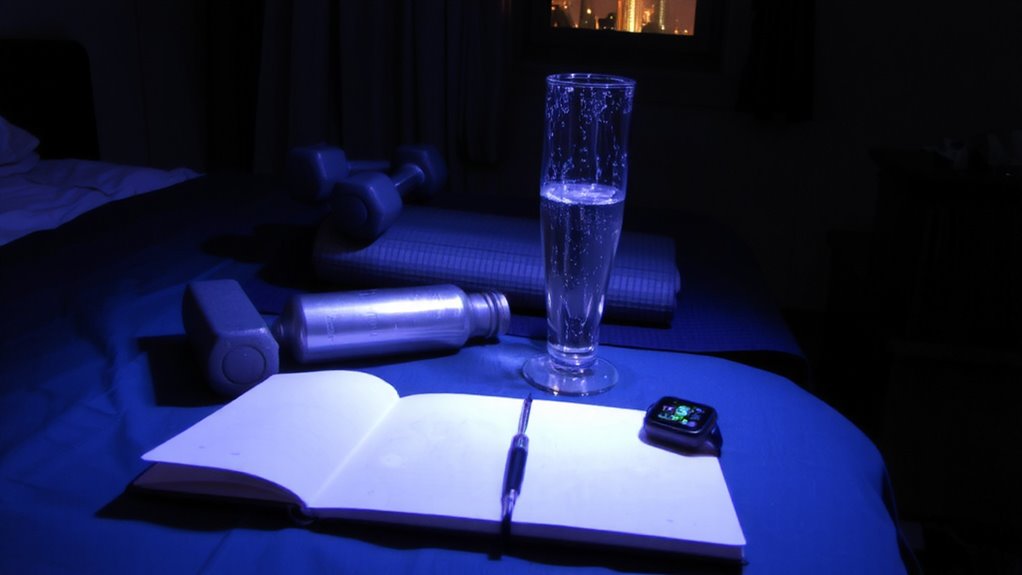
Your hydration needs don’t follow a one-size-fits-all timeline, and while the 90-minute rule helps limit nighttime disruptions, it’s only part of the recovery picture. Your weight directly impacts fluid distribution-larger bodies retain more water, altering water retention patterns and increasing overnight bladder pressure if you hydrate too late. Intense workouts elevate fluid and electrolyte loss, especially in hot environments or prolonged training, meaning your electrolyte balance must be restored to avoid cramps and disrupted sleep cycles. If you’re heavier or sweat heavily, you’ll need earlier cutoff times-perhaps two hours pre-bed-to allow sufficient processing. Poor electrolyte balance can also trigger nocturnal awakenings, even if you stop drinking early. Sleep quality further influences hydration regulation; poor sleep impairs hormonal control of fluid retention. Adjusting your hydration timing isn’t just about volume-it’s a dynamic response to body size, workout demands, and sleep-driven recovery needs.
Hydration Hacks for Better Sleep and Faster Recovery
Why do some athletes recover faster while sleeping soundly through the night? It often comes down to smart hydration habits that support both electrolyte balance and uninterrupted rest. Cutting off fluids too late can lead to 適性排尿, which fragments sleep and hampers recovery. Instead, optimize intake earlier in the evening with a focus on balanced electrolytes to maintain hydration without overloading your bladder. Consider using hydration gear with timed reminders to help regulate intake.
| Hack | Benefit |
|---|---|
| Add magnesium before bed | Supports muscle recovery and stable electrolyte balance |
| Use low-sugar electrolyte mixes | Prevents spikes in nocturnal bathroom trips |
| Monitor urine color by 7 PM | Guarantees proper tapering and reduces 適性排尿 risk |
These small adjustments enhance sleep quality and accelerate physical repair.
Time Your Fluids Around Training and Competition
Managing fluid intake isn’t just about what you drink before bed-it’s also about aligning hydration with your training schedule to optimize performance and recovery. You need to maintain fluid balance before, during, and after workouts to support muscle function and endurance. Start hydrating 2–3 hours pre-training with 16–20 oz of water and include electrolyte intake if your session exceeds 60 minutes. During intense activity, especially in heat, sip 7–10 oz every 10–20 minutes to offset sweat loss. Post-training, replenish with fluids containing sodium and potassium to enhance rehydration. Timing your intake prevents bloating and reduces nighttime bathroom trips. Fitness recovery gear like hydration trackers or smart bottles can help monitor your intake, but their real value depends on consistent use. Ultimately, strategic fluid timing supports both peak performance and restful sleep.
On a final note
You’ve learned timing matters just as much as intake. Stopping fluids 90 minutes before bed minimizes sleep disruptions without risking dehydration. Your muscle recovery hinges on balanced hydration and uninterrupted rest. Smart timing supports both. Recovery isn’t just about gear or supplements-it’s strategic hydration, backed by routine and science. You’ll perform better when sleep and hydration sync. Prioritize this balance, and you’ll see gains in strength, recovery speed, and overall performance. It’s simple, effective, and within your control.