Integrating Anti-Rotation Core Exercises to Enhance Running Mechanics in Distance Runners
You need anti-rotation core exercises to stabilize your pelvis and spine, reducing wasted motion and energy leakage during runs. Without this control, excessive torso rotation disrupts stride efficiency and increases injury risk over distance. Moves like forearm planks, side planks, and band-resisted rotations build essential stiffness in your obliques and transverse abdominis. Doing them 2–3 times weekly post-run improves neuromuscular coordination-something you’ll see reflected in smoother, more efficient form mile after mile.
Notable Insights
- Anti-rotation exercises improve running efficiency by minimizing energy-wasting torso movements.
- Strengthening deep core stabilizers enhances spinal alignment and pelvic control during endurance runs.
- Incorporating planks and band-resisted rotations 2–3 times weekly boosts neuromuscular coordination.
- Performing exercises post-run or on recovery days prevents core fatigue before key workouts.
- Proper form, breathing, and progressive overload maximize stability gains without adding muscle bulk.
Why Runners Need Anti-Rotation Core Strength
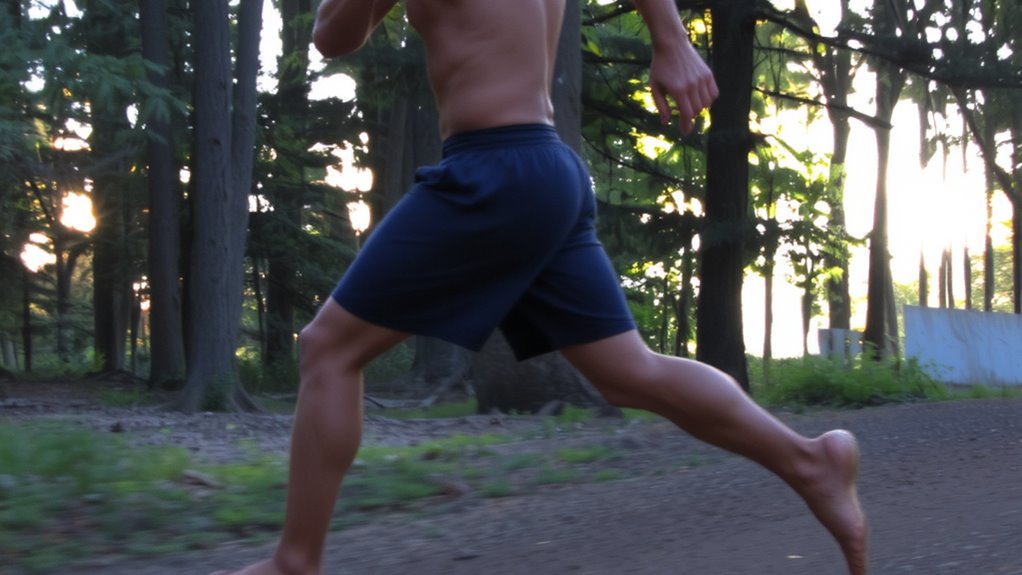
Stability isn’t just a buzzword-it’s the foundation of efficient running. When you run, your body doesn’t just move forward-it twists slightly with each stride. Without anti-rotation core strength, that twist can compromise your spinal alignment and disrupt pelvic stability, leading to wasted energy and compromised form. Think of your core as your body’s natural support system: when it’s trained to resist unwanted rotation, your stride becomes smoother and more controlled. This kind of strength doesn’t happen by accident; it requires targeted exercises that challenge your obliques, transverse abdominis, and deep stabilizing muscles. Runners who neglect this see diminished returns in performance and increased fatigue. Anti-rotation training reinforces posture, enhances endurance, and supports injury prevention. It’s not about bulk or power-it’s about precision, control, and maintaining alignment mile after mile.
Why Twisting Hurts Your Running Efficiency
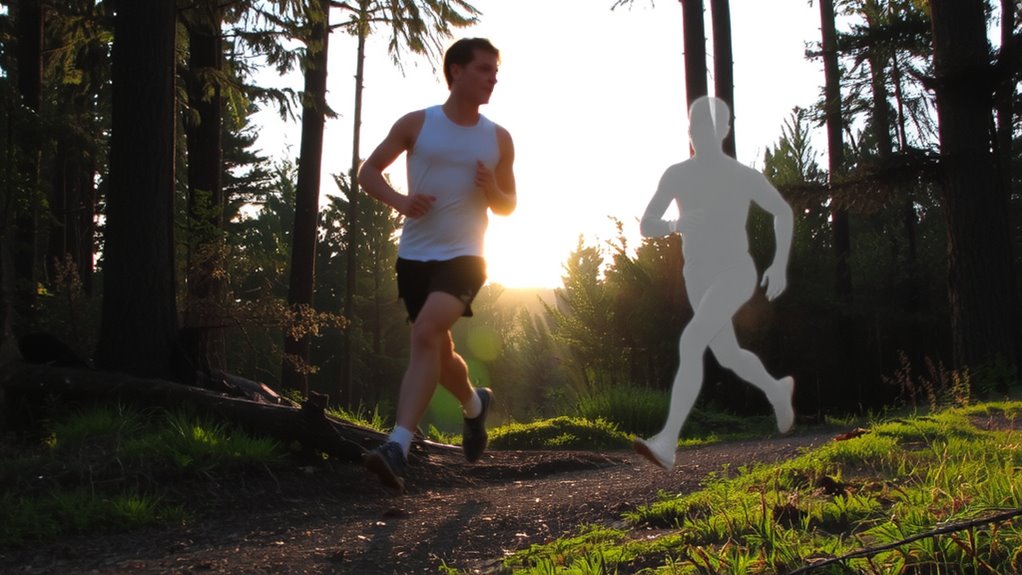
You might not notice it mid-stride, but every time your torso rotates beyond what’s necessary, you’re leaking energy that should be driving you forward. This unnecessary motion creates energy leakage, reducing your running efficiency and forcing you to work harder to maintain pace. Excessive twisting also increases spinal shear, a dangerous side-to-side force that strains your vertebrae and discs over time. Unlike controlled rotation, which can be functional, unmanaged torsional movement destabilizes your core, disrupting the smooth transfer of power from hips to shoulders. Distance runners, especially, can’t afford this kind of mechanical inefficiency-every wasted motion adds up over miles. By minimizing excessive rotation, you preserve forward momentum and decrease injury risk. Maintaining a stable trunk isn’t about stiffness; it’s about smart control. Reducing spinal shear and energy leakage isn’t just smart biomechanics-it’s essential for sustainable, high-performing running.
Best Anti-Rotation Exercises for Distance Runners
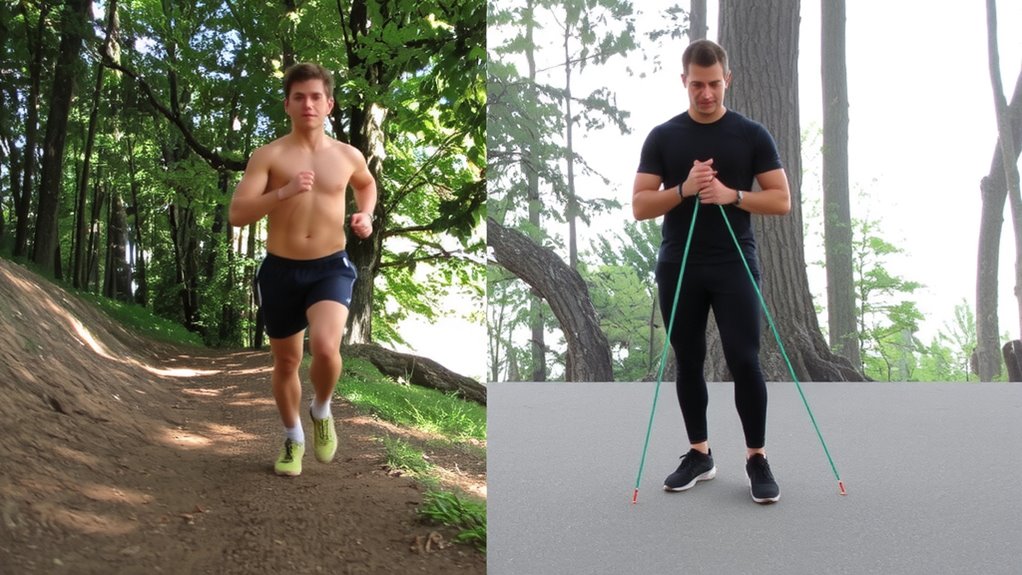
How do you build a rock-solid core that resists unwanted movement without sacrificing running form? Start with plank variations that challenge stability while reinforcing proper alignment. The forearm plank, side plank, and RKC plank all engage deep stabilizers, helping you maintain posture mile after mile. For resisted rotation, resistance band rotations are outstanding-anchor the band at chest height and press straight out, resisting the pull across your torso. This mimics the rotational forces you face while running, training your obliques and transverse abdominis to stabilize, not dominate. These exercises build functional strength without bulk, which matters because excess core stiffness can impair stride efficiency. Both plank variations and resistance band rotations require minimal equipment, yet offer high carryover to running mechanics. They’re also scalable-you can adjust difficulty through time, angle, or band tension-making them practical for high-mileage runners seeking durable, efficient core performance.
Fix These Core Exercise Mistakes
A rock-solid core doesn’t just happen through repetition-it’s built through precision, and even well-intentioned routines can go off track if common mistakes aren’t addressed. Poor exercise selection often leads to wasted effort, favoring flashy moves over functional stability. You need exercises that challenge rotation resistance, not just core fatigue. Ignoring form cues is another pitfall-arching your back during a plank or rushing through a Pallof press defeats the purpose. Stay aligned, brace early, and move with control.
| Mistake | Effect | Fix |
|---|---|---|
| Choosing dynamic over anti-rotation moves | Misses stability training | Prioritize isometric holds |
| Poor spinal alignment | Increases injury risk | Use mirrors or video feedback |
| Overlooking breathing | Reduces core engagement | Exhale on exertion |
| Rushing reps | Lowers neuromuscular control | Slow tempo with pauses |
| Skipping form cues | Weakens motor patterning | Focus on bracing and posture |
Smart exercise selection paired with consistent form cues builds resilient running mechanics.
How to Add Anti-Rotation Work to Your Running Plan
Where should anti-rotation exercises fit in a runner’s weekly routine-after long runs, on recovery days, or during strength sessions? The best approach is thoughtful exercise timing and smart session integration. These moves work best 2–3 times per week, ideally after runs or alongside strength training. Doing them post-run builds stability without pre-fatiguing your core before running. Recovery days also work well if you keep intensity low. You’ll get the most benefit when you pair exercises like bird-dogs or Pallof presses with movements that challenge coordination and control. Consistency matters more than duration-10 to 15 minutes suffices. Use a mat and resistance band for added load, both affordable and durable fitness gear. Over time, this integration strengthens neuromuscular coordination, which supports smoother stride mechanics without disrupting recovery.
How a Strong Core Prevents Running Injuries
Stability isn’t just a goal-it’s a safeguard, especially when every mile adds repetitive stress to your body. Core stability plays a crucial role in injury prevention by keeping your pelvis and spine aligned during each stride. When your core resists unwanted rotation, your hips stay level, reducing strain on knees, ankles, and lower back. Anti-rotation exercises train your obliques, transverse abdominis, and deep stabilizers to work in sync, minimizing compensatory movements that lead to overuse injuries.
| Muscle Group | Function During Run | Impact on Injury Prevention |
|---|---|---|
| Transverse Abdominis | Stabilizes spine | Reduces low back pain |
| Obliques | Controls trunk rotation | Prevents hip imbalances |
| Erector Spinae | Maintains posture | Lowers risk of strain |
You’re not just building strength-you’re reinforcing form, enhancing endurance, and making every mile safer.
Signs Your Run Form Is Improving
How’s your stride feeling lately-smoother, more controlled, like your body finally knows just where it needs to be with each step? When your run form improves, you’ll notice a faster turnover without overstriding, meaning your feet land closer under your center of mass. That smoother stride reduces braking forces and energy waste, letting you maintain pace with less effort. You’ll likely feel more stable through your torso, especially on uneven terrain, a sign your anti-rotation core work is translating to real-world performance. Vertical oscillation decreases, too-less up-and-down motion means better efficiency. Your arms stay relaxed, driving in sync with your legs, not crossing midline. These changes aren’t just feel-good cues; they’re biomechanical markers of progress. With consistent core training, improved form becomes habitual, reducing injury risk and boosting endurance. Pay attention-your body’s giving feedback.
On a final note
You’ll notice better stride efficiency and stability once anti-rotation core work becomes consistent. These exercises train your core to resist unwanted motion, which directly improves running mechanics. Devices like resistance bands and ab wheels help, but proper form matters more than gear. Over time, disciplined integration reduces injury risk and enhances endurance. The real payoff? Smoother, more controlled runs with less energy wasted on lateral sway.