Strategies for Enhancing Tissue Remodeling Processes During High-Intensity Interval Training Programs
You need to align recovery with your HIIT schedule to maximize tissue remodeling, allowing 48–72 hours for muscle repair. Prioritize 20–30 grams of protein soon after workouts and load up on antioxidant-rich whole foods to reduce oxidative stress. Use mobility drills like foam rolling to improve fascial glide and support connective tissue health. Track HRV and sleep quality to gauge readiness, and aim for 7–9 hours of sleep nightly to fuel regeneration. Smart recovery beats gear every time-your next level starts where the workout ends.
Notable Insights
- Allow 48–72 hours between HIIT sessions to enable complete muscle repair and tissue adaptation.
- Consume 20–30 grams of high-quality protein within 45 minutes post-exercise to support microtear recovery.
- Prioritize 7–9 hours of quality sleep nightly to maximize growth hormone release and regeneration.
- Perform dynamic mobility drills and foam rolling to enhance blood flow and reduce fascial restrictions.
- Eat antioxidant-rich whole foods to reduce oxidative stress and improve tissue remodeling efficiency.
Rebuild Stronger: Why HIIT Demands Tissue Repair

Muscle microtears-those tiny disruptions in muscle fibers-are the unsung starting point of your HIIT progress. You push hard during sprints or explosive reps, and in response, your body activates repair mechanisms to patch up damaged tissue. But you’re not just fixing what’s broken-you’re paving the way for stronger, more resilient muscles. This is tissue adaptation in action: your muscles rebuild with improved structure and function, better equipped to handle future strain. Without this process, HIIT wouldn’t deliver its signature gains in strength and endurance. Recovery isn’t downtime-it’s when your body does its most critical work. The right fitness gear, like compression wear or supportive footwear, can support proper movement patterns during sessions, potentially reducing excessive strain. But no gear replaces the biological necessity of repair. You need consistent effort paired with smart recovery to maximize adaptation. Top-rated muscle recovery devices can enhance tissue remodeling by improving circulation and reducing inflammation post-workout.
Match Recovery Windows to Tissue Repair Cycles
How long should you wait before hitting another HIIT session? It depends on your microtrauma timing and how well you manage inflammation modulation. After intense intervals, your muscles undergo microtears-this is normal, even necessary. But rushing back too soon disrupts tissue repair cycles, increasing injury risk. Most people need 48 to 72 hours between high-intensity efforts, giving your body time to clear inflammatory markers and rebuild stronger. Advanced recovery tools like percussion devices or compression gear can support inflammation modulation, but they don’t replace time. Relying solely on gadgets without respecting biological repair windows leads to overtraining. Pair objective feedback-like heart rate variability or perceived exertion-with planned rest. Smart recovery isn’t about inactivity; it’s about aligning your next session with your body’s readiness, ensuring each workout builds resilience, not breakdown. Top-rated recovery tools can enhance circulation and accelerate recovery when used strategically within these biological windows.
Eat These Nutrients to Rebuild After HIIT

You’ve given your body time to recover-now it’s time to fuel the rebuilding process with precision. After HIIT, your muscles need protein intake to repair microtears and grow stronger; aim for 20–30 grams within 45 minutes post-workout. Whey and casein are effective, but plant-based proteins like pea or soy work well too, especially if combined for complete amino acid profiles. Pair that with antioxidant support from colorful fruits and vegetables-blueberries, spinach, bell peppers-to combat oxidative stress caused by intense effort. These nutrients reduce inflammation and preserve cellular function, improving long-term adaptation. While supplements like tart cherry extract or vitamin C can help, whole foods offer broader co-factors that enhance absorption. Don’t overlook timing and balance: consistent meals with quality protein and antioxidants do more for tissue remodeling than any recovery gear. Real recovery starts on your plate, not in a foam roller or compression sleeve.
Boost Tendon & Muscle Repair With Mobility Drills
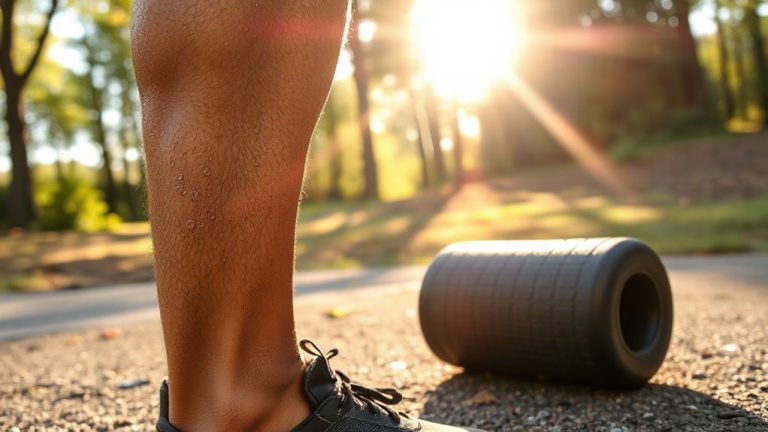
Flexibility isn’t just about reaching your toes-it’s a cornerstone of true recovery, especially when it comes to repairing tendons and muscles battered by HIIT. You’re not just preventing stiffness; you’re actively boosting tissue remodeling. Dynamic stretching primes your connective tissues for repair by increasing blood flow and neuromuscular coordination. Think leg swings, arm circles, and inchworms-moves that mimic workout demands without overloading fatigued muscles. Pair that with fascial release using tools like foam rollers or mobility balls, and you’ll reduce adhesions that restrict movement and delay healing. These aren’t just post-workout bonuses-they’re essential recovery mechanisms. High-quality mobility gear makes a difference: firm rollers offer deeper release, while textured surfaces improve fascial glide. Used consistently, these drills enhance range of motion and speed up structural recovery, letting you train hard again, safely and sooner. For optimal results, choose a roller with firm textured surface that targets deep fascial layers effectively.
Track Recovery to Prevent Tissue Breakdown
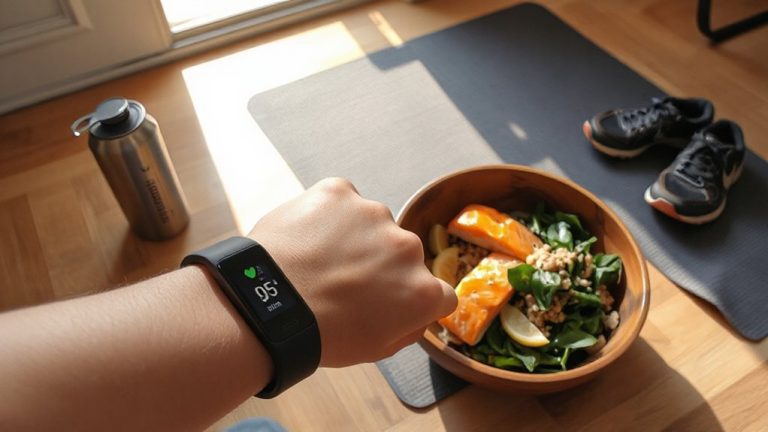
What if you could spot recovery fatigue before it leads to injury? You can-through active monitoring and regular tissue assessment. Tracking markers like muscle soreness, joint stiffness, and workout performance helps you catch subtle declines before they escalate. Wearable tech and recovery apps support this process, offering insights into heart rate variability and muscle oxygenation, but don’t rely solely on gadgets. Manual checks-such as palpating tightness or measuring range of motion-give real-time feedback no sensor can fully replicate. When tissue assessment reveals prolonged tenderness or reduced elasticity, it’s a sign to ease intensity. Ignoring these cues risks microtrauma accumulation and tissue breakdown. Active monitoring isn’t about overanalyzing-it’s about staying responsive. Smart recovery isn’t passive; it’s strategic intervention based on data and feel. That balance keeps remodeling ahead of damage, so you adapt without breaking down.
Sleep Smarter to Accelerate Tissue Regeneration
When could the most accessible recovery tool be right under your nose-or more precisely, under your pillow? Sleep is your body’s natural repair mode, especially during high-intensity interval training (HIIT). Your deepest tissue regeneration happens during slow-wave sleep cycles, when growth hormone peaks and muscle restoration accelerates. Aligning your sleep schedule with natural regeneration timing-particularly between 10 PM and 2 AM-can amplify recovery. Missing these windows disrupts repair efficiency. Aim for 7–9 hours consistently, not just in duration but quality, to support full sleep cycles. Wearables tracking heart rate variability and sleep stages can help optimize this, but no gadget replaces the foundation: a dark, cool room and a regular bedtime. While recovery gear like compression units or cold therapy has value, they’re additive. Sleep remains the most potent, cost-free recovery enhancer-don’t overlook it.
On a final note
You’re pushing hard with HIIT, so your body needs smart recovery to rebuild stronger. Matching rest to tissue repair cycles, fueling with protein and collagen-supporting nutrients, and using mobility drills enhance adaptation. Quality sleep accelerates regeneration, while tracking keeps you from breaking down. Recovery gear like foam rollers and compression tools help, but only if used consistently and correctly. These strategies aren’t optional extras-they’re essential for sustainable performance and long-term tissue resilience.