Hip Mobility Drills With Lying Hip Adduction With Band
You need good hip mobility for everyday movement, and lying hip adduction with a resistance band delivers targeted strength and flexibility gains. Lie on your side, anchor the band above your ankle, and move your top leg across your body with control. Keep your hips stacked and core engaged to avoid common form mistakes. This drill boosts squat depth, running efficiency, and joint stability-especially when using durable latex bands with adjustable tension. Time it right-use light resistance to warm up or lower tension for recovery. You’ll see how small tweaks can transform your long-term hip function.
Notable Insights
- Lying hip adduction with a band improves hip mobility by targeting adductors through a full range of motion.
- Proper form includes side-lying position, bent bottom leg, and band above the ankle to maintain tension.
- Avoid common errors like hip hiking, poor alignment, and incorrect band placement to maximize effectiveness.
- Use this drill in warm-ups with light resistance to activate muscles or in recovery to reduce stiffness.
- Enhanced hip control from this exercise supports better squats, running efficiency, and injury prevention.
Why Hip Mobility Matters for Everyday Movement

Think of your hips as the body’s central pivot point-they’re responsible for connecting your upper and lower body and making everyday movements possible. When hip mobility declines, even simple actions like bending, walking, or rising from a chair become harder. Poor range of motion strains surrounding muscles and compromises joint health over time. Maintaining daily flexibility in the hips supports posture, reduces injury risk, and enhances physical performance. Resistance bands, especially those with durable latex and varied tension levels, are effective tools for preserving this mobility. Their consistent feedback allows you to monitor progress while gently increasing stretch intensity. Used correctly, they support long-term joint health without overloading sensitive areas. Compared to foam rollers or static stretching alone, bands offer targeted resistance that promotes muscle engagement and balanced movement patterns. For anyone serious about fitness recovery, integrating bands into daily routines isn’t just helpful-it’s practical, measurable, and sustainable over time.
How to Do Lying Hip Adduction (With Band)

You can maintain hip mobility with targeted exercises that challenge range of motion while supporting joint alignment, and lying hip adduction using a resistance band is a smart choice for building control and stability. Lie on your side with the bottom leg bent for support and the top leg straight. Attach the band above your ankle-proper ankle placement guarantees consistent band tension and prevents slippage. Keep your torso steady as you lift the leg slightly, then slowly lower it across your body, fighting the band tension through the full range. This movement strengthens the hip adductors while promoting joint coordination. A high-quality band offers steady resistance without rolling or pinching, enhancing effectiveness. Perform 3 sets of 10–12 reps each side. Consistent use improves mobility and prepares the hips for complex movement patterns in daily life or training.
3 Form Mistakes That Kill Results
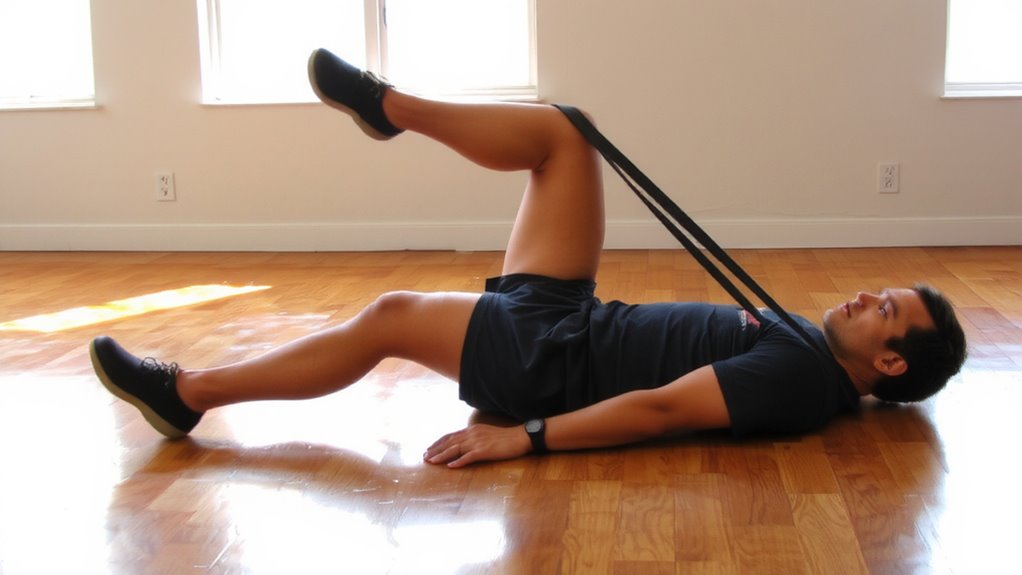
While proper form maximizes the benefits of hip mobility drills, even small technique errors can undermine your progress and reduce the effectiveness of your workout. Poor alignment and incorrect band placement are two of the most common mistakes people make during lying hip adduction. These errors limit muscle activation and can lead to compensatory movement patterns that defeat the drill’s purpose.
| Mistake | Solution |
|---|---|
| Poor alignment | Keep hips stacked, spine neutral |
| Incorrect band placement | Position band just above knees |
| Lifting hips | Engage core, press lower back down |
| Rushing the movement | Control each rep slowly |
You’re not just going through the motions-you’re retraining movement quality. Precise band placement guarantees proper muscle recruitment, while maintaining alignment protects joint integrity. Small tweaks make a big difference in long-term hip function and resilience.
How Lying Adduction Boosts Squats and Running
Lying adduction with a resistance band might seem like a modest move, but its impact on athletic performance is anything but small-especially when it comes to squats and running. By targeting the adductors and glutes under tension, this exercise promotes enhanced joint stability, helping your hips control motion during dynamic movements. That stability translates directly into better squat depth and alignment, reducing compensatory patterns. For runners, improved hip control leads to increased stride efficiency-each step becomes more powerful and less wasteful. The band’s resistance also trains proper muscle sequencing, reinforcing ideal mechanics under load. Over time, this builds resilience and sharpens neuromuscular coordination, which is critical when fatigue sets in. Unlike bulkier fitness gear, the resistance band is compact and low-risk, making consistent use easy. You’re not just moving through space-you’re moving smarter, stronger. This drill is a practical tool for anyone serious about functional gains.
When to Use This Exercise: Warm-Up or Recovery
Since mobility work often sets the tone for performance or aids in post-exercise recovery, knowing when to include lying adduction with a band matters just as much as how to perform it. You’ll want to take into account exercise timing based on your goals. When used as a warm-up, light band tension activates the hip adductors and improves joint awareness before squats or running. It primes the nervous system without fatiguing muscles. For recovery, lower band tension helps restore range of motion and reduce stiffness, especially after heavy leg training. The controlled movement increases blood flow without strain. Either way, the band’s resistance should feel manageable-never so tight it restricts motion. Used wisely, this drill supports long-term hip health, but effectiveness hinges on proper exercise timing and appropriate band tension. Choose your moment: activation or restoration-and stick to it.
Make It Harder: 3 Progressions for Stronger Hips
If you’ve built a solid foundation with basic hip mobility drills, it’s time to level up-progressing these movements isn’t just about adding resistance; it’s about enhancing neuromuscular control and joint resilience. Start with resistance increments: switch to a thicker band to challenge hip adductors without compromising form. This boosts strength and stability across the joint capsule. Next, apply tempo variations-slow the eccentric phase to three seconds, increasing time under tension and improving motor control. Finally, perform the movement unilaterally, anchoring one leg while the other works against the band, amplifying core engagement and hip isolation. These progressions aren’t just harder; they’re smarter, leveraging biomechanical specificity to build durable, functional hips. Used consistently, they enhance performance in compound lifts and dynamic sports actions. Choose gear that withstands repeated tension-like latex-free bands with graded resistance levels-to guarantee long-term progression and joint safety.
On a final note
You’ll find lying hip adduction with a band effective for building mobility and stability, especially when recovery or prep is the goal. It targets deep hip musculature without load, making it ideal post-workout or on rest days. Paired with quality recovery gear-like proper foam rollers or compression sleeves-it enhances circulation and tissue quality. Used consistently, it supports long-term joint health, improves movement efficiency, and reduces injury risk-small effort, high functional return.