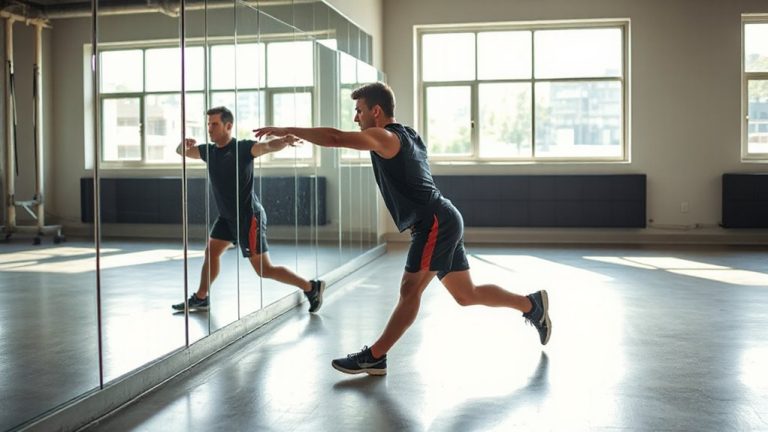
Thoracic Mobility Drills With Seated Arm Swings
You lose thoracic mobility with age, but seated arm swings help restore it by boosting spinal rotation and neuromuscular control. Sit tall, engage your core, and swing your arms forward and back, initiating motion from your mid-back. Avoid overarching or shrugging. Use this drill morning and night for best results, especially if you sit all day or lift weights. Pair with breath and supportive gear to enhance joint lubrication and posture-there’s more to gain with the right technique.
Notable Insights
- Seated arm swings enhance thoracic mobility by promoting controlled spinal rotation and activating mid-back musculature.
- Proper form includes sitting tall, engaging the core, and initiating movement from the thoracic spine.
- Coordinate breath with motion: inhale during forward arm swing, exhale during the backward swing.
- Avoid common errors like overarching the lower back or moving from the arms instead of the mid-back.
- Perform two minutes twice daily, pairing with foam rolling or thoracic rotations for best results.
Why Thoracic Mobility Matters
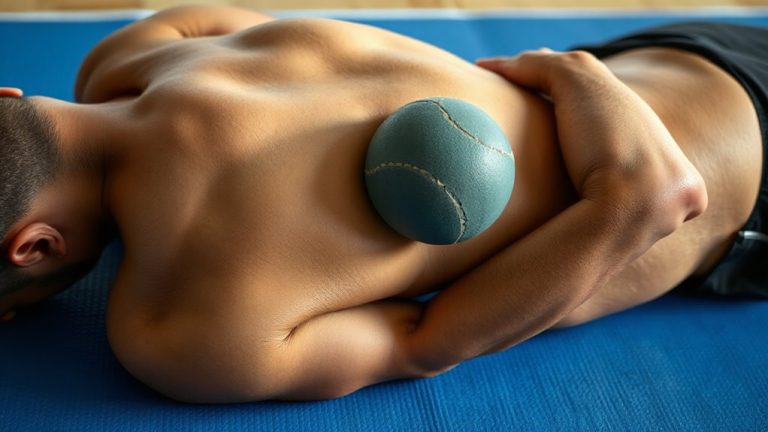
Mobility isn’t just about how far you can move-it’s about how well you move, and nowhere is that more critical than in your thoracic spine. Poor thoracic mobility jeopardizes spinal health, leading to compensatory movements that strain your neck and lower back. When your mid-back stiffens, posture correction becomes nearly impossible, reinforcing slouched positions common with prolonged sitting. You’re not just losing flexibility-you’re risking joint function, breathing efficiency, and overall movement quality. Think of your thoracic spine as the anchor for upper body mechanics: if it’s restricted, every overhead reach or rotational movement suffers. Fitness recovery isn’t complete without addressing this segment, because even the best gear-foam rollers, massage balls, or mobility straps-won’t fix what movement drills can. Prioritizing thoracic mobility enhances performance, reduces injury risk, and supports long-term spinal resilience. It’s not optional-it’s foundational.
How Arm Swings Loosen a Stiff Mid-Back
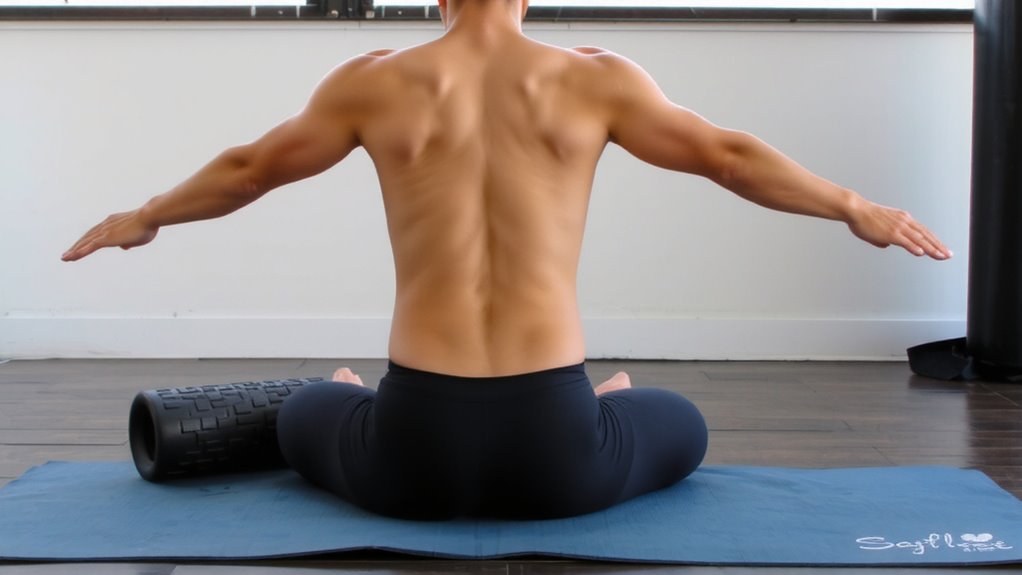
While you might think arm swings are just a warm-up staple, they’re actually a powerful tool for accessing stiffness in your mid-back. As you perform them, each motion encourages controlled spinal rotation, gently coaxing mobility from locked thoracic segments. The dynamic nature of shoulder flexion during the forward swing activates surrounding musculature, helping to release tight fascial connections. Over time, this repetitive loading and unloading improve joint lubrication and neuromuscular coordination. You’ll notice reduced rigidity, especially if daily sitting has compromised your posture. Unlike static stretches, arm swings integrate movement with breath, enhancing circulation and tissue elasticity. Though simple, they deliver disproportionate benefits-particularly when recovery is supported with quality fitness gear like supportive seating or posture aids. These tools don’t replace motion but amplify its effects, making arm swings a smart, low-effort strategy for long-term thoracic health.
How to Do Seated Arm Swings

Sit tall in your chair with feet flat on the floor and spine neutral-this position sets the stage for effective seated arm swings. Begin by engaging your core and initiating movement from the thoracic spine, not the arms. Use controlled breathing: inhale as arms swing forward, exhale as they swing back. Proper arm positioning guarantees maximum mobility-keep arms straight but not locked, moving in line with shoulders. To clarify technique, here’s a quick guide:
| Phase | Arm Positioning | Breathing Pattern |
|---|---|---|
| Start | Arms at sides | Inhale |
| Mid-Swing | Arms forward | Exhale |
| Backward | Arms behind body | Inhale |
This drill enhances thoracic flexibility efficiently. Controlled breathing improves neuromuscular coordination, while correct arm positioning prevents compensation from the neck and lower back, guaranteeing targeted mid-back mobilization.
Common Mistakes in Seated Arm Swings
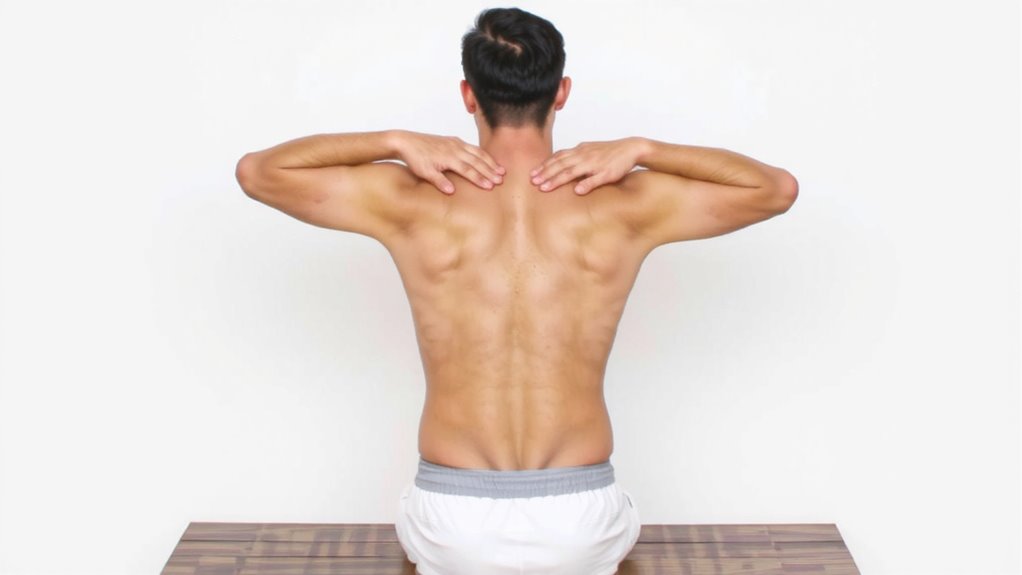
You’re probably familiar with how seated arm swings can loosen up your mid-back when done right, but even small errors can reduce their effectiveness and lead to strain elsewhere. One common mistake is overarching arms too aggressively, which shifts motion away from the thoracic spine and into the lower back, defeating the drill’s purpose. Instead of gaining mobility, you risk compression and discomfort. Another issue is rounding shoulders forward, often from poor posture or fatigue, which limits scapular movement and restricts thoracic engagement. This not only diminishes range of motion but can irritate upper back muscles over time. To get the most from the exercise, maintain a tall spine and initiate movement from the mid-back, not the arms or neck. Keeping shoulders down and relaxed guarantees proper muscle activation. Correct form guarantees targeted mobility without compensatory strain, making your recovery efforts more efficient and sustainable.
Best Times to Do Seated Arm Swings
When should you actually be doing seated arm swings for the best recovery payoff? Adding them to your morning routine jumpstarts spinal mobility and primes your thoracic spine for daily movement. You’ll notice improved posture and reduced stiffness, especially if you sit a lot. The rhythmic motion boosts circulation and gently activates the paraspinal muscles, setting a functional tone for the day. For even greater benefit, incorporate seated arm swings into your post work recovery-especially after heavy lifting or prolonged desk time. They help dissipate neuromuscular tension and restore range of motion without taxing the body. Unlike aggressive stretching, these drills offer a low-risk, high-yield option that complements mobility tools like foam rollers or resistance bands. Consistency matters more than duration; even two minutes morning and night yield measurable gains. Time-efficient and equipment-free, they’re an intelligent addition to sustainable fitness recovery practices.
Combine Arm Swings With These Mobility Moves
Arm swings work well on their own, but pairing them with complementary mobility drills amplifies thoracic spine activation and speeds up recovery. Try combining them with dynamic stretching moves like thoracic rotations or cat-cow pulses to boost blood flow and improve range of motion. These pairings enhance rotational control, making movements smoother and more efficient. Adding a foam roller beneath your upper back during seated swings increases spinal extension, but make sure the foam roller has medium firmness to avoid discomfort. Resistance bands can also be integrated-hold one taut during swings to reinforce posture. The right fitness gear supports consistency and form, especially during repetitive drills. Together, these combinations sharpen neuromuscular coordination while reducing stiffness. Over time, you’ll notice better upright stability and reduced strain during overhead motions-all critical for long-term joint health and functional movement quality. For optimal results, choose a medium-density foam roller that balances support and comfort during mobility work.
Ideal for Desk Workers and Lifters With Stiff Shoulders
A well-structured thoracic mobility routine is especially beneficial for desk workers and lifters dealing with stiff shoulders, as prolonged sitting or heavy overhead pressing often leads to rounded postures and restricted upper back motion. You’re likely to see real improvements when you pair seated arm swings with breathing techniques that activate the diaphragm and enhance spinal control. These drills help restore posture alignment by reducing upper back stiffness and retraining movement patterns. For desk workers, consistency matters more than intensity-short daily sessions yield better long-term results than occasional aggressive stretching. Lifters benefit from improved scapular mechanics, which support safer pressing and pulling. Using simple fitness gear like foam rollers or mobility bands can deepen the work, but isn’t essential. The real value lies in disciplined practice and mindful execution. Over time, you’ll notice broader range of motion, reduced tension, and better overall upper body function.
On a final note
You’ll find seated arm swings effective for boosting thoracic mobility, especially if you sit all day or lift regularly. They’re simple but demand proper form-keep your spine tall and movements controlled. Paired with other drills, they enhance shoulder function and mid-back flexibility. Though not a standalone fix, they’re a practical addition to your routine. Consistency matters more than intensity, so do them daily for lasting results. Your posture-and performance-will notice.