Walking Meditation Focused on Foot-to-Ground Sensation for Plantar Fasciitis Relief
You can reduce plantar fasciitis pain by practicing walking meditation focused on foot-to-ground sensation, as it improves weight distribution and gait mechanics. Tuning into surface texture and foot placement encourages softer heel contact and engages intrinsic foot muscles. Grass or rubber tracks work best, especially when paired with supportive footwear. Doing this daily, especially in the morning, boosts tissue mobility and complements treatments like stretching or orthotics-there’s more to discover about refining the practice for lasting relief.
Notable Insights
- Focus on foot-to-ground contact to heighten sensory awareness and reduce heel impact during each step.
- Walk slowly with mindful heel-to-toe rolling to ease strain on the inflamed plantar fascia.
- Choose soft surfaces like grass to minimize impact and enhance ground sensation barefoot.
- Sync breath with steps to maintain rhythm and promote relaxed, natural gait mechanics.
- Practice daily for five minutes upon waking to reduce morning foot stiffness and improve mobility.
What Walking Meditation Does for Plantar Fasciitis
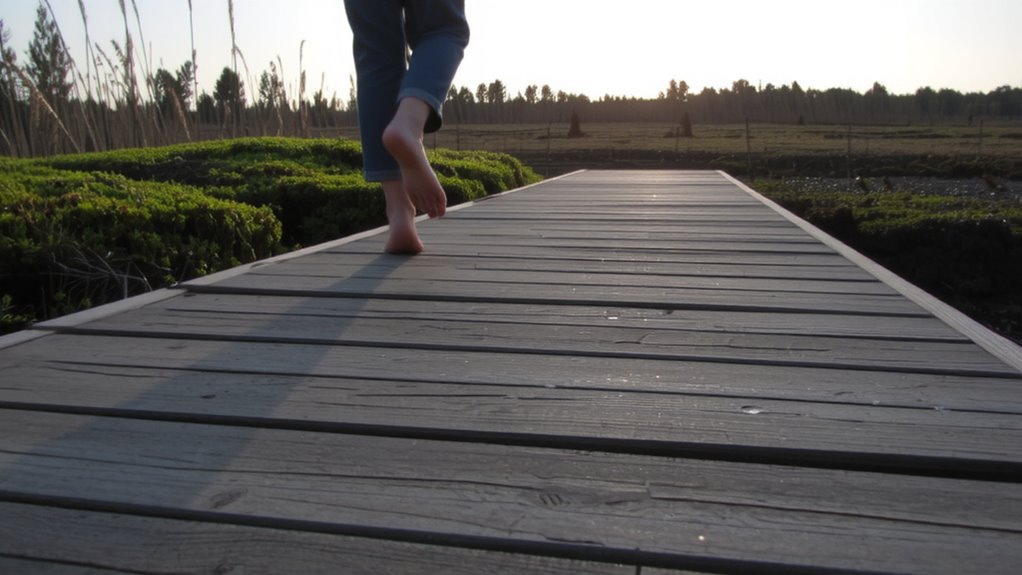
While walking meditation may not replace medical treatment, it can play a supportive role in managing plantar fasciitis by promoting mindful movement and reducing harmful gait patterns. You engage in mindful grounding with each step, feeling the floor beneath your feet and aligning your posture to distribute weight more evenly. This sensory focus helps interrupt automatic, painful strides and encourages a natural, low-impact gait. Over time, you’re likely to notice less heel strain and improved foot awareness, especially when paired with proper footwear or recovery tools like night splints or supportive insoles. Unlike high-tech fitness gear that promises quick fixes, walking meditation offers a low-cost, sustainable method to complement physical therapy. It doesn’t wear out or need charging-it simply asks for your attention. When practiced consistently, it becomes a practical part of recovery, helping you respond to pain with awareness instead of reaction. For added support during daily activity, consider using best insoles for volleyball that provide cushioning and arch support tailored to high-impact movement.
How Ground Awareness Eases Heel Pain
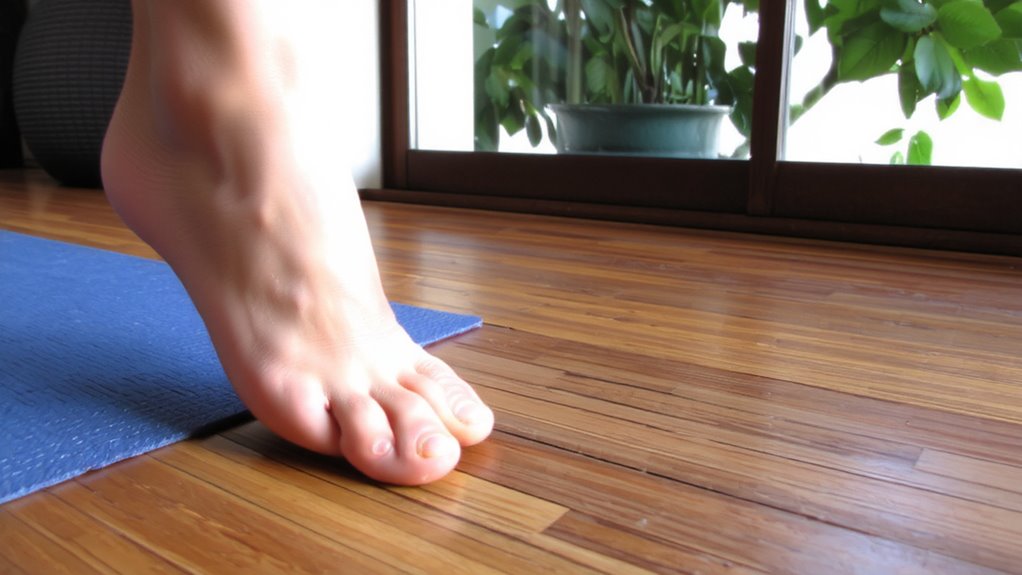
The key to easing heel pain from plantar fasciitis often lies in how well you sense and respond to the surface beneath your feet, and that’s where ground awareness makes a difference. By tuning into ground texture, you activate sensory feedback that promotes mindful balance, reducing strain on the plantar fascia. This awareness encourages softer landings and better weight distribution, which decreases heel inflammation over time. Unlike cushioned footwear that dulls sensation, walking barefoot mindfully strengthens intrinsic foot muscles and improves gait mechanics.
| Sensory Cue | Benefit |
|---|---|
| Ground texture | Enhances neural feedback |
| Surface variation | Trains adaptive mindful balance |
| Barefoot contact | Improves intrinsic foot strength |
With consistent practice, you recalibrate movement patterns, supporting natural recovery while minimizing overreliance on orthotics or invasive treatments.
A Step-by-Step Guide for Sore Feet
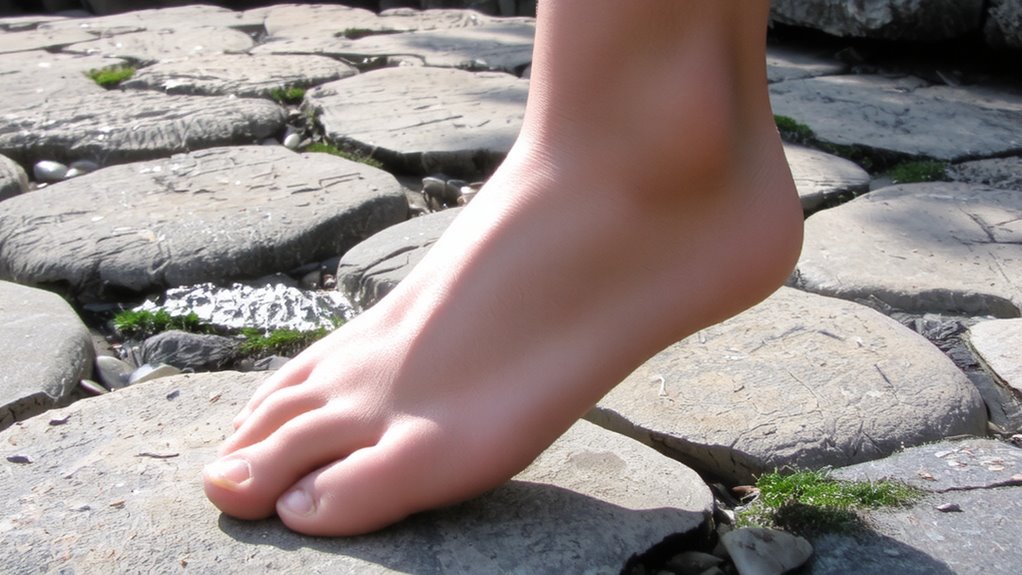
How do you start a walking meditation practice when every step sends a twinge through your heels? Begin by standing still, sensing your weight evenly distributed across both feet. Focus on foot alignment-heel in line with the ankle, toes pointing forward, arches gently engaged. Take one slow step, then another, emphasizing mindful pacing over distance. Keep strides short, allowing your heel to touch down first, then roll smoothly through to the ball of the foot. Notice the ground’s firmness, the subtle shift of weight, the rhythm of your breath syncing with movement. Move slowly enough to catch misalignments before they strain. This isn’t about pushing through pain but tuning in, adjusting, and respecting your body’s current limits. With repeated practice, your gait grows more efficient, reducing stress on the plantar fascia. Consistency matters more than duration-five mindful minutes daily can initiate meaningful recovery.
Best Surfaces and Shoes for Plantar Fasciitis Walking
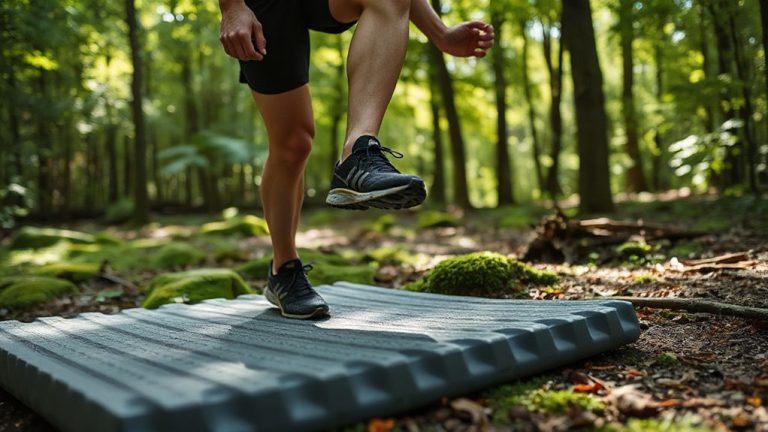
You’ve tuned into your body’s signals and started moving with intention, but the surface beneath your feet and the shoes on your soles make all the difference in whether each step supports recovery or adds strain. For plantar fasciitis, hard surfaces like concrete increase impact, worsening inflammation-opt instead for grass, packed dirt, or rubber tracks that absorb shock. Barefoot walking can enhance foot strength and sensory awareness, but only on safe, even terrain to prevent microtrauma. When shoes are needed, prioritize supportive footwear with firm arch support, cushioned midsoles, and a slightly elevated heel to reduce fascial tension. Minimalist shoes may help some, but only with proper shift.
| Surface | Impact Level | Ideal For |
|---|---|---|
| Grass | Low | barefoot walking |
| Rubber Track | Moderate | supportive footwear |
| Concrete | High | Avoid if sensitive |
Ideal Times to Practice for Pain Relief
While morning stiffness often makes the first steps of the day the most painful for those with plantar fasciitis, starting your walking meditation then can actually help mitigate discomfort by gently loosening tight tissues when done slowly and with proper support. Incorporating this practice into your morning routine sets a mindful tone and eases foot tension before more demanding activity. You’re more likely to remain consistent when it becomes part of a daily rhythm. An evening habit can be equally beneficial-your feet have endured hours of load, and a gentle session helps release accumulated stress. Timing influences effectiveness: morning sessions improve mobility, while evening walks aid recovery and reduce next-day soreness. Both windows offer unique advantages, but consistency matters more than timing. Pair either with supportive footwear and mindful pacing for ideal impact.
Pair With Other Plantar Fasciitis Treatments
Building a consistent walking meditation habit-whether at sunrise or after a long day-creates a strong foundation for managing plantar fasciitis, but it works best when combined with other targeted treatments. Pairing your practice with night splints or custom orthotics enhances structural support, while daily calf and fascia stretches improve tissue resilience. Incorporating breath synchronization deepens the mind-body connection, helping you stay present and reducing strain perception. Mental relaxation lowers overall tension, which can indirectly ease gait-related compensations that worsen foot pain. You’ll likely find that combining meditation with shockwave therapy or physical therapy accelerates recovery more than any single method alone. Fitness recovery isn’t just about gear or reps-it’s about integrating mindful movement with sound clinical strategies. Used together, these approaches address both symptom and cause, offering a more sustainable path past chronic heel pain. For enhanced circulation and muscle recovery, consider using leg compression boots as part of your daily routine.
On a final note
You’ll find walking meditation sharpens focus on foot-to-ground contact, easing plantar fasciitis discomfort through mindful alignment and reduced impact. It complements recovery by promoting proper gait and body awareness. Combined with supportive footwear and firm, even surfaces, this practice enhances tissue healing. Though not a standalone fix, it’s a valuable addition to a recovery plan that includes stretching, rest, and quality foot gear tailored to your biomechanics.