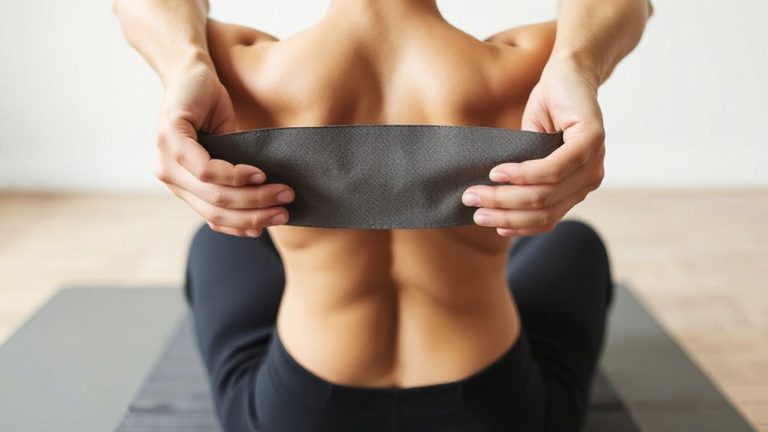
Hip Mobility Drills With Seated Hip Internal Rotation
You can boost hip mobility by incorporating seated hip internal rotation drills that target tight external rotators and improve femoral glide. Sit tall on a stable surface, cross one ankle over the opposite knee, and gently press the knee down. Perform 10–15 controlled reps per side. This move enhances pelvic stability, reduces lower back strain, and supports smooth movement patterns-especially when paired with proper progressions and form cues you’ll want to explore next.
Notable Insights
- Perform seated hip internal rotation on a stable surface with a straight spine to improve joint mobility and alignment.
- Cross one leg into a figure-four position and gently press the knee down for a controlled stretch.
- Complete 10–15 reps per side, 2–3 times weekly to enhance internal rotation range of motion.
- Avoid common errors like rounded back or flaring knees by adjusting posture and using a cushion if needed.
- Progress gradually with dynamic warm-ups, resistance bands, or CARs only after mastering pain-free form.
Why Seated Hip Internal Rotation Boosts Mobility
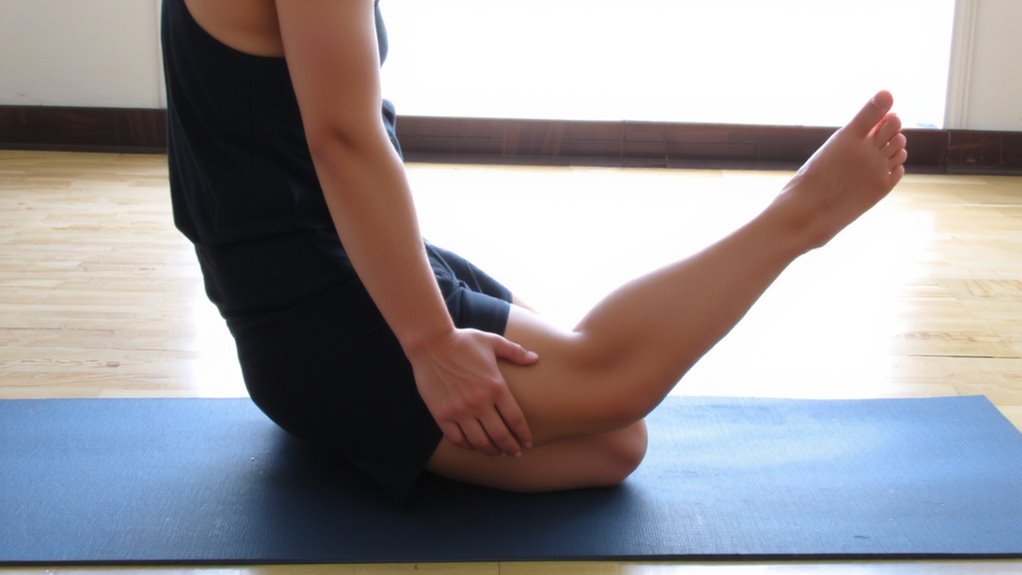
While many overlook the importance of targeted joint movement, seated hip internal rotation specifically enhances mobility by isolating the deep external rotators and capsule tissues that often tighten from prolonged sitting. You gain better joint alignment as this movement encourages the femur to glide properly within the acetabulum, reducing compensatory patterns during dynamic activities. Muscle activation in the gluteus medius and deeper piriformis improves, which supports pelvic stability and reduces strain on the lower back. Unlike broader stretches, this drill targets specific restrictions without overloading surrounding structures. When paired with quality fitness gear-like a stable bench or alignment-sensing cushion-your form stays consistent, enhancing effectiveness. Over time, consistent practice promotes lasting mobility gains, especially if you sit frequently. It’s not just about range but control: precise motion trains neuromuscular coordination, making everyday movements safer and more efficient. This drill’s value lies in its specificity and functional carryover.
How to Do Seated Hip Internal Rotation (Step by Step)
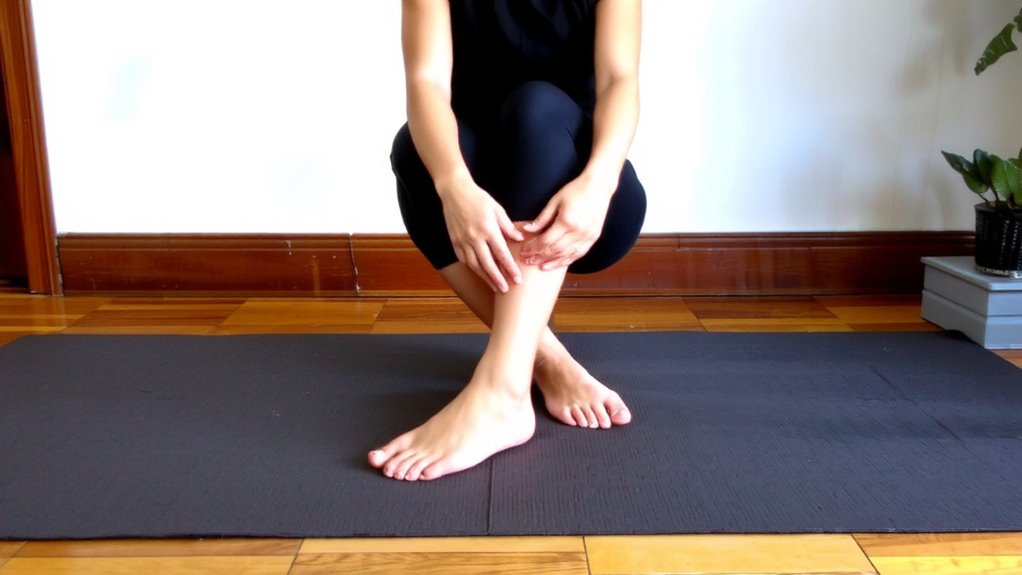
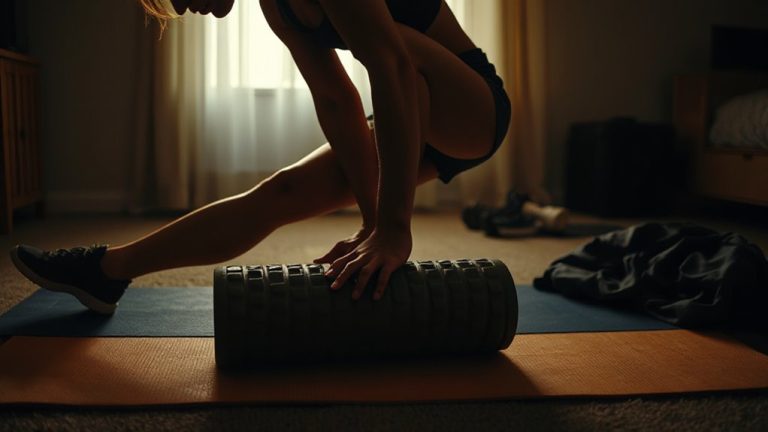
Mastering seated hip internal rotation starts with proper setup-your choice of surface matters. Sit on a firm, stable bench or mat with your back straight and feet flat on the floor. Cross one leg, placing the ankle on the opposite knee, forming a figure-four. Gently press the elevated knee downward using your hand until you feel a stretch in the hip. Maintain proper alignment: keep your spine neutral and avoid rounding your back. This position guarantees targeted engagement of the deep external rotators. Perform the movement slowly, focusing on control rather than depth. Aim for consistent repetition-10 to 15 reps per side, two to three times weekly-to build mobility over time. A quality foam roller can help release tension pre-session, improving effectiveness. Avoid rushing; progression isn’t measured in force, but in repeatable, controlled motion through proper form.
3 Progressions to Improve Your Internal Rotation
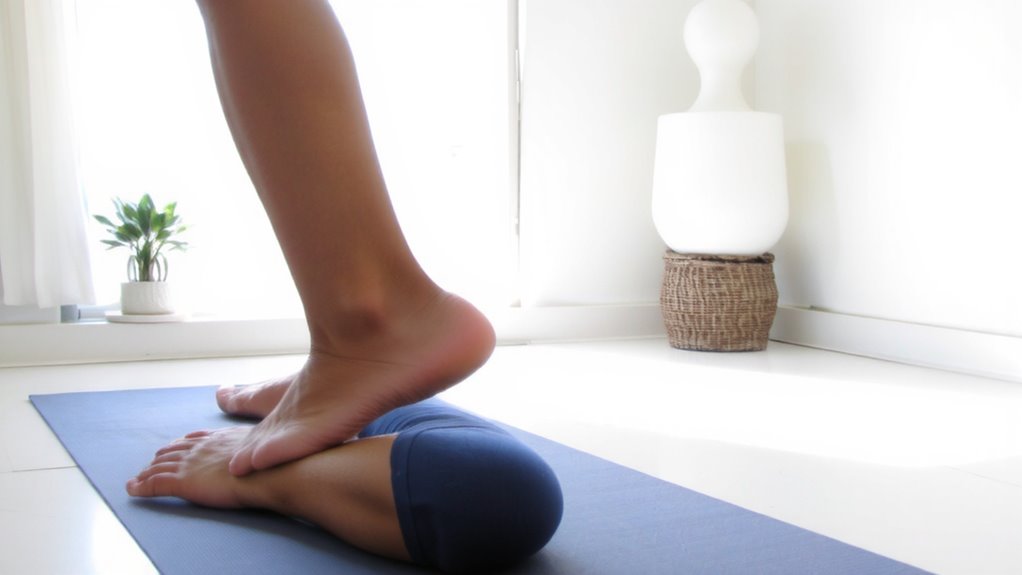
You’ve built a foundation with seated hip internal rotation, and now it’s time to challenge your mobility with targeted progressions. Start incorporating dynamic stretches like lying knee drops and open-hip marches to activate range of motion under movement. These drills enhance neuromuscular control and prepare joints for more complex loading. Once you’re consistently hitting end-range with ease, advance to weighted variations-use a light dumbbell on the knee to gently increase resistance. Advanced techniques, such as distraction mobilizations with a resistance band, can further improve joint glide and capsule flexibility. Controlled articular rotations (CARs) also help teach your hip to stabilize actively through internal rotation. Don’t rush-progress only when form stays clean and discomfort-free. Consistency with these methods leads to measurable gains in functional mobility, especially when paired with proper recovery and supportive fitness gear like breathable activewear and non-slip mats.
Fix These Common Seated Rotation Mistakes
A well-executed seated rotation should promote hip mobility without compromising spinal alignment, yet many people unknowingly set up for poor results by adopting subtle but costly form errors. Maintaining proper knee alignment and neutral spine posture is essential-you’re not just moving your leg, you’re training control. Leaning forward or shifting your hips disrupts spine posture, reducing mobility gains and increasing joint strain.
| Common Mistake | Correction |
|---|---|
| Rounded lower back | Sit on a cushion to tilt pelvis |
| Knee flaring outward | Guide knee toward floor softly |
| Hunching shoulders | Keep chest open, shoulders down |
| Twisting at the spine | Rotate only from the hip joint |
You’ll get better feedback from your body when alignment supports function. Prioritize spine posture and knee alignment-they’re the foundation of effective, safe internal rotation work.
When and How to Add Resistance Safely
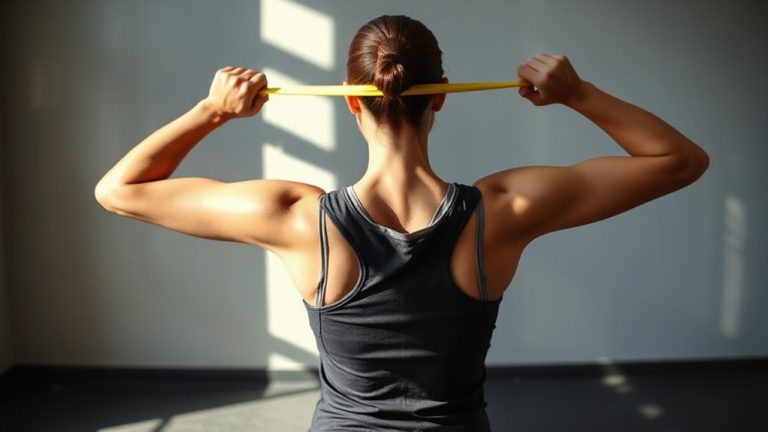
Why do some people push into resistance too soon and end up limiting their mobility gains or inviting strain? Often, it’s because they misunderstand resistance timing. You should only add resistance once you’ve achieved full range of motion with control-no hinging or compensating. Premature loading can reinforce poor patterns, increasing joint stress. When the time comes, start with light bands or cuffs; your focus should be on clean, slow movement. Load selection matters: too heavy restricts mobility, too light offers no stimulus. Aim for 10–15 smooth reps with slight tension. Monitor for discomfort or form breakdown-your hips shouldn’t wobble or hike. Progressive overload works here, but gradually. Quality always trumps intensity. Proper gear, like adjustable resistance bands or padded ankle straps, supports safer progress. Track improvements weekly. When done right, loaded internal rotation strengthens deep stabilizers without sacrificing flexibility-just guarantee the tool matches your stage of development.
Balance With Seated External Rotation
Building on the principle of controlled progression from resistance training, seated external rotation serves as a functional check for hip balance and neuromuscular coordination. You’ll need to maintain ankle stability to prevent compensatory motion, ensuring the movement stems purely from the hip joint. This drill highlights imbalances between sides, making it a practical assessment tool. As you rotate outward, focus on core engagement to stabilize your pelvis-this minimizes lumbar involvement and sharpens motor control. Proper form here reveals weaknesses or restrictions that simpler drills might miss. Use a chair or bench that allows your knees to bend at 90 degrees, keeping feet off the floor to isolate movement. Perform the rotation slowly, resisting momentum. Consistent practice improves proprioception and joint awareness, both essential for injury prevention. It’s not just about mobility-this exercise integrates control, alignment, and precision for long-term hip health.
Daily Moves That Support Better Hip Rotation
How often do you notice stiffness when turning your torso to reach for something in the back seat or pivoting during a quick step sideways? These everyday movements rely heavily on hip rotation, and poor hip alignment can silently undermine your joint stability over time. Incorporating small, intentional motions throughout your day helps maintain mobility and supports long-term function. You don’t need special gear-just awareness and consistency.
| Daily Move | Benefit |
|---|---|
| Standing hip circles | Warms up joint stability |
| Step-through lunges | Encourages hip alignment |
| Weight-shift pivots | Enhances rotational control |
| Seated knee lifts | Gently challenges internal rotation |
| Wall-assisted swings | Builds balance with mobility |
These moves, when done regularly, promote smoother hip rotation and reduce strain. Proper alignment isn’t just for workouts-it’s part of moving well every day.
On a final note
You’ve seen how seated hip internal rotation builds mobility with precision. When done correctly, it enhances joint health and movement efficiency. Pairing it with external rotation guarantees balanced development. Adding resistance gradually sharpens strength without risking form. These drills fit seamlessly into daily routines, supporting long-term hip function. Your consistency, not gear, matters most-though well-designed tools can aid progression. Recovery gains come from smart, repeatable practice, not complexity. Stick with it, and you’ll notice more fluid, pain-free motion.