Standing Tai Chi Drills to Improve Proprioception After Ankle Sprains
You can rebuild ankle proprioception after a sprain with standing Tai Chi drills that emphasize slow, controlled weight shifts and balance. These movements retrain neuromuscular control, enhance joint position sense, and improve stability without straining healing tissue. Practicing stillness and single-leg grounding sharpens foot awareness, while Wave Hands Like Clouds refines coordination. Combined, they offer a gear-free, effective path to recovery-there’s a clear progression from basic alignment to dynamic control worth exploring.
Notable Insights
- Standing Tai Chi drills on varied surfaces enhance ankle joint position sense after sprains.
- Slow, controlled movements retrain ligament receptors to respond faster under load.
- Progressing from double-leg to single-leg stances improves neuromuscular coordination over time.
- Weight-shifting exercises like Wave Hands Like Clouds restore stability without overloading injured tissue.
- Quiet standing in Tai Chi sharpens foot sensory feedback and recalibrates balance without movement.
Rebuild Ankle Proprioception After Sprain
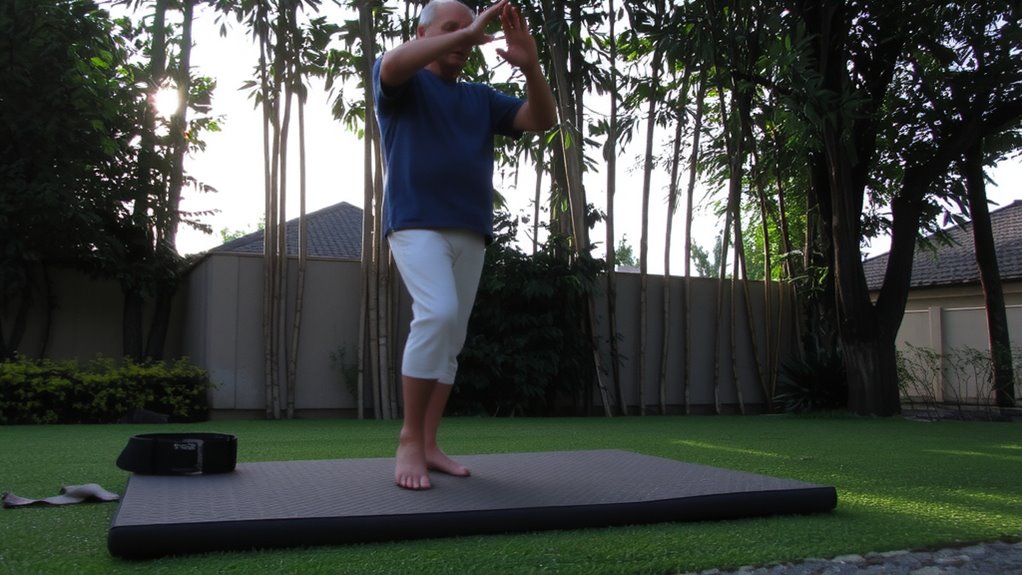
While your ankle heals, restoring proprioception should be a top priority-otherwise, you’re more likely to roll it again. Impaired neuromuscular control is common post-sprain, meaning your brain’s communication with the ankle weakens, increasing re-injury risk. Reestablishing ankle stability isn’t just about strength-it’s about precision. Standing Tai Chi drills enhance joint position sense by challenging balance on varied surfaces, promoting subtle corrections your body learns to make automatically. These slow, controlled movements train receptors in your ligaments to respond faster under load, effectively boosting neuromuscular control. Unlike rigid gym equipment, Tai Chi requires no gear-just body weight and mindful repetition. You’ll notice improved coordination within weeks, especially when progressing from double-leg to single-leg stances. This method outperforms passive recovery, actively rebuilding the feedback loop essential for dynamic stability. For long-term ankle stability, consistency beats complexity every time.
Use Tai Chi to Retrain Balance and Body Awareness
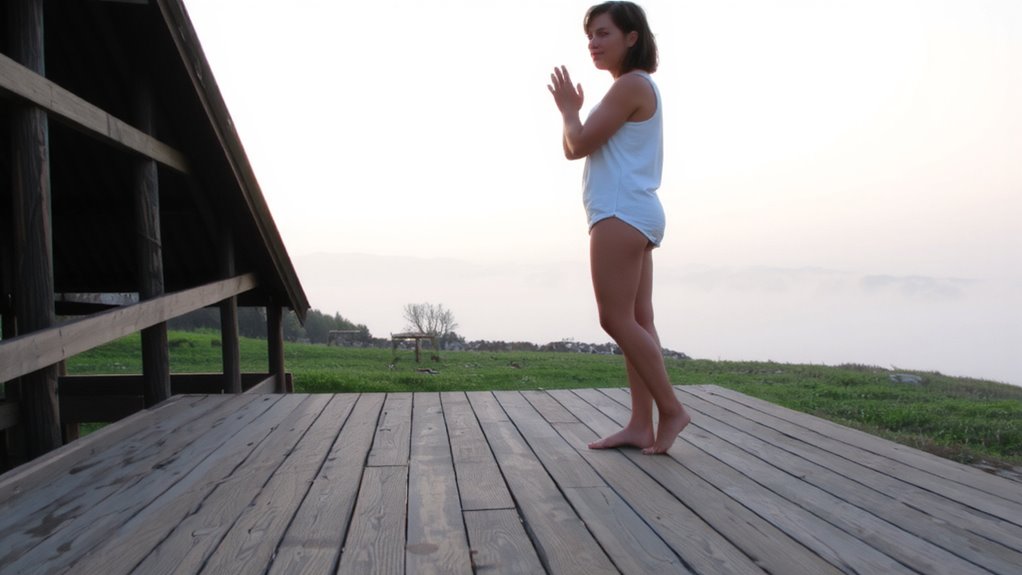
You’ve already started rebuilding joint awareness through proprioceptive drills, and now it’s time to refine that signal between your body and brain with more integrated movement. Tai Chi helps retrain balance and body awareness by blending slow, intentional motions with mindful breathing and precise posture alignment. As you shift weight between legs, your nervous system recalibrates stability responses, particularly in injured ankles. Unlike rigid gym routines, Tai Chi emphasizes control and internal feedback, making it ideal for recovery. Practitioners often report improved coordination and reduced wobble during daily activities. The focus on upright spine alignment also reduces compensatory patterns that can hinder healing. Mindful breathing sustains rhythm and oxygenates tissues, supporting both mental focus and physical repair. While fitness gear like balance boards target isolated skills, Tai Chi develops holistic neuromuscular coordination-essential for long-term ankle resilience and functional movement precision.
Stand Still to Reconnect With Your Feet
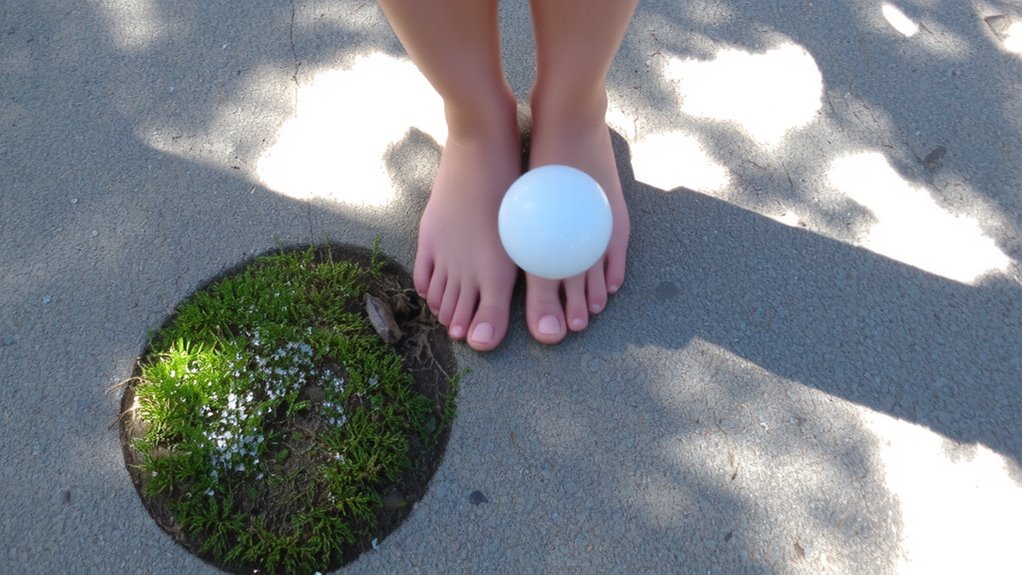
Stillness isn’t passive-it’s a dynamic reset. When you stand quietly in Tai Chi, you’re actively tuning into your body’s subtle signals, especially from the feet. After an ankle sprain, this quiet stance helps restore foot alignment by letting you adjust weight distribution without movement bias. You start noticing uneven pressure, subtle tilts, or shifts that disrupt balance. This heightened sensory feedback sharpens your proprioception, allowing the nervous system to recalibrate. Stand with feet shoulder-width apart, knees slightly bent, and spine aligned. Keep your focus downward, not judging, just observing. The ground contact becomes a conversation-your soles sending continual updates. Over time, this drill strengthens neural pathways critical for stability. It’s low-tech, requires no fitness gear, yet it’s among the most effective recovery tools. Standing still isn’t doing nothing-it’s rebuilding awareness from the ground up.
Shift Weight Smoothly With Tai Chi’s Wave Hands Like Clouds
As you begin to reintroduce movement after an ankle sprain, Tai Chi’s Wave Hands Like Clouds offers a controlled, flowing weight transfer that enhances coordination and joint stability without overloading the injured tissue. This form emphasizes smooth, deliberate steps paired with a continuous fluid motion of the arms, guiding your body through lateral shifts that reinforce proprioception. You’ll notice how each weight transfer promotes balance, engaging core and lower limb muscles gently while preserving joint alignment. The movement’s circular pattern encourages neural reeducation, helping recalibrate spatial awareness often diminished post-injury. Practiced correctly, it builds functional control-essential for daily stability and injury prevention. Unlike high-intensity recovery drills, Wave Hands Like Clouds uses low-impact mechanics ideal during early rehabilitation. Consistent practice improves motor precision and tissue resilience. While no fitness gear is required, supportive, flexible footwear can enhance traction and comfort during sessions, making this drill both accessible and effective.
Try Single-Leg Grounding Exercises
You’re likely familiar with how unsteady balance can feel after an ankle sprain-especially when standing on the affected leg. Single-leg grounding exercises help rebuild stability by sharpening proprioception and encouraging proper foot alignment. Begin by standing barefoot, distributing your weight evenly across the ball, arch, and heel-this balanced pressure distribution reduces strain and enhances control. Focus on maintaining a neutral ankle position, avoiding inward collapse. These drills mimic Tai Chi’s emphasis on mindful weight transfer and body awareness. Over time, you’ll notice improved confidence and reduced wobble. Unlike unstable surface trainers, which may overchallenge early recovery, grounding exercises offer a controlled, safe progression. They require no fitness gear, relying instead on body awareness and repetition. Consistent practice builds foundational strength critical for dynamic movement. While simple, their effectiveness lies in precision-correct form outweighs duration.
Make Daily Balance Practice Stick
Building on the foundation of single-leg grounding exercises, the next step is making balance training a consistent part of your routine-not just something you do when recovery feels urgent, but a daily habit that supports long-term joint resilience. Habit formation thrives on simplicity and repetition, so start with just 3–5 minutes each morning, integrating tai chi stances like Cloud Hands or Golden Rooster into your warm-up. You’ll face consistency challenges-especially when progress feels slow or life gets busy-but pairing balance work with an established habit, like brushing your teeth, improves adherence. Minimal gear is needed; a non-slip mat enhances safety and confidence, letting you focus on proprioceptive refinement. Over time, this daily practice sharpens neuromuscular control, reduces re-injury risk, and transforms rehab into sustainable fitness. The real benefit isn’t just stability-it’s making mindful movement a seamless part of your day.
On a final note
You’ll rebuild ankle proprioception faster with standing tai chi drills because they blend slow weight shifts and mindful control. Moves like Wave Hands Like Clouds sharpen balance and joint awareness without straining healing tissue. Regular practice strengthens neuromuscular connections, reducing re-injury risk. Paired with supportive recovery gear-like compression sleeves or stable training shoes-these drills offer practical, long-term benefits. Consistency matters more than intensity, making daily balance work both smart and sustainable for lasting ankle stability.