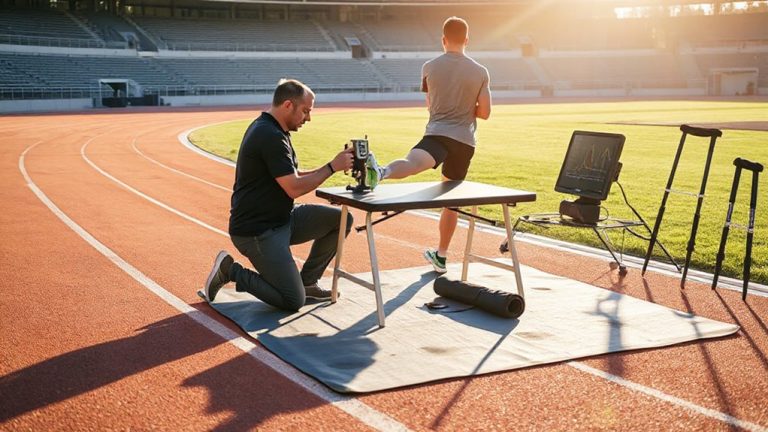
Cross-Education Training Protocols to Maintain Strength in Immobilized Limbs
You can maintain up to 80% of your strength in an immobilized limb by training the opposite side, thanks to cross-education-a neural phenomenon where unilateral exercise boosts central nervous system efficiency. Perform 3–4 weekly sessions using dumbbells or resistance bands, focusing on controlled, high-intensity (70–85% 1RM) unilateral moves like single-leg squats or dumbbell presses. Proper form and consistent volume prevent asymmetry and maximize neural transfer. There’s more to optimizing recovery through targeted adaptation.
Notable Insights
- Train the unaffected limb using unilateral exercises like dumbbell presses or single-leg squats to stimulate strength retention in the immobilized limb.
- Perform 3–4 sessions per week at 70–85% of one-rep max to optimize neural adaptations and contralateral strength benefits.
- Use isometric holds and controlled tempo when range of motion is restricted to maintain neuromuscular activation.
- Focus on full range of motion and proper form to maximize cross-education and minimize injury risk.
- Implement deloading phases periodically to support recovery and sustain long-term neurological adaptations.
How Cross-Education Helps You Stay Strong During Injury
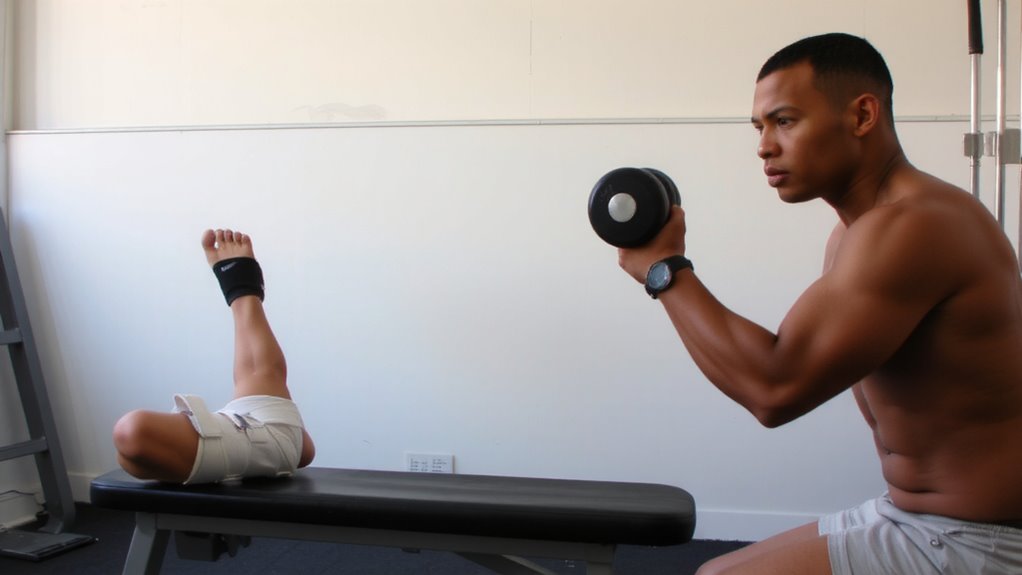
Injury doesn’t have to mean complete strength loss-and that’s where cross-education steps in. When you train your uninjured limb, you’re not just maintaining fitness; you’re actually sending neural signals that help preserve strength in the immobilized side. This happens through neural adaptation, where your central nervous system improves communication with muscles, even those not actively moving. You’ll notice less atrophy and faster recovery, thanks to preserved muscle memory. Studies show measurable strength retention-up to 80%-in immobilized limbs when cross-education protocols are applied. It’s not magic; it’s neurology. You stimulate motor pathways bilaterally, so your brain still “practices” activating muscles on the injured side. For recovery-focused training, this is efficient and practical. Equipment like resistance bands or light dumbbells makes it easy to implement at home. Cross-education won’t replace full training, but it’s a smart, science-backed strategy to keep your body primed and ready for rehab.
Who Benefits Most From Cross-Education After Injury?
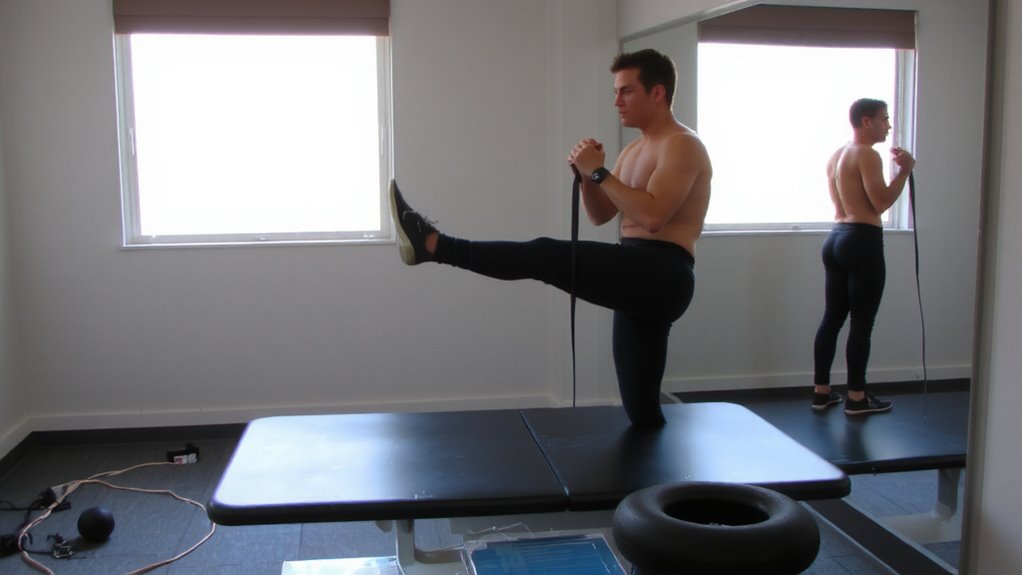
You’re not alone if you’ve ever worried about losing strength after an injury-especially when one limb is sidelined. Fortunately, cross-education helps more than most realize. You benefit most if you’re early in recovery, consistently train the unaffected limb, and tap into neurological adaptations that enhance muscle activation on the immobilized side. These neural pathways retain muscle memory, making strength return faster once healing allows. Athletes, older adults, and rehab patients see strong results, though individual response varies. Research shows up to 80% of strength can be preserved with proper protocol. The key lies not in gimmicks or fitness gear promising miracles, but in systematic, evidence-based training. While equipment can aid consistency, it’s the repeated stimulus-not the tool-that drives gains. Your nervous system adapts intelligently, meaning even basic resistance work on the good side delivers real protective effects.
Top 5 Cross-Education Exercises for Arm and Leg Recovery
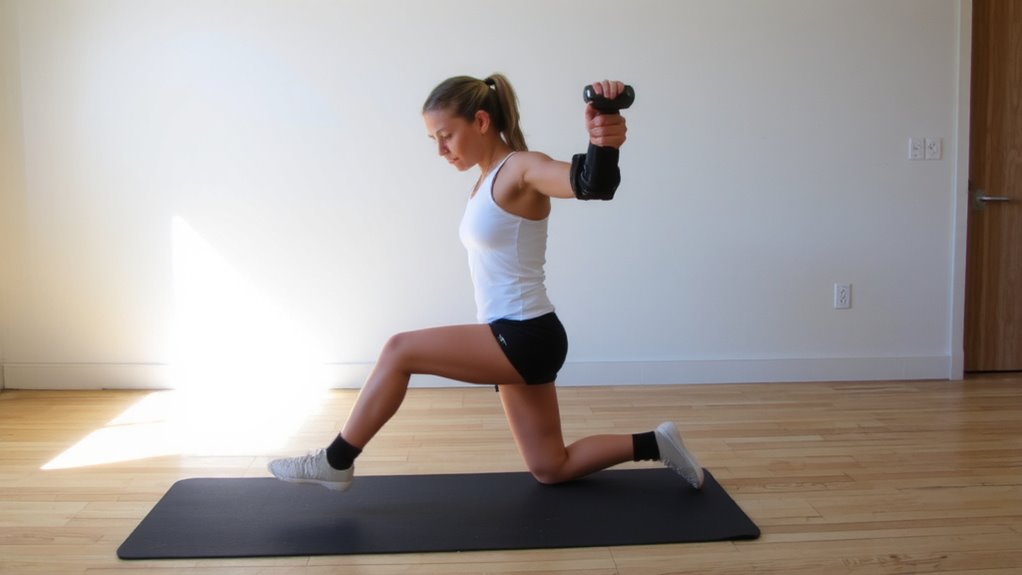
Strength preservation during immobilization isn’t just about waiting-it’s about acting strategically, and cross-education gives you a proven way to do that. When one limb is injured, training the opposite side boosts neural adaptation, helping maintain strength in the immobilized limb. Exercises like unilateral dumbbell presses, single-leg squats, and resisted elbow flexion with bands work best-they’re simple but effective. These movements reinforce muscle memory and improve interhemispheric communication in the brain. You’ll need minimal gear: adjustable dumbbells, resistance bands, and a stable bench are enough. Performance gains aren’t equal to bilateral training, but studies show up to 75% strength retention. Focus on controlled tempos and full range of motion. Isometric holds also help when movement’s restricted. The key is consistency-three sessions weekly yield measurable results. Cross-education won’t replace rehab, but it bridges the gap when one limb can’t train directly.
How to Build a Cross-Education Workout Plan
How do you maintain progress when one limb is sidelined? You use cross-education training by working the uninjured side to preserve strength in the immobilized limb. Start with smart exercise selection-choose unilateral movements like single-leg presses or one-arm rows that closely match the affected limb’s function. This boosts neural transfer and maximizes carryover. Aim for moderate to high intensity, around 70–85% of your one-rep max, to effectively stimulate contralateral pathways. Training frequency matters too; hitting the working limb 3–4 times per week yields better results than sporadic sessions. Research shows consistent effort strengthens both the active and inactive limb, though gains in the immobilized limb plateau over time. Stay disciplined with your routine and track progress. With proper setup and equipment-like resistance bands or adjustable dumbbells-you’ll maintain functionality until full recovery.
Avoid These Cross-Education Training Mistakes
Skipping proper form in favor of heavier weights is a fast track to diminished results-and potential setbacks. You might think lifting heavier speeds up strength transfer to the immobilized limb, but poor technique undermines neuromuscular efficiency and increases overtraining risks. Stick to controlled, deliberate reps that emphasize muscle activation without compensatory movements. Another common error is neglecting to monitor training volume on the working limb, which can create a symmetry imbalance over time. Training too aggressively without deloading phases reduces recovery quality and may impair cross-education benefits. You should also avoid exclusively using machines; free weights or resistance bands better replicate functional movement patterns. Consistency matters, but not at the expense of joint health or movement fidelity. Prioritize balanced loading, proper rest intervals, and progressive intensity to optimize neural adaptations-all while minimizing asymmetry and avoiding overtraining risks.
When to Return to Two-Sided Training After Injury
When can you safely resume bilateral training after an injury? It depends on your recovery timeline and how well muscle symmetry has been restored. You shouldn’t rush back-typically, waiting until the injured limb reaches at least 80–90% of the strength in its counterpart is wise. Cross-education helps maintain neural pathways and slows atrophy, but bilateral movements demand balanced force production. Assess symmetry through functional tests, not just strength numbers. If imbalances persist, adding resistance too soon increases re-injury risk. A gradual reintroduction-starting with light, controlled bilateral exercises-lets you monitor stability and coordination. Fitness gear like velocity-based training tools or wearable sensors can objectively track symmetry during movements. These devices offer real-time feedback, helping you adjust load or tempo. Ultimately, returning isn’t just about healing; it’s about readiness. Let data, not enthusiasm, guide your restart.
On a final note
You’re likely to regain strength faster in an immobilized limb by training its counterpart-cross-education works best with near-maximal, consistent efforts. It’s not a full fix, but it slows decline meaningfully. Paired with smart recovery gear like compression sleeves or neuromuscular stimulators, results improve. Just don’t skip proper rehab later-this bridges the gap, not replaces full bilateral training once healed.