Slackline Progressions for Advanced Proprioceptive Demand in Trail Runners
You build advanced proprioception by progressing from basic slackline balance to eyes-closed stances and unstable surfaces like sand or gravel. These challenges sharpen neuromuscular control and joint resilience, critical for trail running stability. Adding dynamic moves-cross-step turns, single-leg jumps-further enhances foot precision. Incorporate 10–15 minute sessions weekly, using looser lines to increase difficulty. You’ll gain stronger ankle control, better trail adaptability, and reduced injury risk-discover how to tailor these drills for your terrain.
Notable Insights
- Close eyes during slackline stances to heighten reliance on proprioception and remove visual balance cues.
- Perform single-leg stands on unstable surfaces like grass or sand to amplify proprioceptive challenge.
- Use loose, low slacklines to increase wobble and demand real-time neuromuscular adjustments.
- Incorporate cross-step pivots and small jumps for dynamic stability and trail-specific coordination.
- Integrate weekly 10–15 minute sessions to improve ankle resilience and reactive foot placement on trails.
Why Trail Runners Should Train on a Slackline
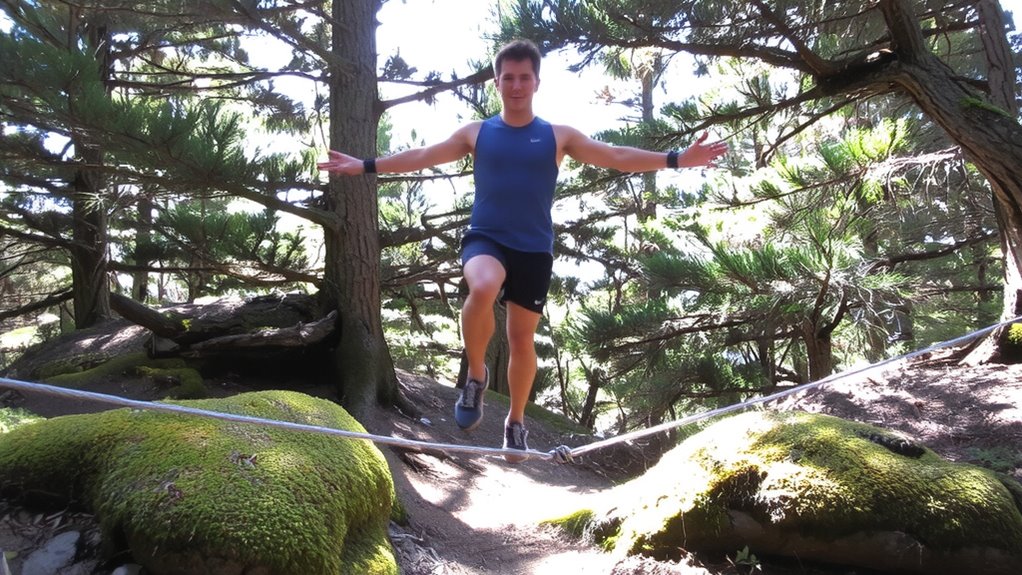
One key reason trail runners benefit from slackline training is the significant improvement in dynamic balance and proprioception-skills directly transferable to uneven terrain. You develop sharper neuromuscular control, which enhances foot placement on rocky descents and slippery trails. The constant micro-adjustments required while on the line boost ankle strength and joint resilience, reducing your risk of rolling or spraining. Meanwhile, maintaining posture activates your core stability far more than static exercises. This integrated engagement mirrors the demands of trail running, where stability and coordination are essential. Unlike passive recovery tools, slacklining actively rebuilds functional movement patterns. The gear is lightweight and portable, demanding minimal setup but delivering high neuromuscular return. When used consistently, it bridges fitness gaps other tools can’t address-making it not just supplemental, but strategic for long-term performance and injury resilience.
Learn to Balance: First Steps on the Slackline
Grab your slackline and anchor it low to the ground-just 6 to 12 inches off the surface-to minimize fall distance and let you focus on balance without fear. This setup supports beginner techniques by reducing intimidation and enhancing initial stability. Stand with feet hip-width apart, arms out slightly for counterbalance, and engage your core to minimize sway. Focus on a fixed point to improve proprioception. Small corrections in ankle angle will help maintain alignment as the line moves beneath you.
| Skill Focus | Benefit |
|---|---|
| Foot placement | Improves precision and control |
| Core engagement | Enhances initial stability |
| Visual fixation | Supports beginner techniques |
Practice daily for short sessions-3 to 5 minutes builds neuromuscular efficiency without fatigue. Consistent use of quality slackline gear guarantees durability and consistent tension, critical for progressive training.
Walk, Turn, and Jump: Build Dynamic Control
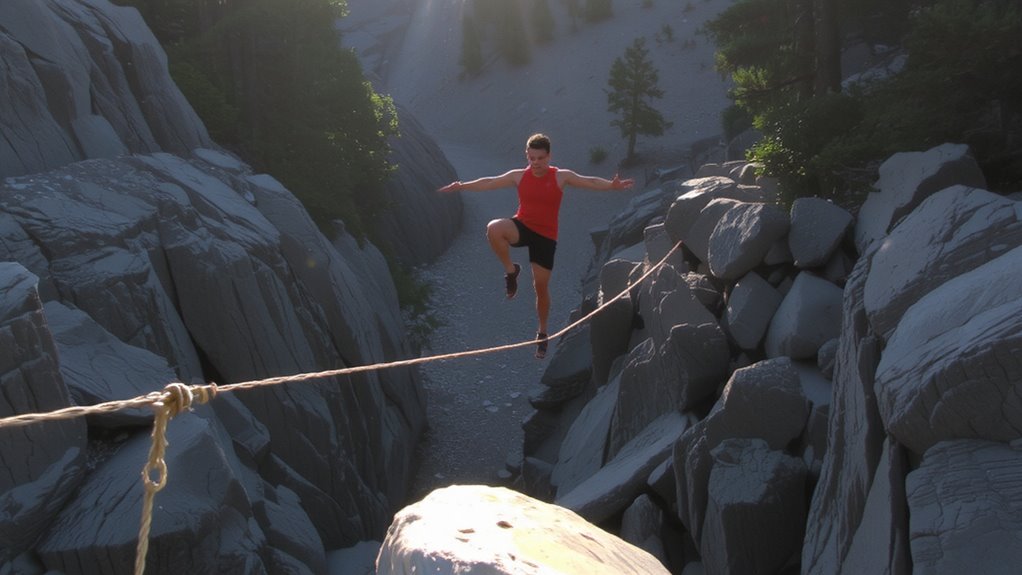
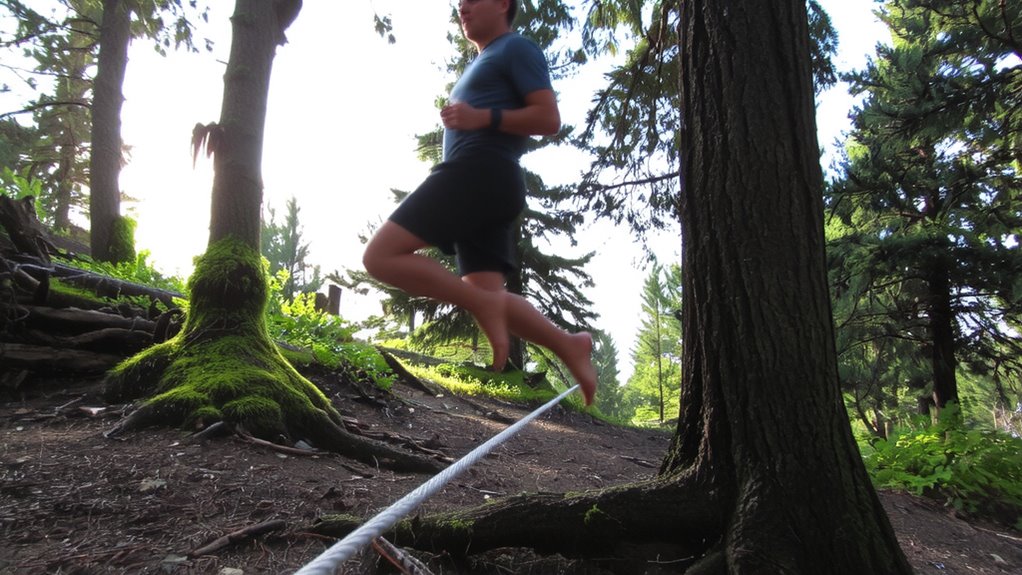
How do you shift from simply standing on the line to moving with control and confidence? You start walking-short, deliberate steps, focusing on stability. As the slackline wobbles, your trail-running muscles engage differently than on packed dirt, forcing micro-adjustments with each step. Once walking feels steady, introduce the cross step pivot to turn smoothly without stepping off. This movement trains rotational stability, mimicking uneven trail shifts. Then progress to small jumps, emphasizing a quiet, controlled one foot land to reduce impact and increase proprioceptive feedback. These dynamic moves build coordination, strengthen stabilizing muscles, and improve joint awareness critical for technical terrain. Unlike flat-ground drills, the slackline’s instability amplifies neuromuscular demand, making gains transferable. Consistent practice sharpens reactive control, benefiting trail performance where split-second balance adjustments are essential.
Challenge Your Balance: Close Your Eyes, Shift Surfaces
Closing your eyes on the slackline might sound counterintuitive, but it’s one of the most effective ways to deepen your balance and sharpen neuromuscular control. By removing visual input, your body relies more on proprioception-critical for handling uneven terrain during trail runs. Try this during a single leg stance to amplify the challenge and mimic the instability of rocky paths. Shifting surfaces-like grass, gravel, or sand-under the anchor points further increases difficulty, training your muscles to adapt rapidly. This progression isn’t just about balance; it builds resilient joint feedback loops essential for injury prevention.
| Surface Type | Stability Level | Proprioceptive Demand |
|---|---|---|
| Grass | Moderate | High |
| Gravel | Low | Very High |
| Sand | Very Low | Extreme |
Integrating varied surfaces and eye closure elevates your reactive control far beyond flat-ground training.
Add Slackline Drills to Your Weekly Running Routine
You’ll often find that integrating slackline drills into your weekly running routine enhances both stability and stride efficiency, especially when approached with consistency and intention. These drills sharpen your neuromuscular control, demanding precise slackline timing and constant reactive adjustments to maintain balance. Just 10–15 minutes, three times a week, can recalibrate your proprioception, translating to quicker foot placement and reduced missteps on technical trails. Unlike static stability exercises, slacklining introduces variable tension and movement, mimicking the unpredictable demands of trail running. High-tension lines offer beginner-friendly resistance, while looser setups increase difficulty and specificity. When paired with recovery-focused gear like compression sleeves or foam rollers, slackline training supports joint integrity and muscle resilience. The minimal equipment-just a line, anchors, and durable tree protection-makes it accessible and easy to maintain. Over time, you’ll notice smoother shifts, better mid-stance control, and improved confidence on uneven terrain. For optimal recovery benefits, consider wearing compression sleeves during post-workout cooldowns.
On a final note
You’ll improve proprioception and joint stability by consistently using a slackline, especially on uneven terrain. Top models resist UV damage and stretching, ensuring reliable tension. Paired with recovery tools like foam rollers, slackline training reduces injury risk and enhances neuromuscular control. It’s not just balance work-it’s functional strength. Integrated weekly, it complements running by demanding real-time micro-adjustments. For trail runners, this translates to sharper foot placement, better ankle resilience, and smoother navigation through technical sections.