How Athletes Can Use Time Blocking to Prevent Burnout and Enhance Mental Recovery
You can prevent burnout by treating recovery like a workout-schedule time blocks for active recovery, mental resets, and personal life with the same discipline as training. Time blocking makes rest measurable, reduces cognitive load, and protects against overtraining. When you pair fitness gear with structured downtime, recovery becomes intentional, not accidental. It’s not just about physical repair-it’s how you sustain peak performance long-term. There’s more to optimizing your rhythm than what happens in the gym.
Notable Insights
- Schedule daily recovery blocks as non-negotiable priorities to enhance physical restoration and mental clarity.
- Use time blocking to track rest like training, identifying patterns in fatigue and mental performance.
- Integrate active recovery-foam rolling, walking, yoga-to reduce soreness and support circulatory and cognitive health.
- Protect personal and family time with strict time boundaries to prevent role overload and psychological strain.
- Audit weekly schedules to adjust workloads, close recovery gaps, and prevent overtraining or burnout.
Build a Recovery-Focused Training Schedule With Time Blocking
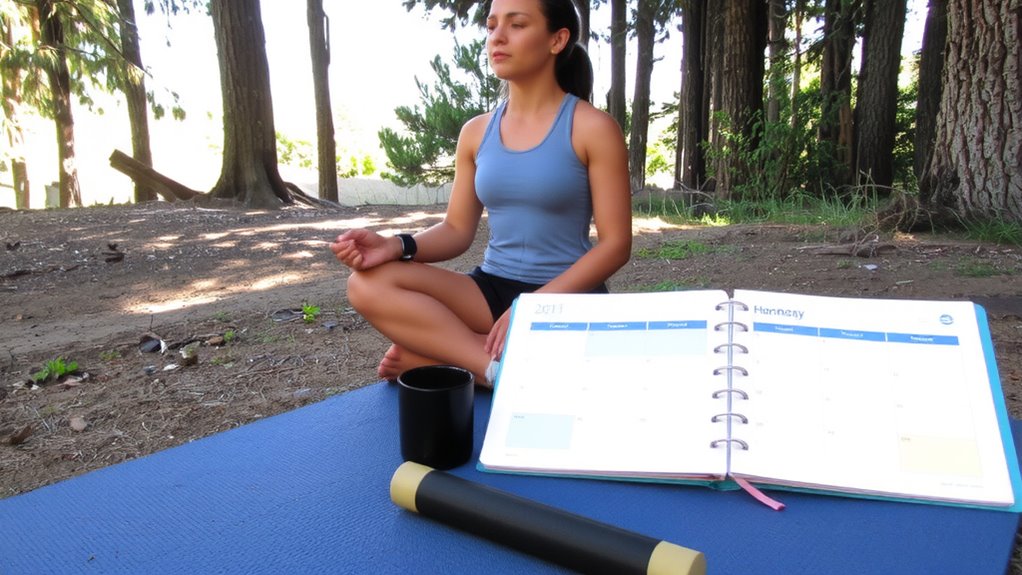
While your training intensity matters, how you schedule recovery can make or break your long-term performance-so building a recovery-focused routine with time blocking isn’t just smart, it’s essential. You need dedicated slots for active recovery, like light cycling or mobility work, to enhance circulation and reduce muscle stiffness without overloading your system. These sessions, when blocked in advance, become non-negotiable priorities. Just as vital is scheduling time for mental reset-periods free from performance pressure that allow cognitive restoration. Whether it’s meditation, quiet stretching, or simply disconnecting from screens, this mental downtime supports emotional resilience and focus. High-performance fitness gear can aid the process, but only if paired with intentional recovery planning. Without structured recovery, even the best equipment won’t prevent burnout. Time blocking turns recovery from an afterthought into a measurable, effective part of your training rhythm.
Use Time Blocking to Schedule Rest Like a Workout

Rest isn’t a luxury-it’s a performance lever, just like strength training or sprint intervals. You wouldn’t skip a key workout, so why treat recovery as an afterthought? Schedule rest with the same precision: block time daily for active recovery, like foam rolling, light yoga, or walking. These sessions boost circulation and reduce soreness, but only if they’re consistent. Treat them like any drill-non-negotiable. Likewise, plan a mental reset: 20–30 minutes of quiet reflection, meditation, or nature time. It lowers cortisol and sharpens focus. Just as heart rate monitors track effort, use downtime to track restoration. When you log recovery like reps, you see patterns-fatigue builds when blocks get skipped. High-end gear like compression boots or sleep trackers help, but only if paired with intentional time. Scheduled rest isn’t passive; it’s strategic. Block it, honor it, and watch resilience rise. For deeper muscle recovery during these blocks, consider incorporating a best massage gun to enhance blood flow and reduce tension.
Set Time Block Boundaries for Life Outside Your Sport

You’ve blocked time for physical recovery, treating rest with the same rigor as your workouts-now extend that discipline beyond the training floor. Carve out personal time just as you would a strength session; it’s not indulgent, it’s strategic. When you schedule family moments, you protect those interactions from being overtaken by training demands or recovery protocols. These non-negotiable blocks reinforce identity beyond sport, reducing psychological strain. Top performers don’t just recover physically-they mentally detach, and structured time off enables that. Use your planner to log personal time like you would ice baths or mobility drills. This isn’t about leisure alone; it’s about cognitive restoration. When family moments are guaranteed, stress doesn’t seep into off-hours. Treat equipment like foam rollers or compression boots like tools, not crutches-valuable when used intentionally, but insufficient without holistic recovery. Boundaries outside sport aren’t optional-they’re foundational.
Understand How Time Blocking Prevents Burnout
Because burnout often stems from unrelenting demands and blurred boundaries between training, recovery, and personal life, time blocking acts as a protective mechanism by imposing structure where chaos typically takes hold. You’re less likely to experience mental fatigue when your schedule includes dedicated windows for rest, just as you would for workouts or meetings. By assigning specific blocks to training, recovery, and downtime, you reduce stress accumulation that comes from constant role switching. Think of time blocking like recovery gear-it’s a tool, just as essential as compression sleeves or foam rollers, but for your mind. Without it, your cognitive load builds silently, weakening focus and resilience. When you protect your time deliberately, you preserve mental energy, maintain performance consistency, and keep long-term drive intact. It’s not just about doing less; it’s about organizing your load so recovery happens by design, not chance.
Spot and Fix Overtraining With Smarter Scheduling
While training hard is essential for progress, pushing through persistent fatigue without adjusting your schedule can signal overtraining creeping in-and smarter scheduling helps you catch it before it derails performance. With time blocking, you gain early detection by mapping workouts, rest, and sleep into clear segments, making recovery gaps obvious. You’ll notice patterns: declining output, prolonged soreness, or mood shifts-all signs your body needs more restoration. Instead of reacting late, you adjust proactively-swap intensity, insert active recovery, or prioritize sleep blocks. Unlike relying solely on fitness gear like heart rate monitors or recovery apps, structured scheduling builds accountability into your routine. It’s not just about logging effort; it’s about designing balance. Overtraining isn’t inevitable. By auditing your plan weekly, you close recovery gaps, align stress with adaptation, and sustain peak performance without burnout. Smarter scheduling isn’t optional-it’s strategic self-preservation.
On a final note
You prevent burnout by treating rest like training-time blocking makes recovery non-negotiable. Scheduling mental downtime, sleep, and active recovery with the same rigor as workouts guarantees consistency and sustainability. This structured approach enhances performance by aligning physiological needs with daily demands. Time blocking isn’t just organization; it’s strategic recovery, improving focus, resilience, and long-term athletic health without relying on gear or shortcuts.