Hip Mobility Drills With Standing Hip Abduction With Band
You’ll boost hip mobility and glute activation by adding standing hip abductions with a resistance band to your routine. Keeping proper form-upright posture, level hips, controlled movement-ensures you target the gluteus medius effectively while protecting your joints. Use a flat, durable latex or fabric band to maintain consistent tension and prevent rolling. This drill works well in warm-ups or between sets, priming your hips for better movement patterns. There’s more to optimize in your approach.
Notable Insights
- Standing hip abduction with a resistance band enhances hip mobility by activating the gluteus medius in a functional, upright position.
- Perform controlled repetitions to improve joint range of motion while maintaining neutral spine and level hips.
- Use light-to-medium bands to ensure proper form and consistent tension during mobility-focused sets.
- Incorporate slow eccentric movement and pulse reps at peak abduction to increase time under tension and joint adaptability.
- Pair banded abductions with dynamic drills like lateral walks to boost hip stability and overall mobility.
How to Do Standing Hip Abduction With a Band
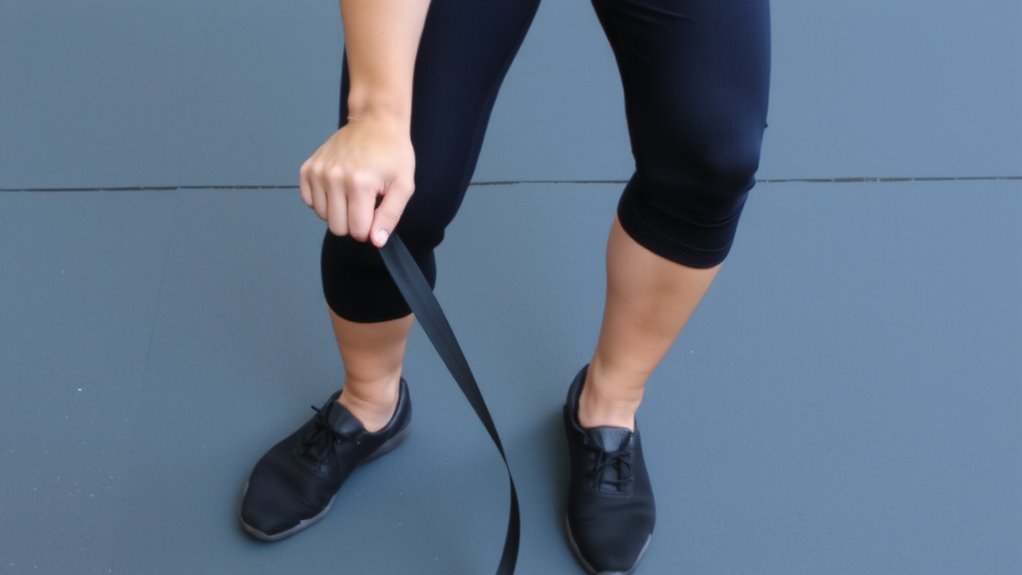
A resistance band around your ankles makes standing hip abduction surprisingly effective for firing up the gluteus medius, especially when you’re warming up or rehabbing a hip issue. You’ll stand tall, engage your core, and maintain proper alignment-hips level, spine neutral, no leaning. As you move your leg sideways, focus on controlled movement to maximize muscle engagement and minimize momentum. A light-to-medium resistance band works best, offering enough tension without compromising form. This drill’s simplicity doesn’t diminish its value; it’s a reliable tool for improving hip stability and mobility. The band’s durability matters-look for latex-free, tear-resistant models that hold up over time. When used consistently, this exercise supports functional strength and joint health. It’s a smart addition to recovery routines, especially if you’re on your feet a lot or rehabbing from injury.
Common Mistakes to Avoid in This Move
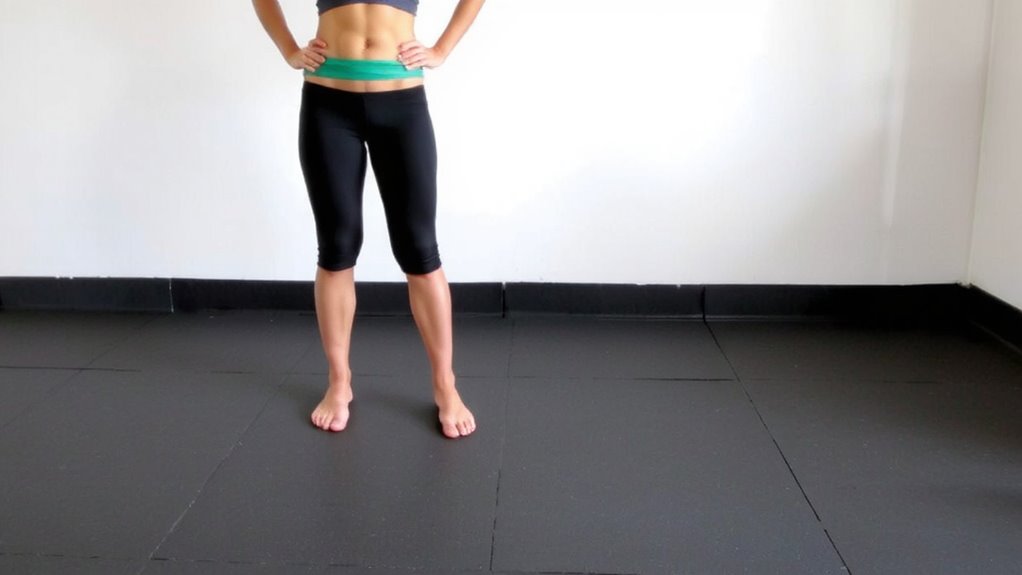
Most lifters, even experienced ones, tend to slip into at least one of several common form breakdowns during standing hip abduction with a band, and skipping these pitfalls can make or break the drill’s effectiveness. You often lean too far to the working side, creating poor posture that shifts tension from the glutes to the lower back. Keep your torso upright and core braced to maintain alignment. Another frequent error is using excessive momentum-swinging the leg outward instead of lifting it with control. This reduces muscle activation and increases joint stress. Move slowly, focusing on a smooth contraction at peak abduction. Avoid bouncing at the bottom or hiking your hip to gain leverage. Stay grounded through the standing leg, guaranteeing the foot remains flat. These adjustments may reduce reps, but they boost quality. Proper form guarantees real glute engagement and joint stability, turning a simple move into a powerful mobility tool.
Best Resistance Bands for Standing Hip Abduction
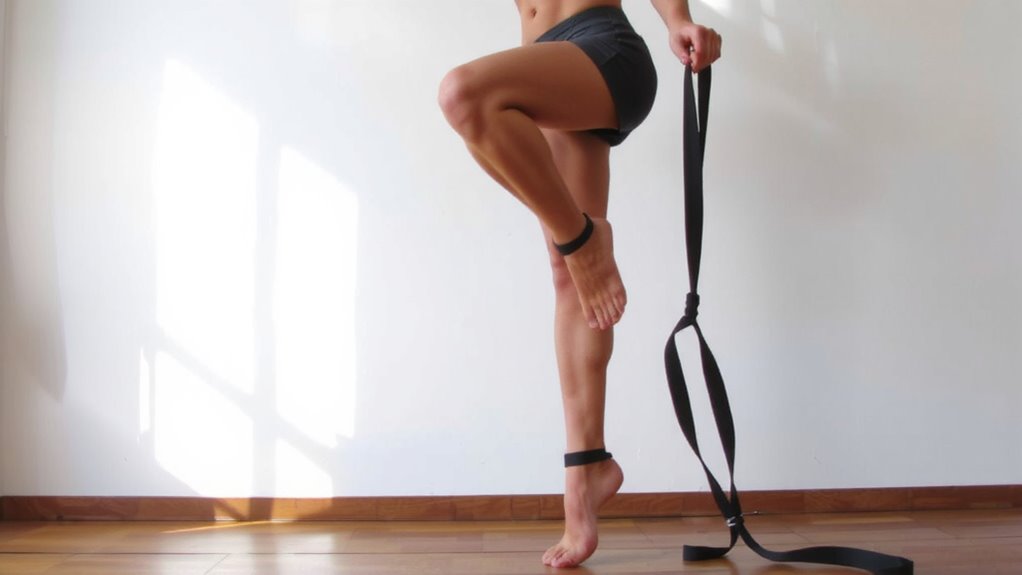
Resistance quality matters more than you might think when selecting a band for standing hip abduction, since the movement demands consistent tension across a full range of motion. You’ll want a latex or fabric resistance band that maintains even band tension from start to finish-cheap bands often weaken at peak stretch, reducing effectiveness. Look for graduated resistance levels (light to heavy) so you can progress safely. Flat bands typically offer more predictable tension than ring-style loops, especially when anchored low. Speaking of anchor points, guarantee your band stays secure around the ankles or just above the knees without rolling or pinching. Wider bands minimize discomfort, while reinforced stitching improves durability. Avoid bands with inconsistent elasticity; they compromise form and results. A quality band should feel sturdy, stretch smoothly, and return to shape without snapping. Pick one that balances resistance integrity with comfort for reliable, long-term use.
When to Add It: Warm-Ups, Workouts, or Recovery
When should you actually incorporate standing hip abduction into your routine-before, during, or after your workout? Timing considerations play a key role in maximizing its effectiveness. For most, it’s ideal in warm-ups, activating glutes and hip abductors before lifting or running. The band adds resistance that primes muscles without fatiguing them, making it a smart pre-session integration. You can also include it during lower-body workouts as a filler between sets to maintain tension and focus on form. Post-workout use is less common but viable during active recovery days, helping promote blood flow and mobility without strain. Still, it’s not a substitute for dedicated stretching or foam rolling. For fitness recovery, prioritize low-intensity applications. Session integration depends on your goals-consistency matters more than timing, but placing it early guarantees you don’t skip it when fatigue sets in.
Why This Move Boosts Hip Mobility
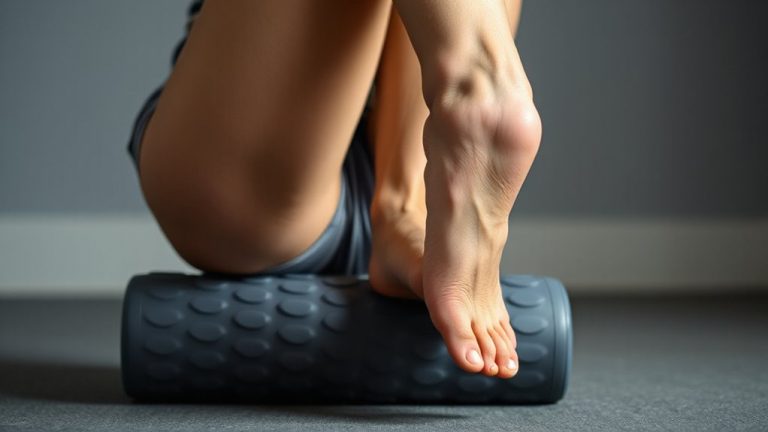
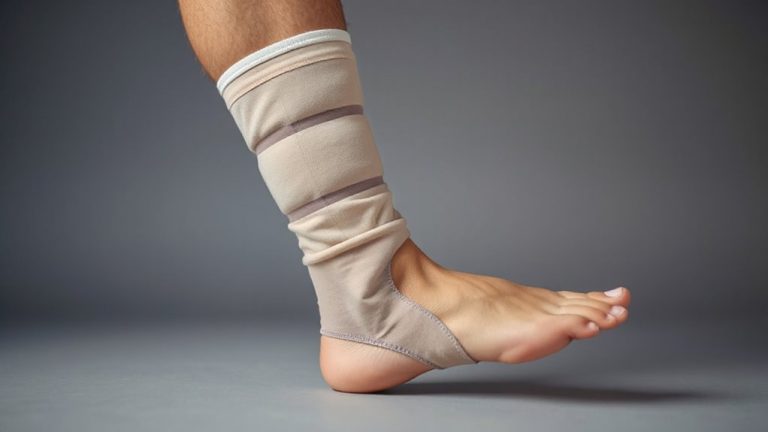
You’re already using standing hip abduction in warm-ups or as a between-set activator, but understanding why this move actually improves hip mobility makes a difference in how you perform it. This exercise enhances joint activation by priming the hip capsule to move through its full range, promoting better alignment and synovial fluid distribution. The resistance band adds external load, increasing muscle engagement-particularly in the gluteus medius and deep hip rotators-which supports pelvic stability. Stronger, more responsive muscles help maintain proper femoral head positioning, reducing impingement risks. Over time, consistent use improves neuromuscular control, making movements in squats or lunges smoother and safer. It’s not just about motion; it’s controlled, coordinated mobility. When paired with quality recovery gear-like supportive foam rollers or compression sleeves-you’re addressing both performance and tissue health, creating a more resilient hip complex.
Variations to Build Stronger Glutes
A handful of well-chosen variations can take your glute development much further than standard moves alone. These tweaks boost glute activation and improve muscle endurance over time. Adding resistance bands, altering foot position, or increasing time under tension all make a difference. Below are five effective variations to integrate into your routine.
| Variation | Benefit |
|---|---|
| Banded lateral walks | Enhances glute medius engagement |
| Single-leg abduction | Increases stability and activation |
| Pulse reps at peak contraction | Builds muscle endurance |
| Elevated stance abduction | Adds range of motion |
| Slow eccentric movement | Amplifies time under tension |
Each version challenges your glutes differently, ensuring balanced strength and joint support. Use secure, durable bands to maintain tension and consistency. You’ll notice better control during movement and reduced hip tightness with regular use. These variations aren’t just add-ons-they’re upgrades that maximize results.
On a final note
You’re getting more from your recovery when you use a resistance band for standing hip abduction correctly. This drill boosts mobility, activates glutes, and improves joint stability with minimal gear. A quality loop band-durable, properly tensioned-makes all the difference in performance and longevity. Integrate it into warm-ups or active recovery, and you’ll notice better movement control. It’s not just effective; it’s essential for balanced lower-body function.