Active Stretching Transitions Blended Into Final Minutes of Elliptical Use
You can boost recovery and flexibility by blending active stretches into the final minutes of your elliptical session. Your muscles respond better when warm, making dynamic moves like leg swings or torso rotations more effective. This seamless shift maintains heart rate, supports joint mobility, and enhances neuromuscular control. Pairing breathable activewear with proper form guarantees peak performance. Avoid common errors like overstretching, and discover how slight tweaks can lead to noticeably better results over time.
Notable Insights
- Begin active stretching during the final 3–5 minutes of elliptical use for optimal muscle warmth and flexibility.
- Perform heel lifts toward glutes while balancing on one leg to stretch quads without interrupting stride.
- Incorporate forward torso leans with hinged hips and engaged core to target hamstrings mid-motion.
- Use controlled arm circles and torso rotations to integrate dynamic stretches seamlessly into the workout.
- Maintain smooth transitions between elliptical motion and active stretches to preserve heart rate and enhance recovery.
Why Add Active Stretching After Your Elliptical Workout

While you’re already reaping cardiovascular benefits from your elliptical session, skipping active stretching afterward means missing a critical window to enhance recovery and mobility. Engaging in active stretching immediately post-workout supports improved joint mobility by gently lengthening muscles while they’re warm and pliable. This practice not only reduces delayed onset muscle soreness but also fosters the benefits of consistency in your routine, leading to better long-term flexibility and muscular balance. Unlike passive stretching, active techniques involve controlled movements that prepare your body for daily activities or future workouts. High-performance activewear with four-way stretch can further aid these motions, allowing unrestricted range. Over time, consistent post-elliptical stretching enhances neuromuscular coordination and joint stability. Neglecting it diminishes overall training gains. Smart integration of recovery-focused habits-paired with functional fitness gear-optimizes both performance and longevity, making active stretching not just beneficial, but essential for sustainable fitness progression.
Transition Smoothly From Cardio to Dynamic Stretching
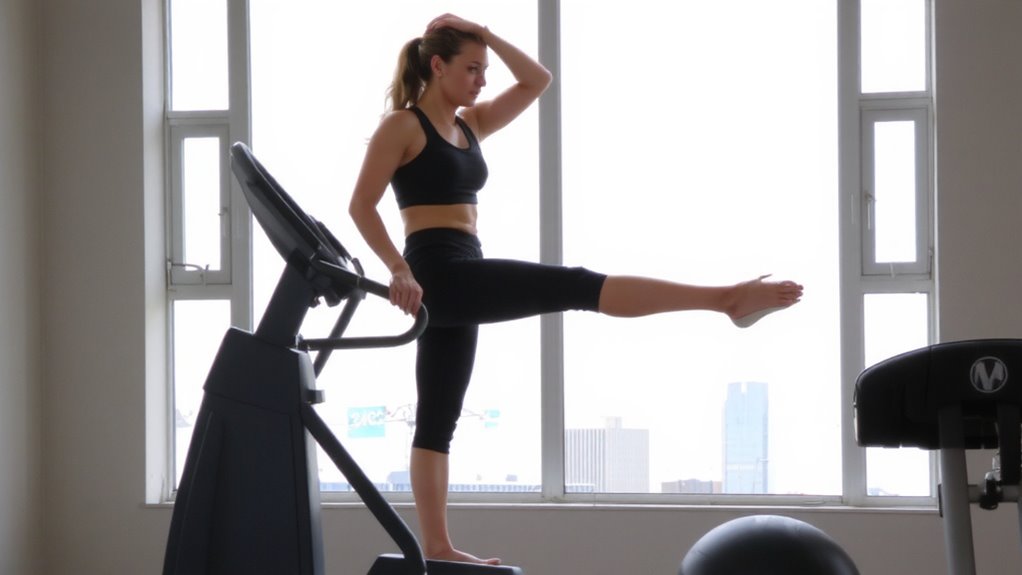
A seamless cooldown begins the moment you step off the elliptical, and shifting into dynamic stretching is your best move for maintaining momentum in recovery and mobility. You’ve already primed your muscles and increased blood flow, so now’s the time to enhance joint mobility with controlled movement. Start with slow, deliberate motions-arm circles, leg swings, torso rotations-and pair each with deep breathing techniques to signal your nervous system to relax. Inhale during preparation, exhale during exertion; this rhythm supports oxygen delivery and reduces post-workout tension. Unlike static stretches, dynamic movements keep your heart rate from dropping too fast, easing the shift into recovery. High-quality fitness gear with breathable fabric can help maintain body temperature during this phase, ensuring your muscles stay warm and pliable. Doing this right improves flexibility, reduces soreness, and prepares you for consistent training.
5 Active Stretches You Can Do on the Elliptical
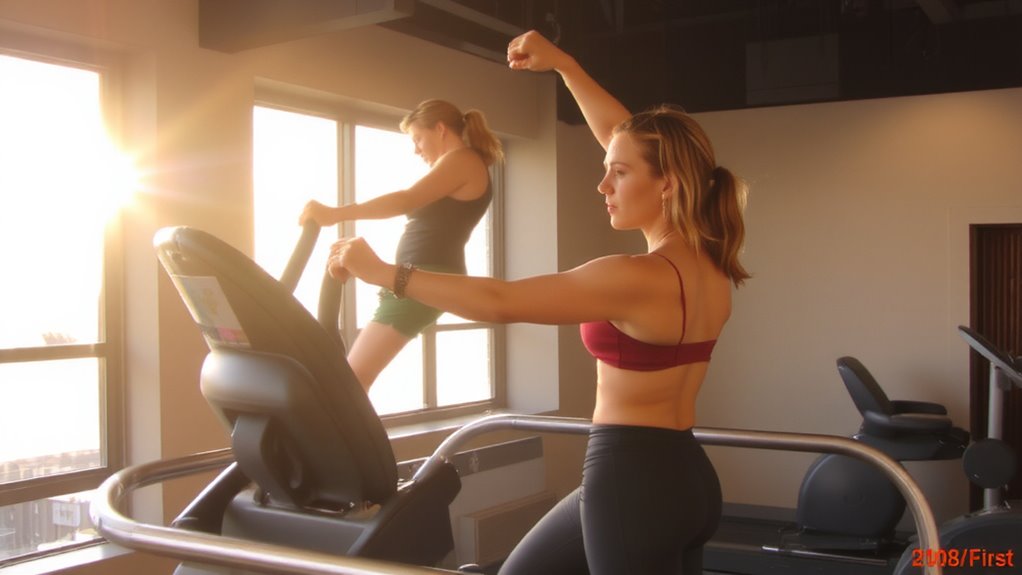
Since you’re already on the elliptical, it makes sense to use those final minutes for active stretches that support recovery without sacrificing momentum. You can maintain elliptical balance while gently increasing joint mobility through controlled movements. Try lifting one heel toward your glutes to stretch your quads while the machine stabilizes your posture. Alternate with forward torso leans to engage hamstrings-just hinge at the hips while keeping your core tight. These motions blend seamlessly into your stride, promoting blood flow without halting rhythm. Dynamic leg swings aren’t possible on all models, but your elliptical’s footplates allow subtle range-of-motion drills that enhance flexibility. Compared to post-workout floor stretches, these on-the-fly moves offer earlier recovery onset. Equipment with smooth resistance shift supports this best. Active stretching here isn’t just convenient-it’s functionally effective, leveraging your machine’s design to boost mobility while maintaining cooldown consistency.
Time Your 3–5 Minutes for Maximum Flexibility
Three to five minutes is all you need, but timing it right makes all the difference in converting cooldown effort into lasting flexibility. Right after your elliptical session, when muscles are warm and blood flow is high, you’re in the ideal window. Start each stretch slowly, maintaining proper alignment to target the right muscle groups and avoid strain. Think neutral spine, squared hips, and joint stability-small adjustments matter. Pair every movement with consistent breathing; inhale to prepare, exhale as you ease into the stretch. This rhythm signals your nervous system to relax, letting muscles release more fully. Don’t rush-quality beats duration. These final minutes aren’t passive; they’re active recovery, shaping long-term mobility. Used correctly, this brief protocol enhances recovery, reduces stiffness, and reinforces the benefits of your workout. Timing it precisely turns a cooldown into a strategic flexibility gain.
5 Mistakes That Ruin Your Post-Workout Stretch
Why do so many people finish a solid workout only to undo their progress with flawed stretching habits? You’re likely overstretching muscles, thinking more pain means better results-but that’s false. Pushing too hard triggers the stretch reflex, causing tightness instead of relief. It’s counterproductive and can lead to microtears, especially when tissues are fatigued. Another common error? You’re ignoring breathing, which reduces oxygen flow and prevents muscles from relaxing. Controlled, deep breaths help activate the parasympathetic nervous system, enhancing stretch effectiveness. Static holds shouldn’t turn into strain sessions. Instead, maintain gentle tension for 20–30 seconds per muscle group. Combine this with proper form and you’ll support recovery, not hinder it. Avoid these mistakes, and your post-workout routine will complement, not compromise, your fitness efforts.
How Daily Active Stretching Speeds Recovery
You’ve likely heard how skipping post-workout stretches can slow recovery, but it’s not just about avoiding mistakes-active stretching done daily can actually accelerate how quickly your body bounces back. By engaging muscles through controlled motions, you boost circulation, delivering oxygen and nutrients essential for muscle regeneration. Unlike passive stretching, active techniques enhance neuromuscular coordination, priming your body for better performance and injury prevention. Consistent daily practice improves flexibility and reduces soreness, letting you maintain intensity without overtraining. Recovery isn’t just downtime-it’s an active process, and your routine should reflect that. Equipment like resistance bands or a quality foam roller complements these efforts, but isn’t required. The real tool is discipline: carving out minutes daily, not just after workouts. When built into your schedule, active stretching becomes a cornerstone of sustainable fitness, promoting long-term resilience and structural balance without relying on gimmicks or expensive gear. A high-quality stretching strap can further enhance your active stretching routine by improving reach and alignment.
On a final note
You’re better off ending your elliptical session with active stretching-it boosts flexibility and speeds recovery when done right. Blending dynamic moves into your cooldown enhances circulation and reduces stiffness. Just 3–5 minutes can make a difference, especially if you avoid common errors like bouncing or rushing. Quality matters: pair the routine with well-maintained gear for consistent performance. Over time, this habit supports joint health and mobility, making it a smart, science-backed addition to any fitness plan.