Hip Mobility Drills With Frog Pumps for Dynamic Hip Internal Rotation
You can boost hip mobility with frog pumps by lying face down, knees bent and splayed outward, heels together. This drill activates deep gluteal muscles and external rotators, enhancing dynamic internal rotation through controlled lifts. Keep your core engaged, spine neutral, and movement smooth to avoid strain. Done 2–3 times weekly, it improves joint lubrication and neuromuscular control. Precision matters more than reps. You’ll find subtle tweaks in form reveal greater gains.
Notable Insights
- Frog pumps enhance dynamic hip internal rotation by strengthening deep hip rotators and improving neuromuscular control.
- Perform frog pumps in a controlled, rhythmic motion to promote mobility and stability in the hip joint.
- Maintain proper form with knees tracking over the second toe to optimize internal rotation mechanics.
- Combine frog pumps with active breathing to boost endurance and reduce compensatory movement patterns.
- Integrate frog pumps 2–3 times weekly into mobility routines for progressive improvement in hip range of motion.
What Are Frog Pumps?
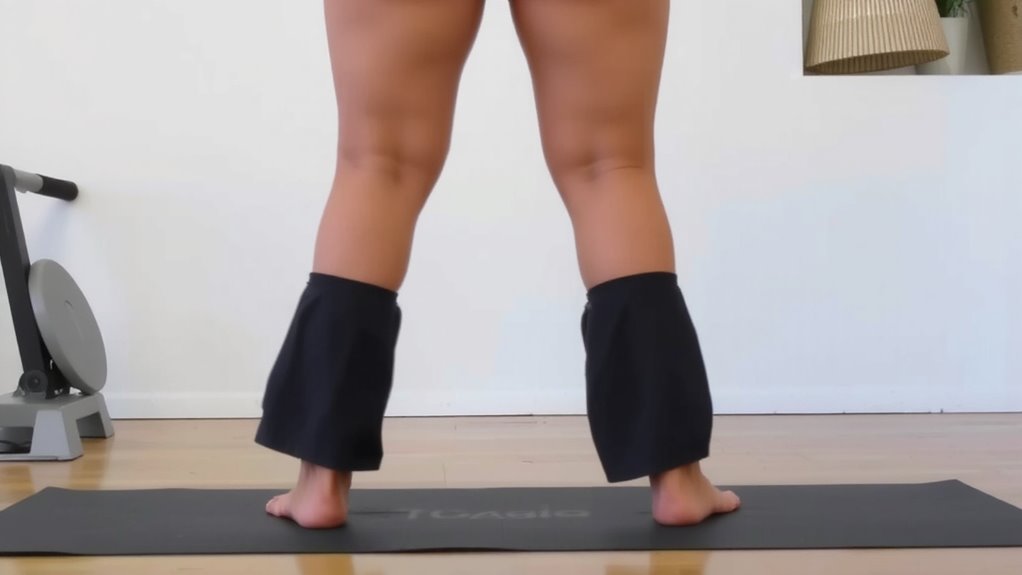
Frog pumps might sound odd at first, but this mobility exercise is anything but gimmicky. You perform frog pumps by lying face down, knees bent at 90 degrees, feet splayed outward in a frog-like position, then lifting your thighs off the ground. This motion emphasizes anatomical benefits by targeting deep hip rotators and gluteal muscles often neglected in standard routines. You’ll notice immediate muscular engagement in the glutes, adductors, and lower back stabilizers. The controlled lift and squeeze help improve neuromuscular control while promoting balanced strength development. Unlike passive stretches, frog pumps actively stimulate tissue health, enhancing joint lubrication and soft tissue resilience. Incorporating them into your regimen offers functional carryover to movements requiring stability and pelvic control. While no fitness gear is needed, consistent form guarantees peak outcomes. Though simple, the drill’s effectiveness lies in precision-making it a credible, science-backed tool for long-term hip integrity and recovery.
Why Frog Pumps Improve Hip Rotation
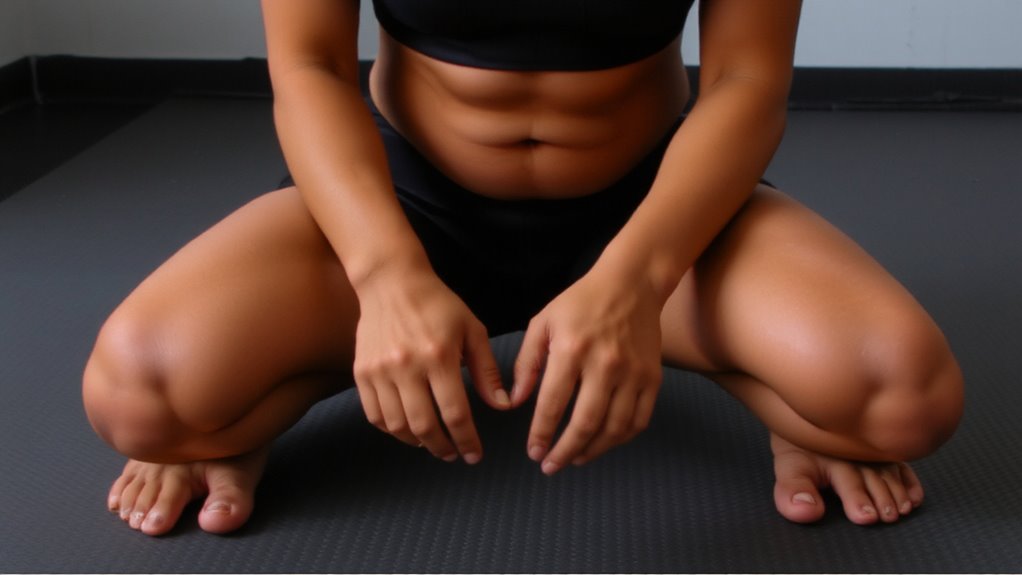
While many mobility drills focus on passive flexibility, frog pumps actively enhance hip rotation by engaging the deep external rotators and gluteal muscles responsible for dynamic joint control. You’re not just stretching-you’re building strength and coordination through repeated contractions. This movement promotes neuromuscular activation, sharpening the mind-muscle connection so your hips respond more efficiently during activity. Unlike static holds, frog pumps challenge your body to maintain biomechanical alignment while moving, which translates to better stability in functional movements like squatting or pivoting. The rhythmic lift and lower forces blood flow into tight areas, aiding recovery and reducing stiffness. You’ll notice improved control and range, especially when combined with proper fitness gear that supports hip alignment. It’s not just about mobility-it’s about training your hips to move well under load. That’s why frog pumps stand out in modern mobility programming.
Get Into the Correct Frog Stretch Position
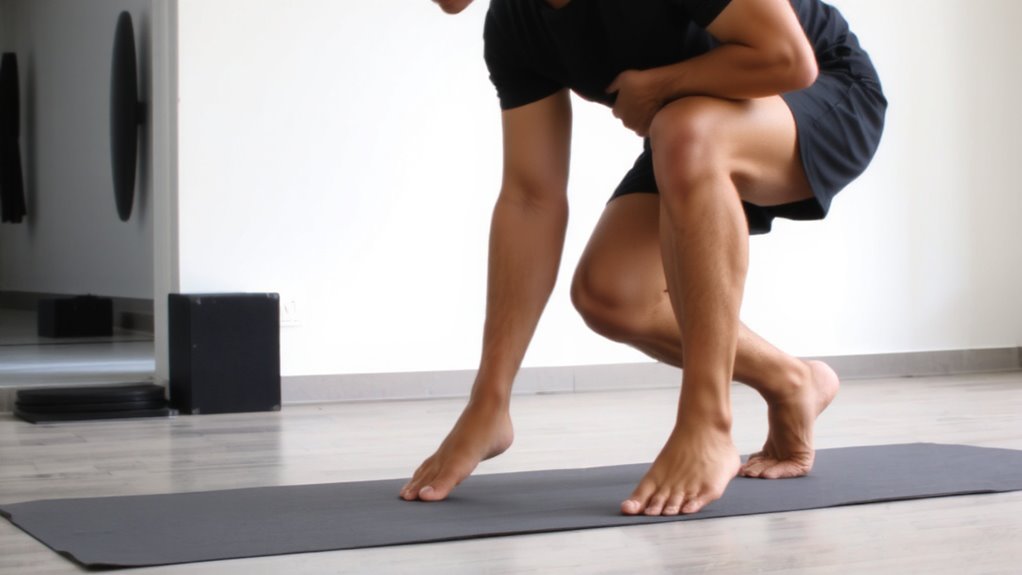
To guarantee you’re setting up the frog stretch properly, start by lying face down on a padded surface, ideally wearing compression shorts or supportive fitness gear that allows free movement without restricting hip adduction. Prop yourself up on your forearms to maintain a neutral spine and ease pressure on the lower back. Your knees should flare outward, heels together, forming a diamond shape with your legs. Proper knee alignment prevents strain-keep them tracking over the toes, not collapsing inward. Ankle positioning matters too; dorsiflex slightly to stabilize and protect the joint.
| Component | Goal | Common Mistake |
|---|---|---|
| Knee Alignment | Track over 2nd toe | Caving inward |
| Ankle Positioning | Slight dorsiflexion | Pointed feet |
| Hip Adduction | Maximize stretch | Restricted by tight clothing |
How to Do Frog Pumps: Step by Step
After you’ve settled into the proper frog stretch position, shifting into frog pumps becomes a natural progression to activate the hips dynamically. Gently lift your hips slightly off the ground, then press your knees outward while allowing your heels to glide toward your hips-this motion enhances dynamic hip internal rotation. Maintain steady core engagement throughout to stabilize your spine and improve control. As you pulse into each pump, focus on smooth, rhythmic movements that encourage mobility without strain. Good ankle flexibility helps keep your feet relaxed and allows for a fuller range of motion, reducing stress on the inner thighs. Perform 10 to 15 pumps per set, using controlled tempo to maximize joint feedback and neuromuscular coordination. This drill not only primes the hips for activity but also supports long-term joint health, especially when integrated consistently into mobility routines.
Common Mistakes During Frog Pumps
You’ve likely felt the burn in your inner thighs and glutes when performing frog pumps, especially if you’ve nailed the form right after settling into the stretch. But improper alignment or excessive pressure can quickly turn this beneficial move into a source of strain. Keep your knees tracking over your toes and avoid flaring them too wide to protect your joints. Lifting too high off the ground shifts focus and risks lower back compression.
| Mistake | Consequence |
|---|---|
| Flared knees | Hip strain, reduced activation |
| Arching lower back | Lower back stress |
| Raising hips too high | Loss of glute focus |
| Holding breath | Reduced endurance, tension |
| Ignoring discomfort | Excessive pressure on joints |
Controlled motion trumps height or speed. Proper form guarantees functional strength and joint resilience over time.
When and How Often to Do Frog Pumps
Frequently incorporating frog pumps into your routine can enhance hip mobility and gluteal activation, especially when performed 2–3 times per week alongside a balanced recovery plan. Frog pump timing matters-performing them pre-workout primes the hips dynamically, while doing them post-workout supports cooldown and joint clearance. For best results, stick to frequency guidelines: 2–3 weekly sessions prevent overuse while encouraging consistent neuromuscular adaptation. If you’re using fitness gear like resistance bands or foam pads, make certain they’re well-maintained to avoid disrupting form or recovery. Daily mobility drills aren’t necessary here; adequate rest supports tissue repair and joint health. Overtraining risks diminishing returns, especially without proper recovery tools. You’ll see the best outcomes when aligning frog pump timing with low-to-moderate intensity days, allowing structural adaptation without fatigue buildup. Recovery isn’t passive-it’s part of performance tuning.
Build Glute Strength and Joint Stability
A solid foundation in hip mobility isn’t complete without targeting glute strength and joint stability-both essential for efficient movement and injury resilience. When you perform frog pumps, you’re not just warming up; you’re building muscular endurance in the glutes and deep hip rotators, which support joint integrity during dynamic motions. Strong glutes stabilize the pelvis, reducing strain on the lower back and knees-especially important if you sit often or engage in high-impact training. Over time, consistent practice enhances control through the full range of motion, reinforcing connective tissues and promoting long-term joint integrity. You’ll notice better balance, reduced stiffness, and smoother shifts in squats, lunges, or sprints. Recovery gear like foam rollers or percussion tools can complement this work by releasing tension, but nothing replaces the foundational strength frog pumps develop. For lasting results, pair mobility drills with targeted strength work-your body’s resilience depends on both muscular endurance and structural support working in sync. Incorporating evidence-based best glute workouts ensures optimal growth and functional strength gains.
On a final note
You’ve likely found that frog pumps boost both hip mobility and glute strength when done correctly. They enhance dynamic internal rotation, which supports squat depth and pelvic control. Paired with quality recovery gear-like targeted foam rollers or compression sleeves-you’ll maintain joint stability and reduce soreness. Consistency matters more than intensity, so integrate these drills into warm-ups or cooldowns. Over time, they deliver measurable gains in movement efficiency and lower-body function.