Introducing 60-Second Centering Exercises Before Entering the Locker Room to Separate Game Mode From Personal Life
You need 60-second centering before entering the locker room to break mental fatigue and emotional carryover. Slow, focused breathing resets your nervous system, sharpens clarity, and stabilizes heart rate-especially when supported by recovery gear that promotes comfort and mobility. Using a designated shift zone enhances emotional separation. Pairing this practice with a physical cue builds consistency. Make it automatic, and you’ll build resilience that lasts well beyond the game. There’s a smarter way to recover-your next step reveals how.
Notable Insights
- Perform 60-second centering exercises immediately after leaving the field to create mental separation from competition.
- Use slow, deliberate breathing to activate the parasympathetic nervous system and reduce post-game arousal.
- Choose a designated shift zone, like a quiet bench or hallway, to enhance focus and emotional reset.
- Anchor the habit by pairing centering with a physical cue, such as removing gear or putting on recovery shoes.
- Build long-term resilience by making the 60-second pause a consistent, non-negotiable part of your post-game routine.
Why Athletes Need 60-Second Centering
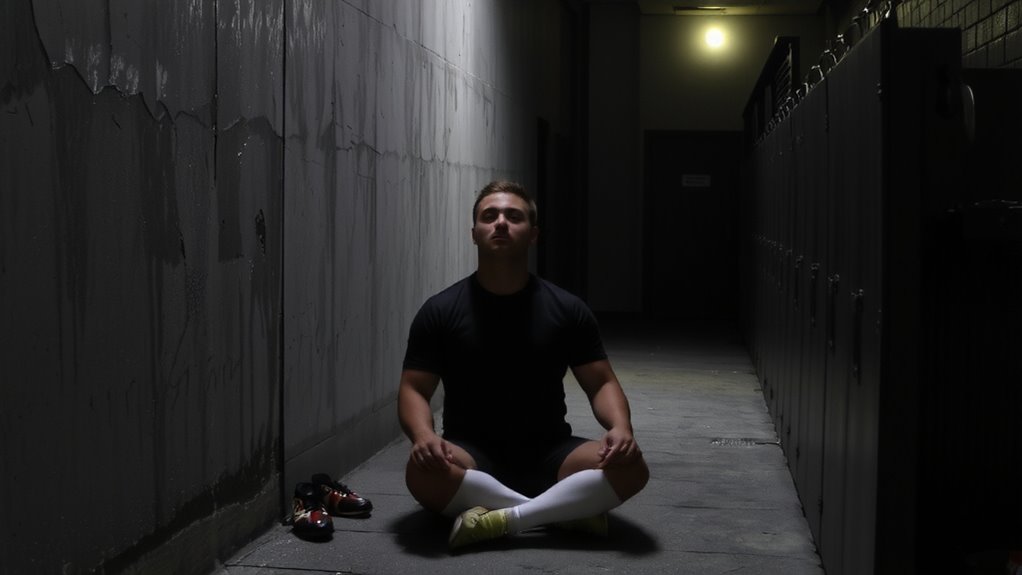
One minute might not seem like much, but when you’re in the middle of a high-stakes game or pushing through a grueling workout, that single minute of centering can make a real difference in your focus, recovery, and overall performance. You’re fighting mental fatigue, which dulls reaction time and weakens decision-making. A quick centering routine helps reset your awareness, letting you step back from emotional detachment without losing competitive intensity. It’s not about disengaging-it’s about regaining control. This brief pause sharpens mental clarity, slows your breathing, and stabilizes heart rate, all of which are critical in high-demand moments. Top athletes use these 60 seconds to shift mindsets, especially before entering the locker room. It’s a tactical pause, not a break. When paired with quality fitness gear that supports mobility and comfort, this practice becomes a reliable recovery tool that enhances both resilience and consistency.
How 60-Second Breathing Resets Your Mind
You’ve already seen how a single minute of centering can sharpen your focus and restore control under pressure, but the real engine behind that reset often lies in one simple, powerful act-breathing. When you slow your breath for just 60 seconds, you activate the parasympathetic nervous system, signaling your body to relax. This isn’t just calming-it’s strategic. Controlled breathing boosts oxygen flow, clears mental fog, and supports mindful focus just before high-stakes moments. You’re not suppressing emotion; you’re creating space for emotional release, letting go of tension that could hinder performance. Studies show rhythmic, deep breaths lower cortisol and steady heart rate variability, both critical in fitness recovery. Unlike gear or apps, your breath is always accessible, free, and effective. It requires no maintenance or charge-just awareness. For athletes, this simple tool offers a reliable way to shift from the intensity of game mode to the calm needed for personal well-being.
3 Science-Backed Techniques to Separate Game From Self
While intense training and competitive drive are essential to athletic success, they can blur the line between identity and performance if not managed with intention. You need mental clarity and emotional detachment to shift smoothly from high-stakes play to personal life. Science-backed techniques like focused breathing, brief mindfulness drills, and cognitive labeling help create this separation. These 60-second centering exercises shift your brain from hyperaroused states to calmer, reflective modes. Studies show they improve emotional regulation by activating the parasympathetic nervous system. They also reduce cortisol spikes common after competition. By practicing them consistently, you train your mind to distinguish performance from self-worth. This isn’t about suppressing emotions-it’s about channeling them appropriately. Over time, this leads to greater resilience, improved recovery, and a healthier relationship with your sport. You stay sharp without carrying the game’s weight home.
Where to Do Your Post-Game Reset
Where should you draw the line between competition and calm? Your post-game reset needs intentional mental space and clear emotional boundaries. It shouldn’t happen on the court or in the locker room, where stress lingers. Instead, designate a shift zone-a quiet hallway, your car, or even a secluded bench-where performance mode ends. This deliberate shift helps protect your personal life from spillover tension.
| Location | Effectiveness for Reset |
|---|---|
| Locker Room | Low – too stimulating |
| Parking Lot | Medium – private but exposed |
| Designated Shift Zone | High – controlled and intentional |
These spots give you room to breathe, recalibrate, and reclaim composure. You’ve earned that mental space-don’t skip claiming it.
Make 60-Stay Automatic
Because consistency shapes lasting habits, turning your 60-second centering practice into an automatic routine amplifies its recovery benefits. You’re more likely to stick with it when it becomes a non-negotiable part of your post-game sequence, like lacing down your cleats or tightening your compression gear. Anchor the habit right after leaving the field-before the locker room door-so it signals a mindful shift from competition to calm. This emotional pause helps your nervous system reset, reducing cortisol spikes and mental fatigue. Pair it with a physical cue, like removing your jersey or adjusting your recovery shoes, to trigger the ritual automatically. Over time, the 60-second practice isn’t something you “remember” to do-it just happens. Think of it like your cooldown stretch: essential, structured, and performance-enhancing. Automaticity boosts adherence, and adherence boosts mental and physical recovery long-term.
On a final note
You’ve seen how 60-second centering sharpens mental recovery as much as cooling down protects your body. These brief, focused routines-grounded in breathwork and mindfulness-actively disengage stress responses. When practiced consistently post-game, they improve emotional regulation and long-term resilience. Combined with proper fitness recovery gear like compression wear and foam rollers, this mental reset isn’t just practical-it’s essential for sustainable peak performance. Make it automatic.