Heel-Toe Walks Along Straight Lines to Refine Subtle Ankle Motor Control
You strengthen ankle stability and refine motor control with heel-toe walks along straight lines, a functional drill that boosts proprioception and neuromuscular coordination. Each slow, controlled step engages stabilizing muscles, improving joint awareness more effectively than passive recovery tools. Perform barefoot for greater sensory feedback, keeping movements precise. Poor form reduces benefits, so focus on alignment and control. You’re already building resilience-there’s more to uncover about integrating this into your daily routine.
Notable Insights
- Heel-toe walks on a straight line enhance ankle motor control through precise, sequential weight transfer from heel to toe.
- Performing the walk barefoot increases sensory feedback, refining subtle stabilizing adjustments in the ankle and foot.
- Controlled, slow steps activate small stabilizing muscles, improving dynamic balance and joint proprioception.
- Maintaining a neutral spine and relaxed shoulders helps isolate ankle control and minimize compensatory movements.
- Progressing to uneven surfaces or closing the eyes intensifies neuromuscular demands, further sharpening motor precision.
What Heel-Toe Walks Are and Why They Help
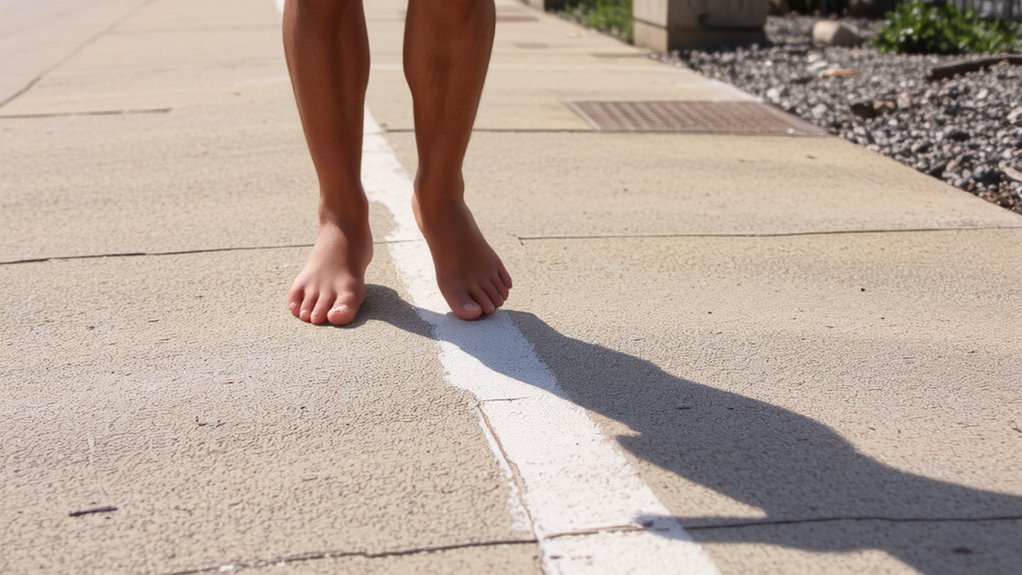
While you might overlook the simplicity of basic movement patterns, heel-toe walks-where you step forward by rolling from heel to toe in a controlled, exaggerated motion-actually play a critical role in building ankle stability and coordination. You engage stabilizing muscles with each step, reinforcing joint integrity and improving proprioception over time. This isn’t just mechanical-it triggers neural adaptation, meaning your brain learns to control foot placement more precisely, enhancing motor efficiency. Unlike passive recovery tools, heel-toe walks actively demand focus and form, making them a functional alternative to static stretching or foam rolling. While fitness gear like balance boards can help, nothing replaces the neuromuscular feedback this drill provides. Consistent practice leads to measurable improvements in foot control, especially after injury or prolonged inactivity. It’s low-tech, requires no equipment, and fits seamlessly into warm-ups or recovery routines, offering long-term gains in movement quality without added cost or complexity.
Why Heel-Toe Walking Boosts Balance and Control
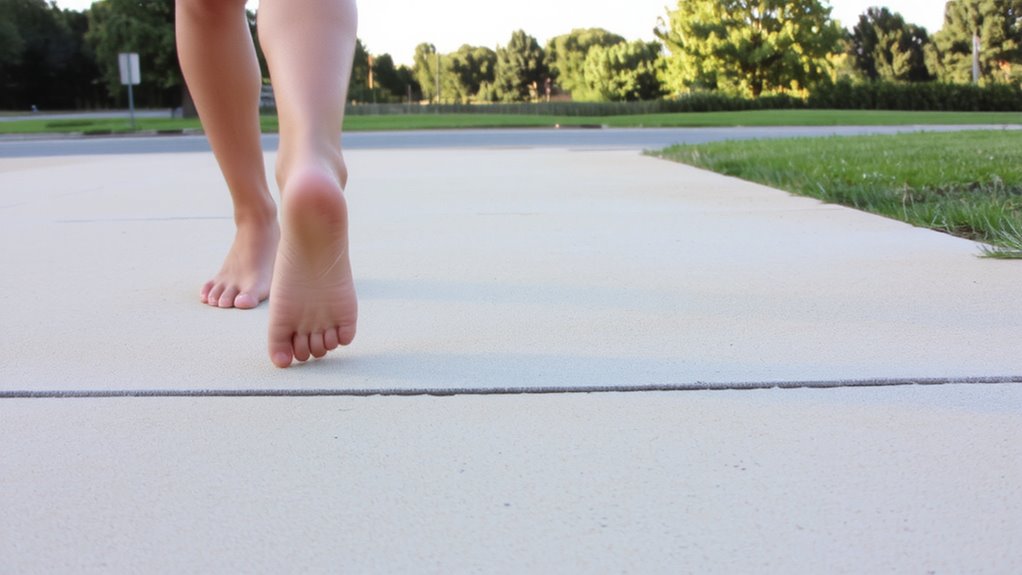
Because every step you take during a heel-toe walk forces your ankle to stabilize over an uneven base of support, this movement sharpens both dynamic balance and joint control in ways few recovery exercises can match. You’re constantly challenging your ankle stability as each foot rolls from heel to toe, demanding micro-adjustments with every stride. This isn’t just about strength-it’s about precision. The narrow path activates small stabilizing muscles and improves neuromuscular coordination, training your brain to communicate more efficiently with your lower limbs. Over time, you’ll notice better control during everyday movements and athletic maneuvers alike. Unlike passive recovery tools, heel-toe walking is an active, functional exercise that mirrors real-world stability demands. It requires no gear, yet delivers measurable improvements in proprioception and joint awareness. For those rebuilding from injury or enhancing performance, it’s a simple but highly effective tool that fits seamlessly into most recovery or fitness routines.
Perfect Your Heel-Toe Walking Form
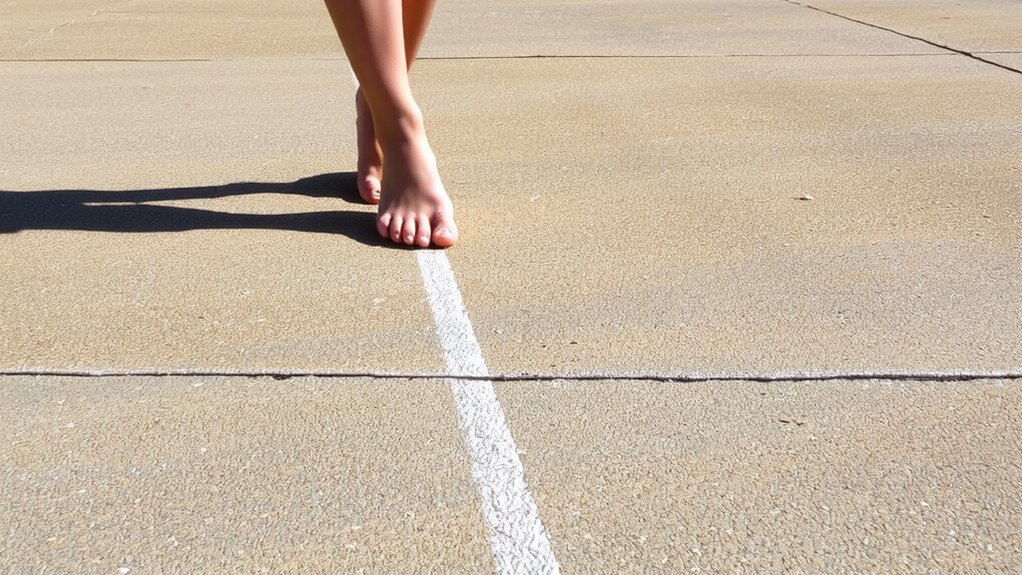
You’ve already seen how heel-toe walking challenges your balance and sharpens ankle control by forcing constant micro-adjustments with each step. To perfect your form, start by standing tall-your posture alignment is key. Keep your spine neutral, shoulders relaxed, and core gently engaged. As you walk, place the heel of one foot directly in front of the toes of the other, maintaining a straight line. Move slowly, focusing on controlled steps to build ankle strength and stability. Your arms can stay at your sides or extend slightly for balance. Wear supportive, low-profile shoes or go barefoot on safe surfaces to enhance sensory feedback. Consistent practice improves neuromuscular coordination, reinforcing proper mechanics. Over time, this refined movement pattern supports better joint awareness and injury resilience, especially on uneven terrain. With attention to technique, heel-toe walking becomes more than a balance drill-it’s functional training that transfers to daily mobility and athletic performance.
Avoid These Heel-Toe Walking Mistakes
If you’re aiming to build ankle strength and improve balance through heel-toe walking, even small form breakdowns can undermine your progress and lead to inefficient movement patterns. One common mistake is overcorrecting movements-swinging your arms wildly or lifting your knees too high to stay balanced, which shifts focus from ankle control to momentum. These exaggerated adjustments reduce the drill’s precision and weaken neuromuscular feedback. You’re also doing yourself a disservice by ignoring fatigue cues. When your calves start to tremble or your steps waver, pushing through often leads to compromised form and diminished returns. Instead of reinforcing motor control, you’re training instability. Listen to your body: fatigue isn’t just discomfort-it’s a signal your nervous system is losing fine-tuned command. Respect it, rest, and repeat with focus. Proper execution beats long durations with poor technique every time.
Make It Harder: Heel-Toe Walk Progressions
Want to know how to turn a simple balance drill into a serious challenge for your lower legs and nervous system? Progress your heel-toe walks by adding complexity. Start on flat ground, then shift to uneven surfaces like grass or gravel. Close your eyes-going eyes closed forces your proprioception to work harder, sharpening ankle control. You can also try narrow beams or slopes for increased demand.
| Surface Type | Visual Input | Difficulty Level |
|---|---|---|
| Flat pavement | Eyes open | Moderate |
| Grassy terrain | Eyes closed | High |
| Uneven trail | Eyes closed | Very High |
These progressions aren’t just harder-they’re smarter, training your neuromuscular system under real-world conditions. Uneven surfaces combined with eyes closed create functional resilience, essential for injury prevention and dynamic stability.
Adding Heel-Toe Walks to Your Daily Routine
Often overlooked but highly effective, heel-toe walks easily integrate into daily movement routines without requiring extra time or equipment. You can perform them during short breaks, while brushing your teeth, or even walking down a hallway-making routine integration seamless. Just 5 to 10 minutes a day enhances proprioception and strengthens the stabilizing muscles around your ankles. For lasting gains in motor control, daily consistency matters more than duration or intensity. Unlike fitness gear that promises quick results, this low-tech exercise delivers measurable improvements through repetition and mindful movement. There’s no need for balance boards or resistance bands-your body and a straight line are enough. Over time, you’ll notice better coordination, reduced risk of ankle rolling, and smoother gait shifts. Heel-toe walks aren’t flashy, but their functional benefits align closely with long-term joint health and movement efficiency.
On a final note
You’ve seen how heel-toe walks sharpen ankle control and balance through precise, deliberate movement. This simple yet effective exercise enhances proprioception and stability, making it a valuable addition to fitness recovery routines. When paired with supportive footwear and quality recovery gear, results improve further. It’s not flashy, but consistency here builds functional strength that translates to better performance and injury resilience in daily life and athletic pursuits alike.