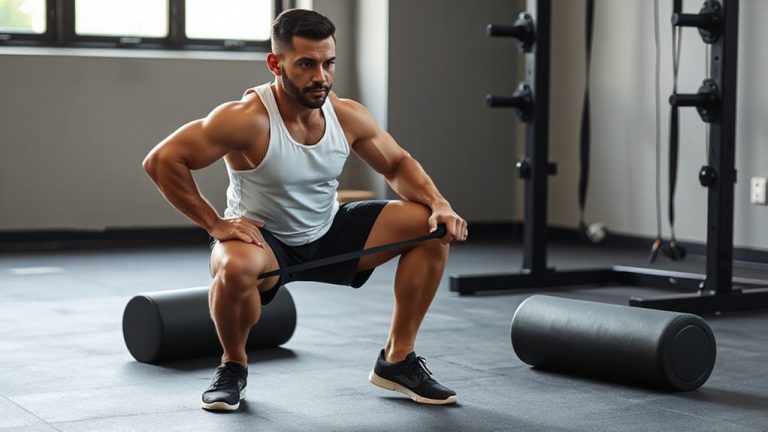
Resistance Band Rows Paired With Foam Rolling Blocks for Myofascial Release Chains
You’re getting more from resistance band rows when you pair them with foam rolling on the thoracic spine and lats-this combo taps into myofascial chains that boost mobility and muscle activation. Use a dense, textured roller to release tension along the mid-back and under the shoulder blades, then shift straight into rows with controlled scapular retraction. Avoid overstretching the band and keep your spine neutral. Proper sequencing enhances neuromuscular readiness, making each rep more effective. There’s a smarter way to link gear and movement for lasting gains.
Notable Insights
- Perform foam rolling on the thoracic spine before resistance band rows to enhance myofascial release and improve mobility.
- Use textured foam rolling blocks to target rhomboids and erector spinae for deeper tissue release along the mid-back.
- Pair foam rolling with resistance band rows to activate scapular retractors and optimize neuromuscular engagement.
- Maintain proper rowing form by driving elbows back and retracting scapulae to maximize back muscle involvement.
- Avoid overstretching bands and focus on controlled tempo to ensure joint safety and effective myofascial chain activation.
How to Do Resistance Band Rows Right
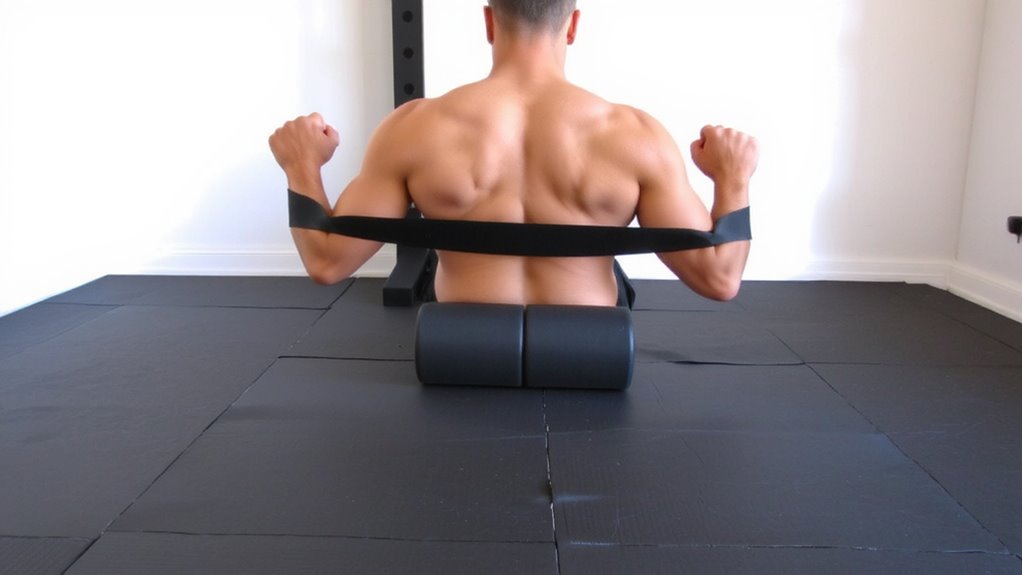
Why do so many people struggle to get the most out of resistance band rows? You’re likely missing two key elements: proper grip and scapular retraction. Without a firm, neutral grip, the band can shift unpredictably, reducing tension where you need it and increasing joint strain. A secure hold-thumbs wrapped under or over, depending on comfort-keeps force evenly distributed. But even with proper grip, you won’t activate the right muscles unless you focus on pulling your shoulder blades together. That’s scapular retraction, and it’s what turns a basic pull into a real back-builder. Watch the mirror or record yourself-many people lean too far forward or yank the band with their arms alone. Instead, hinge slightly at the hips, keep your spine neutral, and drive elbows back. This form maximizes muscle engagement, especially in the rhomboids and lower traps, making your session far more effective for both strength and recovery.
Where to Foam Roll for Back and Shoulder Relief
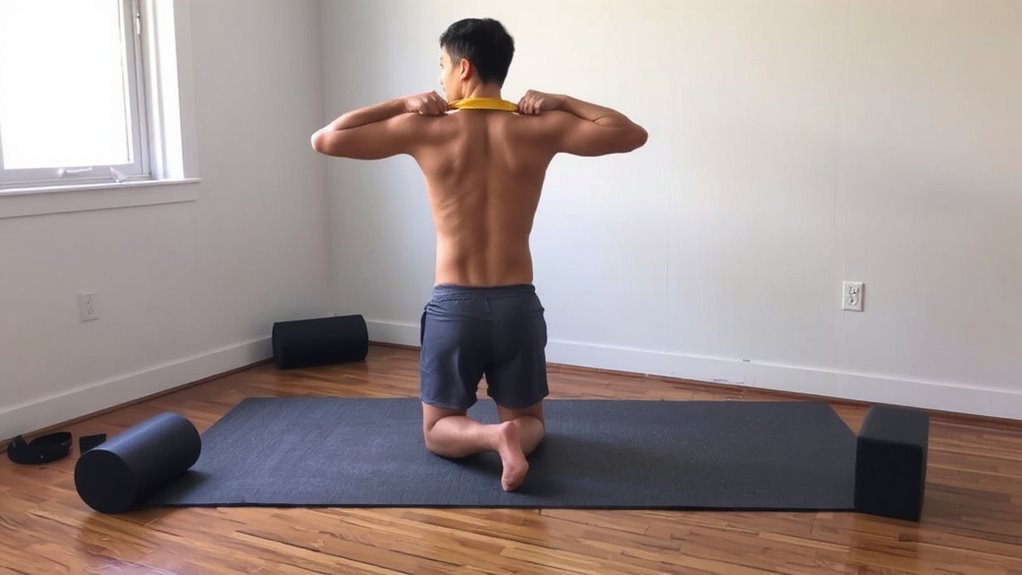
Your back and shoulder tension likely isn’t isolated-it’s tied to tightness in key myofascial zones that respond well to targeted foam rolling. Focus on the thoracic spine first: lie with the foam roller beneath your upper back, just below the shoulder blades, and slowly roll upward toward the base of the neck. Avoid the lower back-stick to the mid-back region where stiffness often accumulates from poor posture or prolonged sitting. Spend extra time along the sides of your spine, where muscles like the rhomboids and erector spinae commonly tighten. Then, position the roller under your shoulder blades and gently open your arms wide to stretch the front of the shoulders and upper chest. This helps rebalance posture and reduces strain. A dense foam roller offers better support and durability, making it ideal for consistent use. For optimal results, choose the best foam rollers based on density, texture, and size to match your recovery needs.
Chain Rows and Rolling Into One Mobility Flow
After loosening tight myofascial tissue with targeted foam rolling, you’re primed to integrate strength and mobility in a single, efficient sequence. The dynamic pairing of resistance band rows and foam rolling creates a seamless shift from release to activation. By following flow sequencing, you move directly from rolling out your thoracic spine or lats into a set of rows, capitalizing on newly gained range of motion. This method enhances neuromuscular engagement, making each rep more effective. High-quality resistance bands with consistent tension and durable foam rollers with textured surfaces improve performance and longevity. You’re not just moving through exercises-you’re reinforcing posture and movement patterns. This combo isn’t flashy, but it’s practical, backed by functional gains. Over time, this flow builds resilience, especially when used consistently. It’s a smart addition to recovery-focused routines, blending mobility work with strength in a way that feels intentional and impactful.
Avoid These Band Row and Foam Rolling Mistakes
While integrating resistance band rows and foam rolling can substantially enhance recovery and movement efficiency, skipping proper form often undermines the benefits. You’re likely overstretching bands if you feel strain in your shoulders or joints-this increases snapback risk and reduces muscle engagement. Stick to 70–80% of the band’s max stretch to maintain tension without compromising joint alignment. Pairing this with incorrect breathing-like holding your breath during reps-elevates tension instead of relieving it. Exhale on the pull, inhale on release to sync with muscular effort. When foam rolling, avoid rushing or leaning on painful spots too aggressively; that doesn’t release fascia-it triggers protective tightness. Apply slow, controlled pressure, and keep your breath steady. Poor technique turns recovery tools into sources of strain. Master the basics first: tension control, joint stability, and rhythmic breathing. That’s how you optimize both performance and tissue health without setbacks. For deeper tissue penetration and enhanced myofascial release, consider using a vibrating foam roller as part of your recovery routine.
Tailor Rows and Rolling for Strength or Recovery
Getting the most out of resistance band rows and foam rolling means recognizing that these tools aren’t one-size-fits-all-they shift in function depending on whether you’re building strength or speeding up recovery. When targeting strength, you’ll use higher resistance bands with controlled tempo to maximize muscle activation and boost joint stability. Focus on full retraction and scapular engagement with each row. For recovery, swap intensity for frequency-use lighter bands or none at all, pairing gentle rows with foam rolling to release tension along myofascial chains. The rolling improves tissue quality, while low-effort movement enhances circulation without taxing the system. Joint stability benefits during both phases, but in different ways: strength work builds dynamic control, while rolling restores baseline alignment. You’re not just moving or releasing-you’re signaling your body to adapt or reset. Choose your approach based on your goal, not habit.
When to Combine Them for Best Results
Though timing and intent matter, you’ll get the most from combining resistance band rows and foam rolling when you layer them in a deliberate sequence-specifically during active recovery days or as a pre-workout prep for upper-body pulling movements. The ideal timing hinges on your goal: pre-workout, rolling primes movement by releasing tension in the lats, thoracic spine, and shoulders, letting you engage muscles more effectively during rows. Post workout, the synergy enhances recovery-foam rolling flushes metabolic waste while rows maintain neuromuscular activation. This pairing isn’t just convenient; it’s a strategic use of tools that supports joint integrity and muscle function. You’re not just moving tissue-you’re guiding adaptation. Whether you’re using a dense foam roller or looped resistance band, their combined use reflects smart recovery design. With consistent application, this combo delivers post workout synergy that keeps connective tissue pliable and performance primed. For deeper targeted release, consider incorporating a best massage gun to complement foam rolling and enhance myofascial mobility.
Foam Rolling Areas That Boost Row Performance
You’ve already seen how the timing of foam rolling and resistance band rows influences recovery and performance, but focusing on the right areas during your roll-out is what truly amplifies the payoff. Start with your thoracic spine to enhance thoracic extension, which many miss when hunched at desks all day. Better extension means you can maintain a neutral spine during rows, reducing strain. Then roll the lats and upper back-tight fascia here restricts motion and compromises form. Don’t skip the anterior shoulders; tension here pulls the scapula forward, weakening scapular stability. Finally, address the mid-traps and rhomboids to support retraction. Using a firm foam roller consistently improves tissue quality, letting muscles fire efficiently. Pair this with resistance band rows, and you’re not just moving better-you’re building strength through a fuller, healthier range. It’s not just recovery; it’s preparation.
On a final note
You’ve got the tools to boost both strength and recovery. Resistance band rows build rear delt and upper back stability with minimal gear, while targeted foam rolling improves fascial glide along the thoracolumbar chain. Paired wisely, they enhance mobility and reduce soreness. Just avoid over-rolling or using bands with slack-precision matters. For best results, integrate rolling before or after rows, depending on your goal. It’s practical, effective, and science-backed.