Shoulder Mobility Drills With Behind-The-Back Clasping to Improve Shoulder Extension
You can improve shoulder extension with the behind-the-back clasp drill by interlacing your fingers palms-down, keeping elbows slightly bent and shoulders down. This stretch targets the anterior tightness from poor posture while enhancing scapular control. Avoid common mistakes like bent wrists or pinched fingers, which reduce effectiveness. Proper alignment boosts leverage and joint safety. For best results, progress gradually through wrist, partial, then full clasps. A combined overhead and under-reach clasp further refines posture and mobility. You’ll discover even more ways to refine form and track progress as you go.
Notable Insights
- Perform the Behind-the-Back Clasp Drill daily, holding for 30 seconds to enhance posterior capsule flexibility and shoulder extension.
- Maintain proper form by interlacing fingers with palms away, thumbs down, and shoulders depressed to avoid strain.
- Avoid common mistakes like bent wrists or misaligned fingers to ensure effective stretch and joint safety.
- Progress from lower back clasp to full hand weave to gradually improve mobility and detect side imbalances.
- Combine with overhead arm bends for a posture-enhancing combo that activates the upper back and stabilizes the thoracic spine.
Do the Basic Behind-the-Back Clasp Drill
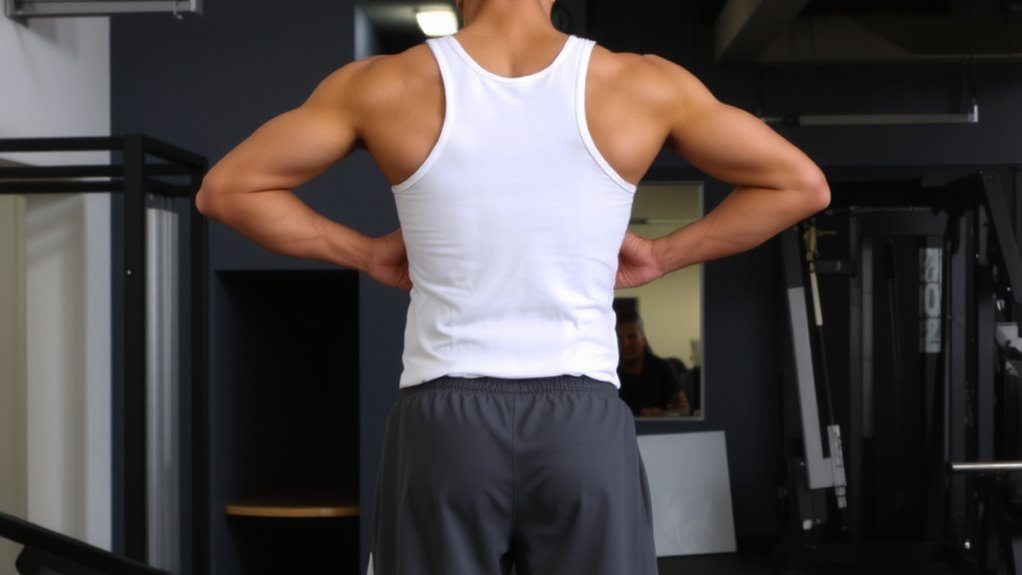
Stability, mobility, and shoulder health-all ride on small, consistent drills like the Behind-the-Back Clasp, and this one’s a cornerstone. You’re not just stretching; you’re training neuromuscular coordination. Hand positioning matters: start with palms facing away, thumbs pointing down, then gently interlace fingers behind your back. Keep arm alignment clean-elbows slightly bent, shoulders drawn down, no shrugging. This drill targets posterior capsule flexibility and improves scapular control, especially useful post-workout or during recovery. It integrates well with foam rolling or resistance band routines and pairs efficiently with recovery gear like percussion massagers for enhanced effect. Consistency trumps intensity here; daily 30-second holds yield noticeable gains in shoulder extension. You’ll feel reduced tension and better posture over time. It’s simple, but don’t underestimate it-proper form amplifies results.
Fix These Common Clasping Mistakes

Why do so many struggle to clasp their hands behind the back correctly? Poor finger alignment and faulty wrist positioning often sabotage the movement before it begins. You might think it’s just tight shoulders, but how you connect your hands matters just as much. Misaligned fingers reduce leverage, while bent wrists limit tension transfer, compromising the drill’s effectiveness.
| Issue | Fix |
|---|---|
| Fingers twisted or pinched | Align digits evenly, knuckle to knuckle |
| Wrist positioning collapsed | Keep wrists straight, not bent sideways |
Proper finger alignment increases mechanical efficiency, letting you feel the real shoulder stretch. Correct wrist positioning prevents strain and improves joint safety. Adjusting these small details makes a noticeable difference-don’t overlook technique for range alone.
Try 3 Step-by-Step Clasping Progressions
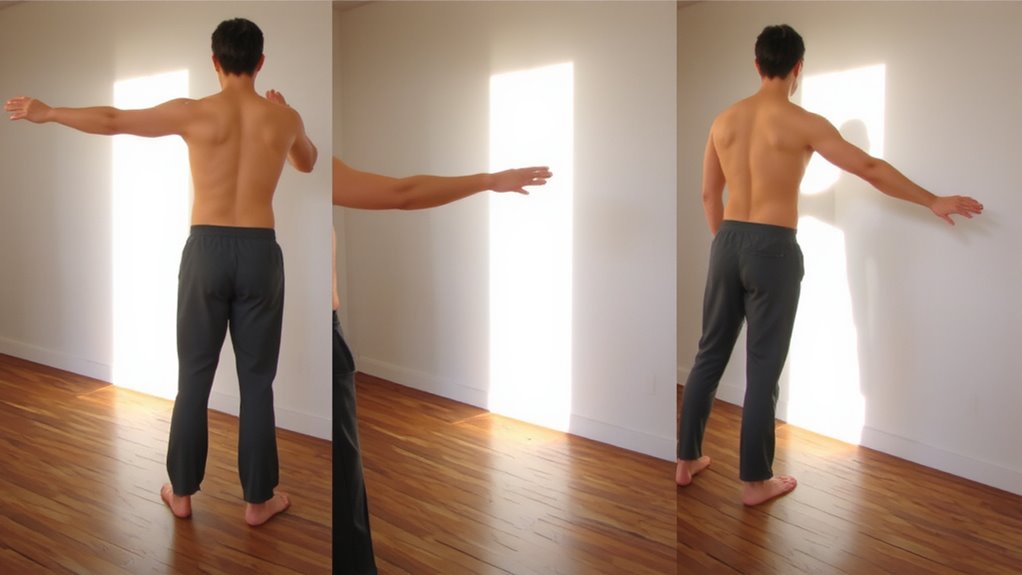
A solid grip setup is key to accessing better shoulder mobility, and you don’t need advanced gear-just smart progressions. Start with hands just behind your lower back, fingers interlaced without strain-this builds awareness and supports joint integrity. Next, move to wrist clasping: one hand grips the opposite wrist, encouraging muscle symmetry by balancing pull and resistance. This stage often reveals side imbalances, so adjust slowly. Finally, attempt full hand clasp-palms together, fingers woven-deepening shoulder extension safely. Each progression demands controlled form, not force, to avoid compromising shoulder alignment. These steps aren’t just about reach; they reinforce functional movement patterns and promote balanced loading across both sides. When practiced regularly, they enhance recovery by maintaining tension-free joint paths. The absence of equipment puts the focus entirely on technique, making these drills reliable for long-term shoulder health.
Why Shoulder Extension Relieves Tight Shoulders
Tight shoulders often stem from prolonged poor posture and restricted joint motion, especially in shoulder extension-the range where arms draw backward and open the chest. When you improve shoulder extension, you restore anatomical alignment, letting the scapulae settle into their natural position instead of hunching forward. This movement counters the chronic shortening of anterior muscles caused by slouching or screen hunching, promoting better muscular balance across the joint. You’re not just stretching-you’re re-educating your body’s positioning. Behind-the-back clasping gently coaxes the shoulders into this extended range, encouraging mobility without strain. It’s a subtle yet effective way to release tension, as improved motion in one plane positively influences overall shoulder function. Over time, consistent practice supports joint health and reduces stiffness, making daily movements easier and more efficient.
Boost Posture With This Clasping Combo
Now that you’ve explored how shoulder extension releases tightness and resets posture, you can take it a step further with a simple yet effective clasping combo that builds on those gains. Stand tall, reach one arm overhead and bend it down your back, then clasp hands behind you with the opposite arm reaching up from below. Gently press the hands together, encouraging upper back activation and discouraging shoulder shrugging. This position promotes spinal alignment by drawing the shoulder blades together and stabilizing the thoracic spine. Hold for 20–30 seconds, breathing deeply. Over time, consistent practice enhances mobility and reinforces postural muscle memory. Unlike braces or recovery gear, this natural drill strengthens intrinsic support without dependency. It’s practical, requires no equipment, and integrates seamlessly into daily movement routines. For lasting posture improvement, this clasping combo offers both immediate feedback and long-term neuromuscular adaptation-making it a reliable tool in fitness recovery.
On a final note
You’ve seen how the behind-the-back clasp boosts shoulder extension and combats tightness. When done right, improves posture and joint mobility. Common mistakes, like shrugging or flaring elbows, limit gains-focus on form. The progressions build flexibility safely. Paired with recovery gear like mobility bands or foam rollers, results improve. These tools support consistent practice, essential for lasting change. This drill isn’t a quick fix, but a smart, science-backed move in any fitness recovery routine.