Navigating Scar Tissue Management: Advanced Techniques for Enhancing Recovery Speed in Sportsmen
You’re already controlling inflammation, but disorganized scar tissue could still be limiting your recovery. Manual therapy like deep friction massage helps realign collagen, while shockwave therapy boosts blood flow and activates tissue repair. Laser therapy enhances cellular energy to improve elasticity, and targeted rehab-like Nordic curls and banded walks-supports proper fiber regrowth. These advanced methods work together to speed healing and cut reinjury risk. There’s more to optimizing your recovery just ahead.
Notable Insights
- Shockwave therapy accelerates soft tissue healing by stimulating blood flow and fibroblast activity with focused acoustic waves.
- Laser therapy enhances mitochondrial function, boosting ATP production to improve collagen organization and tissue elasticity.
- Deep friction massage breaks cross-fiber adhesions, promoting realignment of collagen during scar tissue remodeling.
- Nordic hamstring curls use eccentric loading to strengthen healing tissue and reduce re-injury risk in athletes.
- Myofascial release and dynamic stretching improve tissue mobility and support proper collagen alignment during recovery.
Why Scar Tissue Delays Athlete Recovery
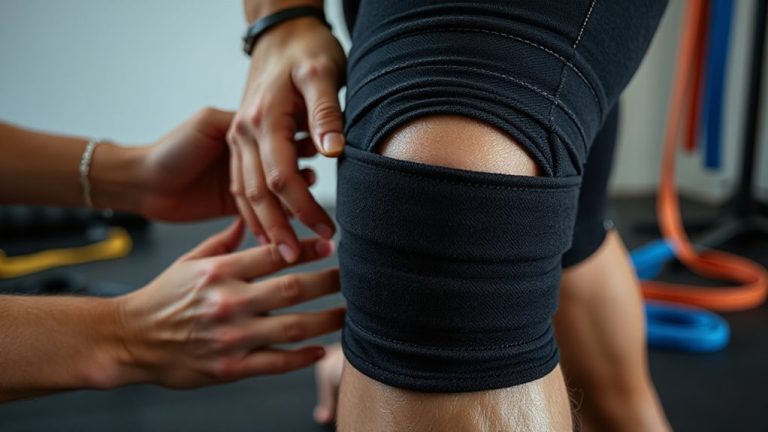
While your body’s natural response to injury is to form scar tissue, that same protective mechanism can actually slow down your return to peak performance. The initial inflammation response helps clear debris and start healing, but excessive or prolonged swelling can lead to disorganized collagen alignment. Unlike healthy muscle fibers that run in parallel, scar tissue forms haphazardly, reducing tissue elasticity and strength. That misalignment restricts movement and increases stiffness, making reinjury more likely during intense training. You’ll notice decreased range of motion and possibly chronic discomfort, especially under load. Fitness recovery gear like compression wraps may help manage inflammation response early, but they can’t correct poor collagen alignment. Without targeted intervention, scar tissue becomes a long-term weak point. Proper load management and progressive exercise are essential to guide collagen realignment. Recovery isn’t just rest-it’s strategic adaptation. Devices such as best muscle stimulators can support this process by enhancing muscle activation and promoting blood flow to accelerate tissue repair.
Manual Therapy for Breaking Down Scar Tissue
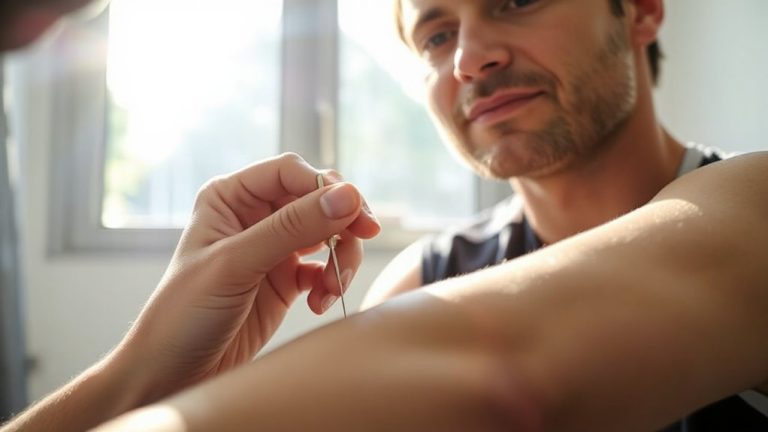
Think of manual therapy as a precision tool for remodeling the tough, fibrous patches that form after an injury. You’re not erasing scar tissue-you’re reorganizing it to improve mobility and reduce restriction. Myofascial release applies sustained pressure to connective tissue, easing tension and restoring glide between layers. Joint mobilization uses controlled movements to increase range of motion and decrease stiffness near affected areas. When applied consistently, these techniques enhance functional recovery and prepare the body for load. Here’s how they compare:
| Technique | Primary Benefit |
|---|---|
| Myofascial release | Improves tissue elasticity |
| Joint mobilization | Restores joint mechanics |
| Deep friction massage | Breaks cross-fiber adhesions |
| Stretching | Supports realigned collagen |
| Active movement | Reinforces proper tissue patterning |
You’ll need skilled hands and patience-results build over sessions, not overnight.
Shockwave Therapy for Faster Soft Tissue Healing
How do you accelerate soft tissue recovery when conventional methods plateau? Shockwave therapy might be your next move. You’re likely familiar with stubborn injuries that resist massage, stretching, or even rest. That’s where shockwave effects come in-focused acoustic waves penetrate deep into damaged tissue, stimulating blood flow and jumpstarting cellular repair. Studies show these pulses enhance tissue regeneration by activating fibroblasts and reducing chronic inflammation. You’ll typically undergo 3–5 sessions, each lasting 10–15 minutes, with minimal discomfort. While it’s not a magic fix, many athletes report faster resolution of tendonitis, muscle strains, and ligament issues. The equipment is clinic-based, so access depends on provider availability. It’s pricier than foam rollers or compression gear, but for persistent soft tissue problems, the return on recovery time can justify the cost.
Laser Therapy to Speed Scar Tissue Recovery
What if you could target scar tissue with precision, not just hoping for improvement but driving measurable change? Laser therapy does exactly that, using specific laser wavelengths to penetrate deep into affected tissue. You’re not just applying heat-you’re stimulating cellular repair at the source. Therapeutic wavelengths, typically between 600 and 900 nanometers, optimize absorption by mitochondria, boosting ATP production and accelerating healing. The right treatment duration-usually 5 to 15 minutes per session-ensures enough energy delivery without thermal damage. Studies show significant reductions in collagen cross-linking and improved tissue elasticity after consistent application. For athletes, this means less downtime and faster return to peak performance. While results depend on proper calibration and injury severity, laser therapy stands out for its non-invasive precision and clinical reliability. Equipment quality matters-choose devices with medical-grade output and proven protocols for best outcomes.
Rehab Exercises That Prevent Scar Tissue Re-Injury
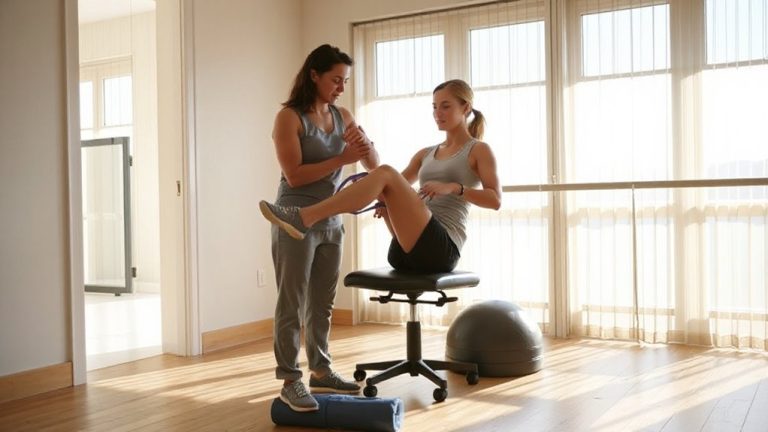
Movement is medicine, especially when it’s guided. The right rehab exercises don’t just restore function-they prevent scar tissue re-injury by promoting organized collagen alignment. Flexibility training enhances tissue extensibility, reducing stiffness around healed areas. Eccentric loading, meanwhile, strengthens muscles during lengthening phases, critical for tendon and ligament resilience. These methods are most effective when progressed gradually and paired with proper recovery tools like compression gear or massage rollers. Incorporating a vibrating foam roller can further improve tissue mobilization and recovery speed by enhancing blood flow and reducing muscle tightness.
| Exercise Type | Focus Area | Benefit |
|---|---|---|
| Nordic hamstring curl | Eccentric loading | Reduces reinjury risk |
| Dynamic stretching | Flexibility training | Improves tissue mobility |
| Banded resisted walk | Glute activation | Supports joint stability |
Consistency beats intensity. Overloading too soon disrupts healing, but disciplined, phased movement rebuilds confidence and structural integrity-key for athletes returning to high demand.
On a final note
You’ve seen how scar tissue slows recovery by restricting movement and increasing re-injury risk. Manual therapy, shockwave, and laser treatments effectively break down fibrous tissue, with studies showing faster healing times. Rehab exercises maintain gains by promoting proper alignment. Combined, these methods outperform passive rest. While recovery gear like percussive massagers helps, it’s no substitute for targeted therapy. You’ll optimize results by integrating clinical techniques with smart, consistent rehab.