Managing the Transition Back to Sport After Severe Tendinopathy: A Step-by-Step Approach
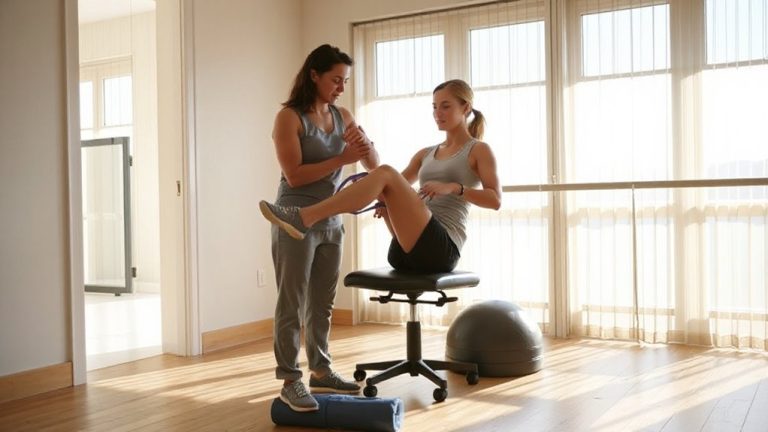
You’ll start by using isometric exercises to ease pain and retrain muscle control, holding contractions at about 70% effort. Then, you’ll progress to eccentric loading-like slow heel drops-to rebuild tendon strength gradually. Once pain allows, you’ll add sport-specific movements, keeping intensity low at first. Always adjust based on your pain response, scaling back if symptoms flare. Compression gear may offer feedback but won’t speed healing. Stick to the process, and you’ll build lasting resilience-there’s more to fine-tune as you go.
Notable Insights
- Progress to sport only after achieving pain-free daily function and completing structured tendon loading rehab.
- Use isometric exercises to modulate pain before introducing dynamic or sport-specific movements.
- Gradually introduce eccentric loading with proper form, ensuring no pain during or after sessions.
- Integrate sport-specific movements slowly, emphasizing control and precision over intensity or load.
- Monitor pain response closely; reduce activity if pain increases hours post-exercise or the following day.
Know the Severe Tendinopathy Recovery Timeline
While recovery from severe tendinopathy varies by individual, understanding the general timeline helps you set realistic expectations and stay consistent with rehab. Tendon healing typically progresses through three recovery phases: reactive, dysrepair, and degenerative. You’re likely in the later stages if diagnosed with severe tendinopathy, meaning structural changes have occurred. Healing isn’t linear-flares can happen even as you improve. The full process often takes 3 to 12 months, depending on load management, age, and adherence to rehab. You’ll need patience, as tendons adapt slowly. Tools like compression gear or smart recovery wear can support tissue feedback but aren’t substitutes for proper loading protocols. Evaluations show their benefit is mostly in symptom tracking, not accelerated healing. Relying solely on fitness gear without addressing biomechanics delays progress. Your best move? Stick to evidence-based rehab and use technology as a supplement, not a solution.
Start With Isometric Exercises to Reduce Pain
You’ve likely been told that tendons need time and proper loading to heal, and that’s especially true when structural changes from long-term overload are present. Starting with isometric exercises helps you achieve both pain modulation and early muscle activation without aggravating the tendon. Holding a static contraction-like a 45-second mid-rep pause during a squat or heel raise-reduces pain signals quickly, often within minutes. Research shows these exercises provide immediate analgesic effects, making daily movement and further rehab more manageable. You’ll maintain neuromuscular connection in weakened muscles, which is essential after periods of inactivity. The intensity should be around 70% of max effort-enough to engage the muscle but not enough to strain the tendon. This phase isn’t about building strength yet; it’s about reestablishing control and comfort. Consistent, properly dosed isometrics set a functional foundation, preparing you for the next stage: progressive loading that rebuilds tendon resilience.
Progress to Eccentric Loading for Tendon Strength
Once pain levels have decreased and you’ve regained baseline muscle activation through isometrics, shifting to eccentric loading becomes the logical next step in rebuilding tendon strength. Eccentric benefits include improved tendon structure and increased load tolerance, which are essential for withstanding sport-related demands. You’ll start with slow, controlled lengthening movements-like lowering a heel off a step for Achilles tendinopathy-because they stimulate collagen realignment more effectively than concentric actions. Your loading progression should be gradual: begin with body weight, then add resistance only when you can complete sets without pain. Aim for 3 sets of 15 reps twice daily, monitoring your symptoms closely. Research supports this phased approach, showing reduced tendon thickness and improved function over 12 weeks. Stick with it-consistency in eccentric loading is key to durable recovery and preparing your tendon for what’s next.
Add Sport-Specific Moves Gradually
Now that you’ve built a foundation with eccentric loading and your tendon shows improved capacity to handle load, it’s time to start weaving in movements that mirror your sport’s demands. This phase emphasizes sport specificity-meaning your rehab should mimic the speed, direction, and force of your actual sport. Think controlled lunges for soccer players or angled jumps for basketball athletes. You’ll begin with low-intensity versions, then gradually increase complexity and load. This movement progression guarantees your tendon adapts without overload. Perform each drill with precision, focusing on form before intensity. Equipment like resistance bands or agility ladders can support this stage but aren’t essential. The goal isn’t to rush back, but to prepare your body for real-game stress. Done right, this step bridges rehab and performance, reducing re-injury risk while building confidence in your tendon’s resilience.
Adjust Your Plan Based on Pain
How do you know if you’re pushing too hard or not enough during recovery? Pay close attention to your pain levels-you’re aiming for pain modulation, not elimination. Mild discomfort during or after activity is common, but sharp or lasting pain means you’ve crossed the threshold. Use activity pacing to balance load and recovery, adjusting intensity based on daily feedback. If pain spikes hours later or the next day, scale back slightly. This isn’t failure-it’s smart training. Consistent monitoring lets you progress without setbacks. Think of it like tuning a high-performance engine: small adjustments yield peak output. You don’t need expensive fitness gear to do this; reliable symptom tracking works best. Over time, you’ll see patterns that guide smarter choices. Pain isn’t just a warning-it’s data. Use it to refine your approach and build resilience safely, staying on track toward full function without rushing the process.
Return to Full Play Safely
While you’ve built strength and tolerance through phased loading, stepping back into full play demands more than just physical readiness-it requires strategic timing and smart decision-making. You need to apply careful load management, gradually increasing intensity while monitoring your body’s response. Sudden spikes in activity can undo progress, so use activity modification to stay competitive without overloading healing tissues. Cross-train when needed, shift positions, or reduce play duration to maintain performance safely. Think of it as recalibrating your relationship with effort-pushing limits, yes, but with awareness. High-quality recovery gear, like compression sleeves or targeted massage tools, can support adaptation, but they’re not substitutes for sound planning. Relying solely on equipment without adjusting demands is risky. Instead, pair proper gear with intelligent load progression and real-time feedback. This balanced approach guarantees you return not just stronger, but smarter-ready for sustained play without relapse. Consider using best volleyball knee support to help stabilize the joint during dynamic movements as you reintroduce sport-specific demands.
On a final note
You’ve navigated the recovery timeline, used isometrics to ease pain, and built tendon strength with eccentric loading. Now, integrating sport-specific moves means progress hinges on pain feedback. This structured return safeguards against setbacks. Fitness recovery isn’t just time-it’s strategy. Quality gear, like supportive braces or proper footwear, enhances stability and alignment, reducing re-injury risk. Smart progression, combined with reliable equipment, guarantees you return stronger, not just healed.