The Science Behind Using Swimming for Cross-Training Recovery and Its Impact on Athletic Anxiety Reduction
You recover faster with swimming because it’s low-impact, thanks to water’s buoyancy reducing joint stress by supporting up to 90% of your body weight. The hydrodynamic resistance rebuilds strength gently, while rhythmic breathing calms your nervous system and lowers athletic anxiety. Regular aerobic swim sessions improve circulation, flush lactic acid, and sharpen mental focus. This combination of physical recovery and mindfulness enhances overall resilience-especially when consistency and proper gear are part of your routine.
Notable Insights
- Swimming’s low-impact nature reduces joint stress while promoting active recovery through hydrodynamic resistance.
- Buoyancy in water supports body weight, minimizing impact on joints during rehabilitative and cross-training exercises.
- Rhythmic breathing patterns in swimming enhance mindfulness, reducing athletic anxiety and improving mental focus.
- Aerobic swimming boosts circulation and lactic acid clearance, accelerating physical recovery and decreasing muscle soreness.
- Consistent aquatic training builds mental resilience by combining meditative movement with controlled physiological stress.
Speed Up Recovery With Low-Impact Swim Workouts
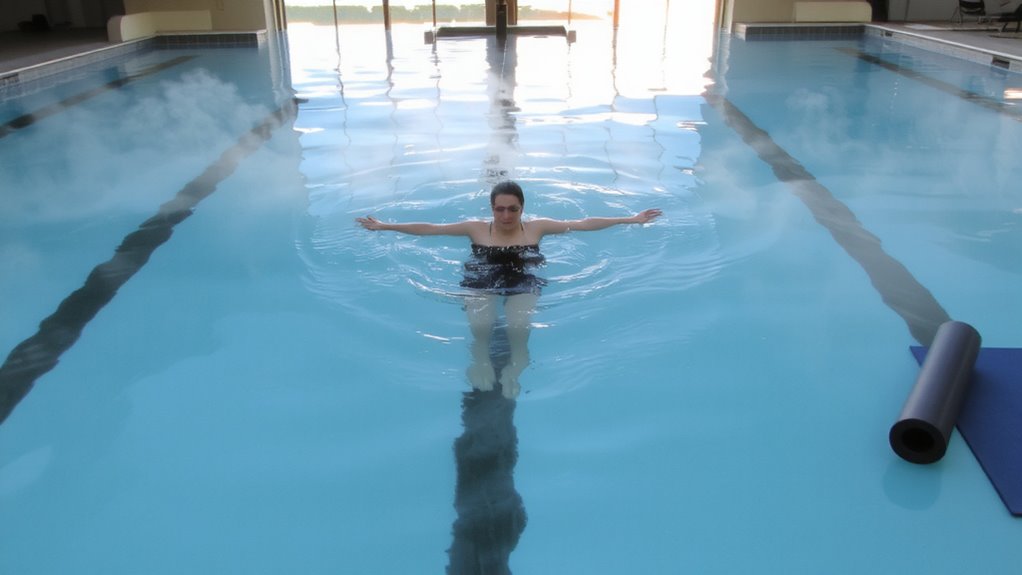
While running, cycling, or lifting weights can leave your joints and muscles taxed, swimming offers a rare chance to stay active without adding stress-making it one of the most effective low-impact recovery tools available. You get the benefits of movement while minimizing strain, thanks to water’s natural support. Hydrodynamic resistance helps rebuild strength gently, activating muscles without the jarring impact of land-based workouts. It’s ideal for flushing lactic acid and boosting circulation. After intense training, a moderate swim session serves as an excellent cardiovascular cooldown, stabilizing heart rate and promoting faster recovery. Unlike foam rolling or static stretching alone, swimming keeps your body in motion, improving joint mobility and muscle elasticity. Recovery swim gear-like fins or paddles-can enhance technique and engagement when used sparingly. You don’t need heavy equipment; just consistent effort in the water. This makes swimming not only practical but also highly efficient for sustained athletic recovery.
Protect Joints With Buoyancy-Based Training
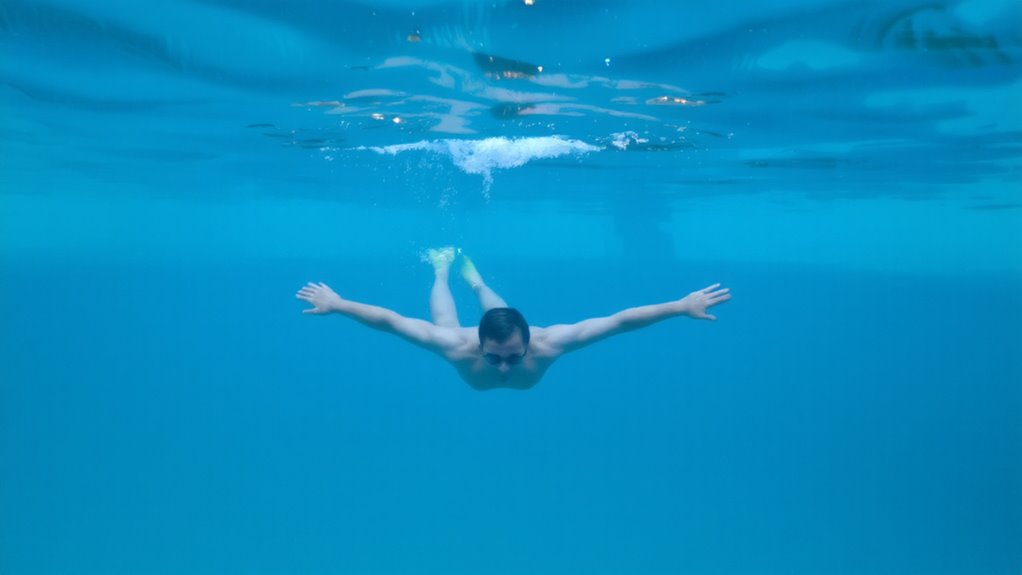
Your joints’ longevity hinges on how well you manage impact stress, and buoyancy-based training delivers a proven solution. By exercising in water, you gain natural joint protection-up to 90% of your body weight is supported, drastically reducing strain on knees, hips, and ankles. This makes swimming ideal if you’re recovering from injury or managing high-training loads. Equipment like aquatic dumbbells or resistance belts enhances fluid resistance, building strength without compromising joint safety. Unlike land-based workouts, where impact accumulates over time, water’s viscosity provides consistent resistance that’s both challenging and forgiving. You’ll maintain aerobic capacity and muscular endurance while letting joints recover. Studies show regular aquatic training improves joint stability and range of motion, especially when dry-land drills are temporarily limited. For athletes seeking sustainable recovery, buoyancy-based routines aren’t just effective-they’re essential. The combination of joint protection and fluid resistance offers a scientifically backed edge in long-term performance and joint health.
Calm Your Mind With Rhythmic Swim Breathing
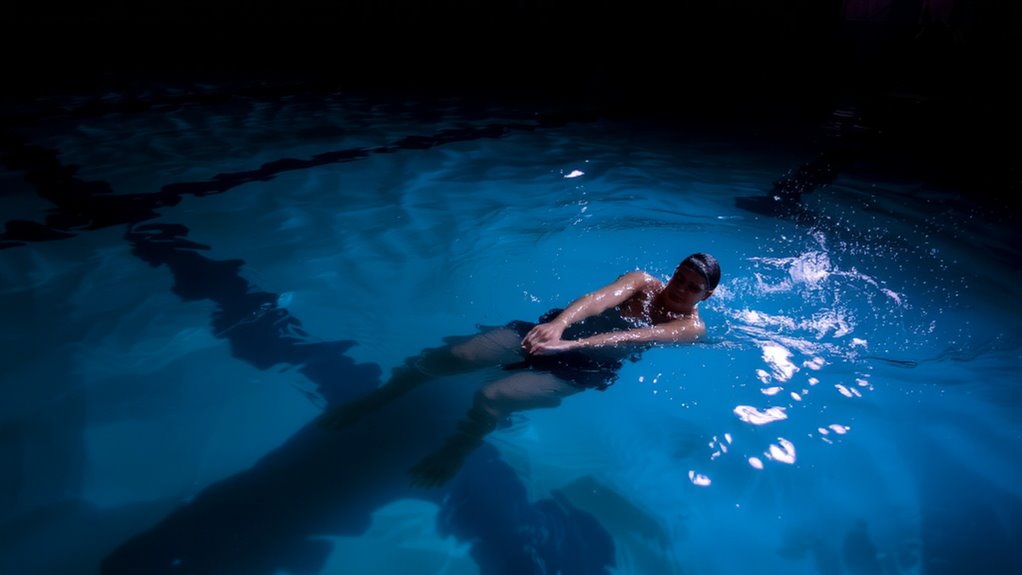
Swimming doesn’t just protect your joints-it also offers a built-in method for mental recovery through rhythmic breathing. This consistent pattern turns each stroke into a mindfulness practice, helping you stay present and reduce mental clutter. By synchronizing your breath with movement, you develop greater breath control, which is essential for calming the nervous system. Unlike land-based workouts, the water’s resistance slows your pace, naturally encouraging longer exhalations and deeper inhalations. Below is how rhythmic swim breathing compares to typical recovery methods:
| Technique | Promotes Mindfulness Practice? |
|---|---|
| Rhythmic Swim Breathing | Yes, highly |
| Walking | Moderately |
| Stretching | Yes |
| Foam Rolling | Minimally |
| Static Meditation | Yes, but less active |
This combination of movement and breath control makes swimming a top-tier recovery tool-not just physically, but mentally.
Build Mental Resilience Through Aerobic Swimming
Because aerobic swimming demands sustained effort at a controlled intensity, it strengthens not just your cardiovascular system but your mental endurance as well. You learn to stay present, managing your pace and breath over long distances, which builds mental clarity and sharpens focus. The repetitive motion and rhythmic breathing create a meditative effect, helping you maintain emotional balance even under physical stress. Unlike high-impact recovery methods, swimming offers resistance with minimal joint strain, letting you train hard while staying calm. Over time, you’ll notice improved composure during competition and daily challenges, as consistent aerobic sessions condition both body and mind. This form of training doesn’t just restore muscle function-it reinforces resilience, helping you recover with purpose. You’re not just swimming to rest; you’re swimming to grow stronger mentally, with each lap forging greater discipline, patience, and psychological stamina.
Add Swimming to Your Recovery Routine (Here’s How)
How do you make recovery both effective and sustainable? Start by adding swimming to your routine two to three times weekly, ideally in a temperature-controlled pool between 78–82°F. Water resistance provides low-impact, full-body movement that enhances circulation without stressing joints-ideal for active recovery. Begin with 20–30 minutes of easy freestyle or backstroke, keeping your heart rate at 50–60% of maximum. Focus on controlled breathing to further reduce athletic anxiety. Don’t overlook pool etiquette: respect lane assignments, swim counterclockwise in shared spaces, and maintain hygiene to guarantee a safe environment. Goggles, a swim cap, and moisture-wicking suit improve comfort and performance. Chlorine-resistant gear lasts longer and supports consistent use. Over time, this practice boosts recovery efficiency while minimizing physical and mental fatigue-making it a practical addition to any serious athlete’s regimen.
On a final note
You’re getting more than just physical recovery when you swim-buoyancy reduces joint stress by up to 90%, making it ideal after high-impact training. The rhythmic pattern of breath and stroke lowers cortisol, easing athletic anxiety. Regular aerobic swimming boosts parasympathetic activity, aiding mental resilience. Paired with proper recovery gear like moisture-wicking suits and swim-specific headphones, consistency improves both physiological repair and psychological balance-making swimming a scientifically sound, low-risk addition to smart recovery routines.