Mirror-Guided Gait Retraining to Normalize Pelvic Drop After Hip Arthroscopy
You’ve had surgery, but your pelvis still drops because your brain clings to old movement habits. Mirror-guided gait retraining fixes this by giving you real-time visual feedback, so you see and correct the tilt instantly. Unlike passive rehab, it actively retrains neural pathways, improving motor control faster. Standing sideways in front of a mirror, you practice weight shifts and engage your gluteus medius with precision. Daily 10–15 minute sessions rewire faulty patterns more effectively than verbal cues or braces. Seeing your progress builds confidence-and there’s more to how this method transforms recovery on a neurological level.
Notable Insights
- Post-surgical pelvic drop often persists due to ingrained neural movement patterns, not just muscle weakness.
- Mirror-guided gait retraining provides real-time visual feedback to correct lateral pelvic drop during walking.
- Visual feedback enhances motor learning by linking pelvic alignment directly to brain-controlled movement correction.
- Daily 10–15 minute sessions standing sideways in front of a mirror improve gluteus medius activation and coordination.
- Accurate mirror positioning and focused practice prevent common errors and enable objective progress tracking.
Why Pelvic Drop After Hip Surgery Needs Mirror Training
Why does your pelvis still tilt down on one side even after hip surgery? Because your body relies on ingrained movement patterns-muscle memory and neural adaptation-that persist even when tissues heal. Your brain has learned to walk unevenly, often to protect the injured hip, and now defaults to that asymmetry. Traditional rehab strengthens muscles but doesn’t always retrain coordination. That’s where mirror-guided gait retraining becomes essential. It provides real-time visual feedback, letting you *see* the pelvic drop as it happens. This immediate insight helps override faulty muscle memory by reinforcing proper alignment. Neural adaptation kicks in when you repeatedly correct your gait with visual cues, gradually rewiring motor control. Unlike passive treatments or standard exercises, this method actively engages your nervous system. It’s not just about strength-it’s about reprogramming movement precision. For lasting recovery, especially in fitness-focused rehabilitation, correcting gait mechanics is as crucial as surgical success.
How Mirror-Guided Gait Retraining Corrects Your Walk
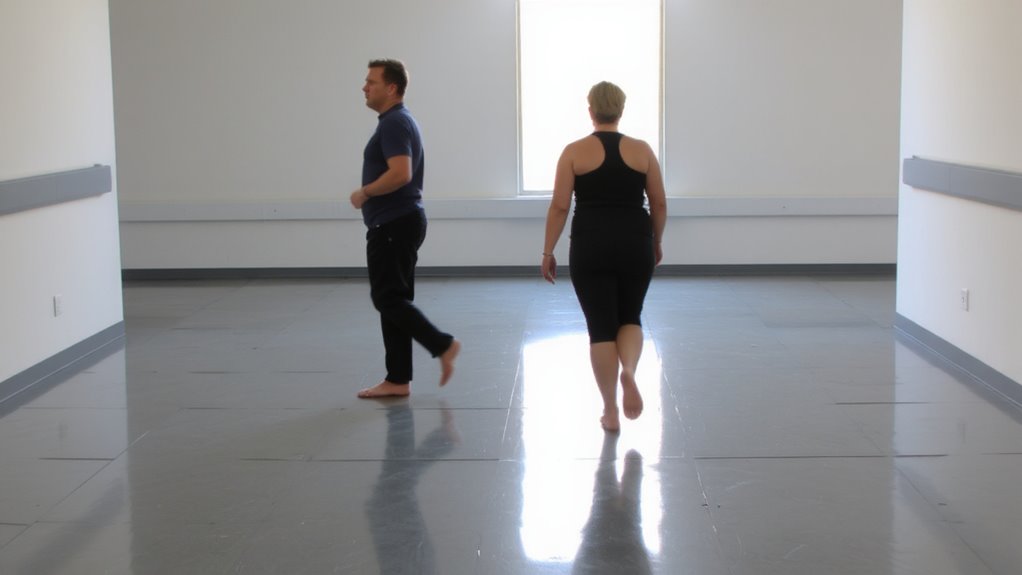
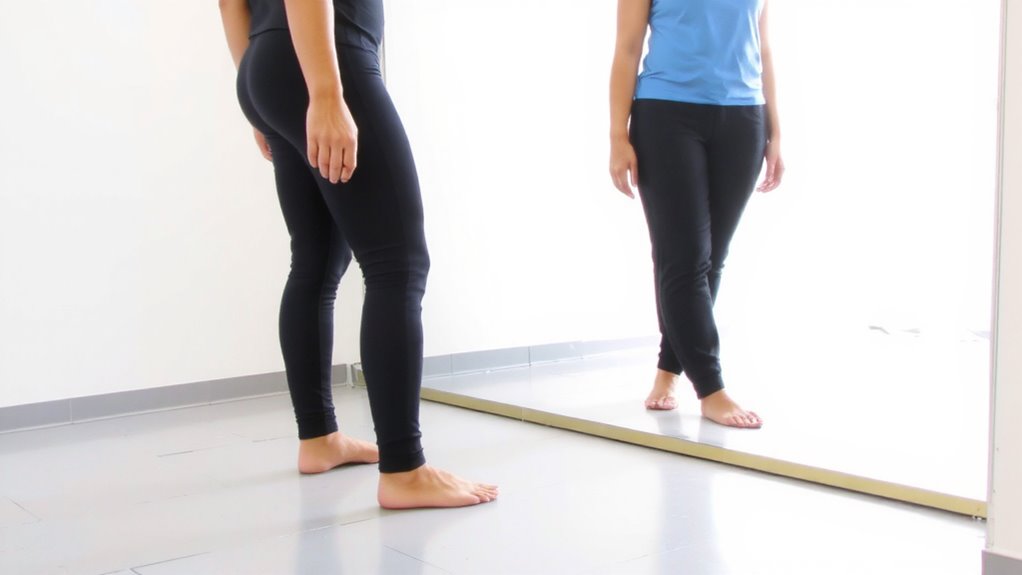
A well-designed mirror-guided gait retraining program doesn’t just show you how you walk-it helps you fix it by turning abstract sensations into clear, visible corrections. You’ll immediately see when your pelvic alignment is off, letting you adjust in real time. Watching your reflection, you can spot the drop on one side and consciously engage the weak gluteus medius to restore balance. That feedback loop strengthens proper muscle activation with every step. Over time, your nervous system learns the right patterns, making corrected gait feel natural. The mirror doesn’t compensate or automate anything-it simply reveals what’s happening so you can fix it yourself. Unlike passive recovery tools, this method actively retrains movement. It’s low-tech but high-impact, requiring focus and consistency. No special gear is needed, just a full-length mirror and guidance from a trained therapist.
Why Seeing Yourself Rewires Your Gait Patterns
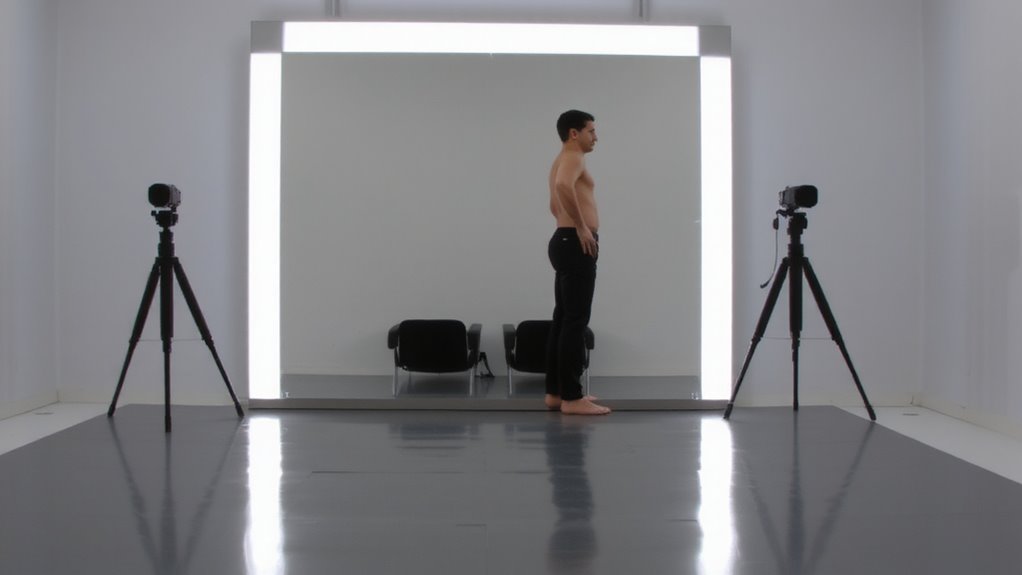
How is it that simply watching yourself walk can reshape the way your body moves? It’s because visual feedback creates a real-time loop between your actions and your brain’s perception of them. When you see your pelvic drop in the mirror, your brain immediately registers the asymmetry, triggering neural adaptation-your nervous system recalibrating motor patterns to correct it. This isn’t just awareness; it’s learning. Studies show this method boosts motor control faster than verbal cues alone, especially post-hip surgery. Unlike passive recovery tools, mirror training actively engages your neuroplasticity. You’re not just moving-you’re retraining with precision. While fitness recovery gear like braces or sensors offers data, they can’t match the instant clarity of seeing your gait. Mirror-guided retraining stands out because it uses your own eyes to drive lasting change, making neural adaptation both measurable and meaningful.
Step-by-Step: Start Your Mirror Gait Training Today
Where do you begin when turning self-observation into a tool for recovery? Start by standing sideways in front of a full-length mirror, barefoot, in snug-fitting clothes so you can clearly see your pelvic alignment. Begin with slow weight shifts from one leg to the other, watching closely for any lateral pelvic drop. Focus on engaging your gluteus medius-that subtle muscle activation is essential for stabilizing your pelvis during gait. Take small, controlled steps forward while maintaining visual feedback, adjusting posture as needed. Keep your torso upright and avoid excessive sway. Practice daily for 10–15 minutes to retrain motor patterns effectively. This method leverages real-time visual input to reinforce correct biomechanics, making it a practical, low-cost addition to post-surgical rehab. Consistency turns awareness into lasting change, supporting long-term walking efficiency and joint health.
Avoid These Common Mirror Training Mistakes
Why do so many people struggle to see progress despite consistent mirror gait training? Often, it’s due to incorrect posture and delayed feedback-two pitfalls that silently undermine your recovery. Standing too far from the mirror distorts visual input, making it hard to detect pelvic drop. You might think you’re aligned when you’re not. Rushing through reps without focus leads to ingrained errors. Even slight misalignments, if repeated, reinforce bad patterns. Worse, relying on memory instead of real-time cues means delayed feedback keeps you stuck.
| Mistake | Emotional Cost |
|---|---|
| Incorrect posture | Frustration from stalled progress |
| Ignoring alignment cues | Loss of confidence in recovery |
| Training without focus | Doubt in the method’s effectiveness |
| Delayed feedback | Discouragement over slow results |
Stay close, stay sharp, and correct errors immediately.
Track Progress and Build Confidence With Visual Feedback
Isn’t it remarkable how quickly small improvements become visible when you’re watching yourself move in real time? Using a mirror during gait retraining gives you immediate visual cues, helping you recognize subtle asymmetries in pelvic movement. This feedback loop lets you make real time adjustments, reinforcing proper mechanics with each step. Over time, you’ll notice reduced pelvic drop and smoother weight shifts-objective signs your hip is healing correctly. Unlike delayed assessments, mirror training builds confidence through consistency, as you actually see progress. It’s not just about form; it’s about rewiring motor control with accuracy. The mirror acts like a coach, offering constant, honest input without extra gear. When paired with therapist guidance, this method enhances neuromuscular awareness more effectively than verbal cues alone. You’re not guessing-you’re confirming. That kind of active engagement improves compliance and outcomes, making mirror use a smart, low-tech addition to post-surgical rehab.
Fit Mirror Training Into Your Daily Rehab Routine
While consistency matters most in gait retraining, integrating mirror training into your daily rehab routine doesn’t have to be time-consuming or complicated. Just 5–10 minutes twice a day can maintain daily consistency and improve visual alignment. Use a full-length mirror in a well-lit space to observe your pelvic movement as you walk slowly. Focus on symmetry and controlled step length. Pair this with your prescribed exercises for better carryover.
| Time of Day | Activity | Duration |
|---|---|---|
| Morning | Mirror gait check | 5 min |
| Evening | Reinforcement with exercises | 10 min |
This structured yet flexible approach supports motor relearning. You don’t need high-tech fitness recovery gear-just a mirror and attention to form. Over time, consistent visual feedback helps correct pelvic drop more effectively than verbal cues alone, making mirror training a practical cornerstone of post-arthroscopy rehab.
On a final note
You’re retraining your gait, and mirror-guided feedback sharpens your awareness better than verbal cues alone. Seeing pelvic drop in real time helps correct asymmetry reliably, aligning stride with post-op rehab goals. This method’s low-tech but effective-no apps or sensors needed-just consistent positioning and observation. It fits seamlessly into daily routines, offering instant visual reinforcement. While not a standalone fix, it boosts motor learning when paired with strength work. Simple, practical, and proven to support lasting gait normalization after hip surgery.