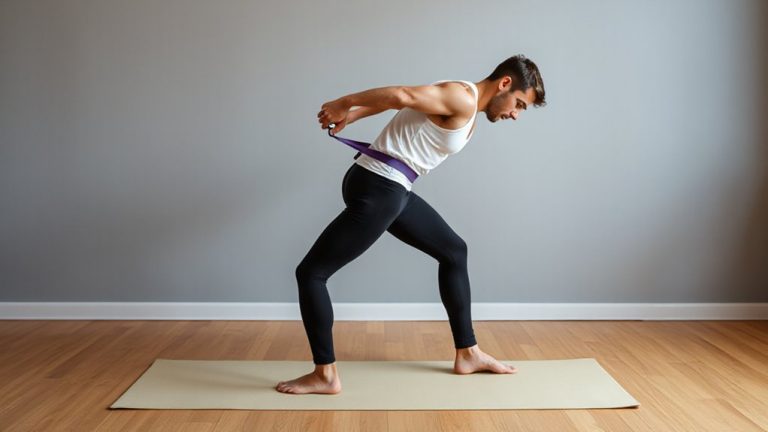
Functional Strength for Dancers: Eccentric Relevé Control
You build functional strength every time you control the lowering phase of a relevé, as eccentric loading boosts calf activation, enhances joint alignment, and improves tendon resilience. Move slowly-3 to 5 seconds down-to sharpen balance and neuromuscular coordination. Avoid locking your knees or rolling your ankles, and stay centered over the tripod of your foot. This method outperforms standard rises by targeting dance-specific stability. There’s more to optimize in your training.
Notable Insights
- Eccentric relevés build functional strength by emphasizing controlled lowering phases to enhance muscle coordination and joint stability.
- Proper alignment during execution involves stacking joints vertically and maintaining a microbend in the knees to prevent hyperextension.
- Lowering over 3–5 seconds increases time under tension, boosting strength and neuromuscular control in calves and feet.
- Avoid common errors like ankle wobbling, forced turnout, and bouncing to protect tendons and ensure effective muscle engagement.
- Integrate eccentric relevés into barre and center work with progressive challenges like single-leg variations for dance-specific resilience.
Why Eccentric Relevés Improve Dance Control
Why do some dancers maintain flawless balance while others wobble during shifts? The secret often lies in eccentric relevé training, which builds functional strength through controlled lowering phases. You’re not just lifting-you’re teaching your body to decelerate with precision, enhancing muscle synchronization across calves, ankles, and stabilizing joints. This coordination sharpens proprioception, making balance adjustments seamless during complex shifts. More than aesthetics, this control supports injury prevention by reducing strain on tendons and ligaments during landing or pivoting. Unlike generic strength work, eccentric loading targets the very muscles overtaxed in dance, making recovery more efficient and movement safer. When paired with smart recovery gear-like compression sleeves that support circulation-you maintain peak performance. This isn’t just training; it’s refining how your body absorbs force, adapts, and moves with intentional control.
How to Do an Eccentric Relevé
| Focus Point | What to Do | Why It Matters |
|---|---|---|
| Proper Alignment | Stack joints vertically | Prevents excessive strain on ankles |
| Slow Lowering | Take 3–5 seconds to descend | Maximizes muscle time under tension |
| Control | Avoid bouncing at the bottom | Enhances neuromuscular coordination |
Precision in execution delivers functional gains.
Progress Your Eccentric Relevé Work
A well-structured eccentric relevé progression isn’t just about adding reps or going slower-it’s about systematically increasing demand while preserving control and alignment. You can start by adjusting the *relevé tempo*, prolonging the descent to intensify muscle lengthening under load. This controlled lowering builds functional strength more effectively than fast, bouncy repetitions. Try incorporating pauses at the midpoint to challenge stability and deepen neuromuscular engagement. As you progress, increase sets or shift to single-leg variations, ensuring clean form throughout. Using a mirror or recorded feedback helps maintain accuracy. Training surfaces matter too-avoid overly soft mats that disrupt alignment. The right footwear or barefoot setup supports precise movement. Progressing smartly reduces injury risk and builds endurance that translates directly to performance. Consistent, mindful practice with strategic overload yields real gains in strength and control.
Avoid These Form Breakdowns
While maintaining proper alignment during functional strength exercises, you’ll want to watch for common form breakdowns that undermine both effectiveness and safety. Letting your knees lock out leads to knee hyperextension, which places unnecessary stress on the joint and reduces gluteal engagement. You’re better off keeping a microbend to protect the ligaments and maintain muscular control. Similarly, collapsing into ankle instability-often seen as wobbling or rolling inward-compromises tendon integrity and diminishes power transfer. This often happens when fatigue sets in or proprioception is underdeveloped. Avoid forcing turnout from the feet, as it encourages this instability. Instead, engage your deep rotators and keep your weight centered over the tripod of the foot. Consistently correcting these flaws guarantees safer, more efficient movement. Addressing them early improves performance longevity and reduces injury risk, especially during repetitive loading like repeated relevés.
Use Eccentric Relevés in Barre and Center Work
You’ve just corrected the alignment errors that compromise stability and joint health, so now it’s time to put that solid foundation to work with more intentional movement patterns. Incorporating eccentric relevés into barre and center work enhances both dance alignment and muscle endurance. When you lower slowly from relevé-controlling the descent over two to four counts-you activate calf and intrinsic foot muscles far more than during concentric motions. This builds functional strength while reinforcing proper joint stacking. At the barre, pair these with pliés and tendus; in center, add them to adagio sequences. The controlled lengthening reduces tendon strain and improves proprioception, making movements safer and more efficient. Over time, dancers report improved stability in turns and jumps. Unlike passive stretching, eccentric training strengthens through range, boosting resilience. It’s not just about flexibility-it’s sustainable power. Smart progressions here elevate performance while minimizing overuse injuries, making it a critical tool in any dancer’s routine.
On a final note
You’ll notice improved balance and joint stability when incorporating eccentric relevés into both barre and center work. This controlled lowering phase builds functional strength more effectively than concentric movements alone. Over time, consistent practice enhances proprioception and reduces injury risk. Paired with proper recovery and supportive gear-like well-cushioned dance floors and fitted footwear-eccentric training optimizes performance. It’s not just repetition; it’s mindful, progressive loading that delivers measurable results in dance technique and endurance.