How Delayed Onset Muscle Soreness Signals Effective Exercise Intensity Management
You’re feeling sore two days after a workout because microtears from intense or unfamiliar exercise trigger inflammation-a sign your muscles are adapting. Mild DOMS suggests you’ve challenged them enough to grow without overtraining. If soreness fades in 48 hours, you’re balancing intensity and recovery well. Severe or lasting pain means you’ve pushed too hard. Tracking how your body responds helps fine-tune your routine for steady progress.
Notable Insights
- Mild DOMS indicates effective exercise intensity that challenges muscles without causing overtraining.
- Soreness peaking at 48 hours and resolving quickly signals proper recovery and adaptation.
- Frequent severe DOMS suggests poor exercise intensity management and inadequate recovery planning.
- Minimal soreness in trained individuals reflects efficient adaptation, not ineffective workouts.
- Using performance progress-not soreness-as a guide ensures sustainable intensity management.
What Is Delayed Onset Muscle Soreness (DOMS)?
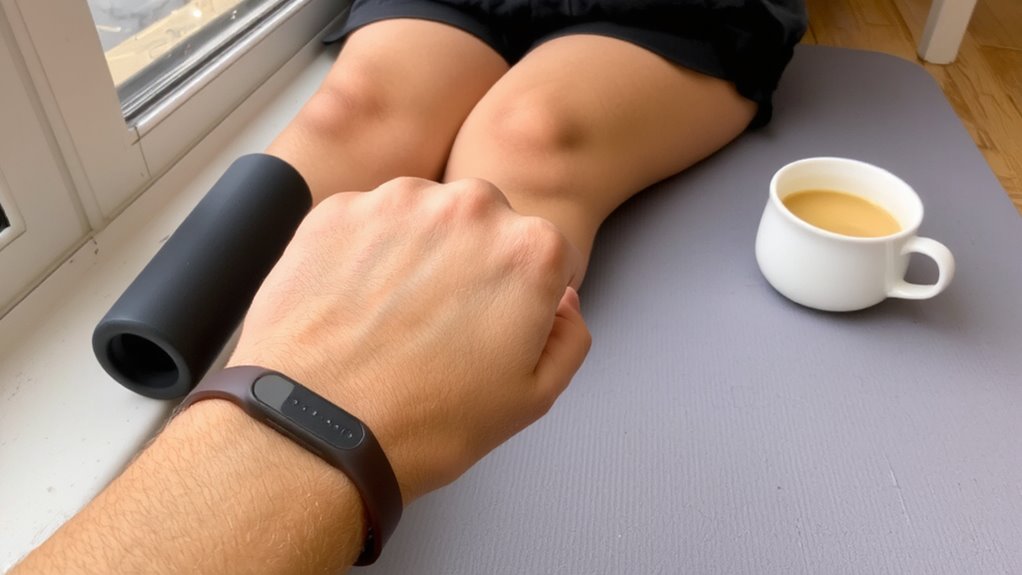
Soreness that shows up a day or two after a tough workout? That’s delayed onset muscle soreness (DOMS). The definition: microtears in muscle fibers due to unfamiliar or intense physical stress, especially during eccentric movements like lowering weights. It’s not lactic acid buildup-that myth’s been debunked. DOMS sets in after your body starts repairing strained tissue, peaking around 48 hours. The primary causes include sudden increases in exercise intensity, trying new routines, or returning to training after a break. While not inherently harmful, it indicates mechanical stress your muscles aren’t conditioned to handle. Recovery strategies-like proper hydration, sleep, and compression gear-can ease discomfort. Some fitness gear, such as percussive therapy devices, may support recovery by boosting circulation. Still, gear alone won’t prevent DOMS if training progression is too aggressive. Understanding DOMS helps you manage exercise intensity wisely, aligning effort with recovery capacity. A variety of best massage guns are available to help target muscle tension and support recovery when used appropriately.
DOMS: Sign of Progress or Overtraining?
You might assume that sore muscles mean you’re building strength, but it’s worth questioning whether DOMS really signals progress or if it’s your body waving a red flag about overdoing it. Persistent muscle fatigue can hinder performance, suggesting inadequate recovery rather than growth. Below is a comparison to help assess what your soreness might indicate:
| Symptom | Likely Indicates | Recommended Recovery Methods |
|---|---|---|
| Mild soreness, resolves in 48 hrs | Normal adaptation | Light activity, hydration |
| Pain during movement, lasts 5+ days | Overtraining | Rest, compression gear |
| Swelling or decreased range of motion | Excessive strain | Cold therapy, professional advice |
| Repeated severe DOMS | Poor recovery balance | Adjusted intensity, sleep focus |
Smart use of recovery methods supports adaptation without compromising long-term gains. Incorporating a high-quality muscle recovery device can significantly enhance recovery speed and muscle function.
Does Muscle Soreness Mean You’re Getting Stronger?
Could that lingering ache after a tough workout actually mean you’re building strength, or is it just your muscles protesting? While soreness can signal muscle adaptation, it doesn’t always confirm growing strength. Delayed onset muscle soreness (DOMS) often follows new or intense efforts, showing your muscles are adjusting-but that doesn’t guarantee a direct strength correlation. You might experience microtears and inflammation, which are part of rebuilding stronger fibers, yet consistent strength gains come from progressive overload, not soreness itself. In fact, trained individuals often feel less sore due to improved adaptation. Relying solely on soreness misleads; progress trackers, performance metrics, and proper recovery gear-like compression wear or foam rollers-offer more reliable feedback. A high-quality foam roller can enhance recovery by improving circulation and reducing muscle tightness. So while some soreness may accompany growth, it’s not the best indicator of strength. Effective training prioritizes consistency, recovery, and measurable performance over discomfort.
Should You Workout When You’re Sore?
How soon after feeling that deep, post-workout ache should you lace up again? It depends on your pain tolerance and recovery strategy. Mild soreness? You can keep going-especially with active recovery. This means low-intensity workouts like walking or cycling, which boost circulation without stressing fatigued muscles. But sharp or worsening pain means you should rest-pushing through can impair gains and increase injury risk. Your fitness gear also plays a role: supportive shoes and breathable compression wear may help manage discomfort and improve workout efficiency during recovery phases.
| Activity Level | Recommended When Sore? |
|---|---|
| Strength Training | Only if soreness is mild |
| Cardio (moderate) | Yes, aids active recovery |
| HIIT | No, wait until recovered |
| Stretching/Yoga | Yes, promotes mobility |
| Rest | Necessary for severe soreness |
How to Manage DOMS Without Slowing Gains
While delayed onset muscle soreness (DOMS) is a natural response to increased exercise intensity, managing it effectively guarantees you stay on track without sacrificing progress. You can reduce discomfort and maintain training consistency by incorporating active recovery-like light cycling or walking-which promotes blood flow and muscle repair without overstressing tissues. This method outperforms passive rest, helping you return to full performance faster. Pair this with proper hydration, as even mild fluid deficits impair muscle elasticity and recovery speed. Electrolyte balance also plays a role, especially after intense or prolonged workouts. Compression gear may offer mild support by improving circulation, though evidence remains mixed. Prioritize sleep and consistent nutrition, since gains occur during recovery, not the workout itself. Smart DOMS management doesn’t eliminate soreness-it optimizes your response to it-keeping you resilient, adaptive, and ready for the next effective session.
Using DOMS to Improve Your Training Over Time
Isn’t it interesting how soreness, often seen as a nuisance, can actually guide smarter training when interpreted correctly? You can use DOMS as a feedback tool to monitor training adaptation over time. When you consistently track your soreness patterns, you’re engaging in recovery tracking-helping identify whether your intensity is ideal, excessive, or insufficient. Mild to moderate DOMS signals effective muscle stimulus and progressive overload, while prolonged or severe soreness may indicate poor recovery or overtraining. Over weeks, reduced DOMS from the same workout suggests improved adaptation, meaning your body’s handling load more efficiently. This doesn’t mean chasing soreness, but rather respecting it as one performance indicator among many. Pairing DOMS observations with sleep quality, mood, and strength gains offers a fuller picture. Used wisely, DOMS becomes part of an intelligent, responsive training strategy-not a goal, but a clue.
On a final note
You’re wise to see DOMS not as a badge of honor but as feedback. It signals muscle adaptation when managed well, yet persistent soreness hints at poor recovery or overreaching. Effective training balances stress and rest. Recovery gear-like compression tools or foam rollers-may ease symptoms, but they won’t replace sleep or nutrition. Use soreness as one clue, not the sole measure, in refining your fitness approach for sustainable gains.