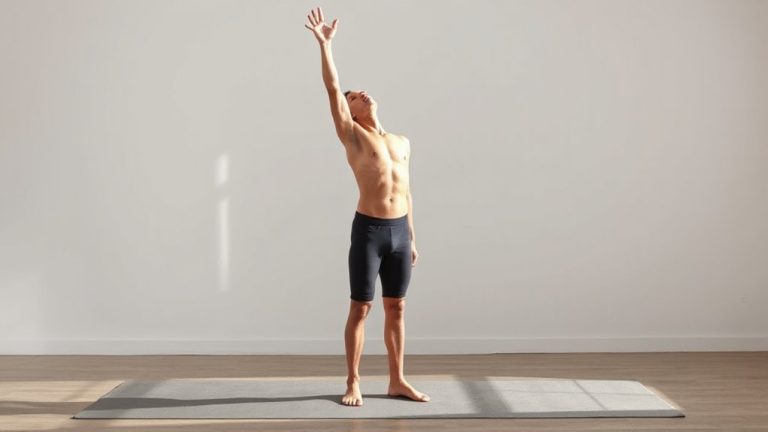
Why Joint Mobility Drills Are More Effective Than Static Stretching for Stiff Joints
You’re not just tight-you’re stiff, and static stretching won’t fix that. Mobility drills beat stretching because they boost joint lubrication, improve active control, and enhance movement under load. They stimulate synovial fluid to reduce friction and feed cartilage, while building strength through ranges where you actually use them. Stretching may feel good briefly, but it doesn’t retrain how your joints move. You’ll see real change when you train motion with purpose-there’s more to releasing stiffness than holding a stretch.
Notable Insights
- Static stretching targets muscle length but doesn’t resolve joint stiffness caused by compression or restricted joint surfaces.
- Mobility drills actively improve joint range of motion through controlled, dynamic movement rather than passive elongation.
- Joint mobility exercises stimulate synovial fluid production, enhancing lubrication and long-term joint health.
- Active mobility work integrates strength, coordination, and neuromuscular control within functional ranges of motion.
- Performing mobility drills during warmups prepares the nervous system, improves mechanics, and reduces injury risk more effectively than static stretching.
Why Stiff Joints Need More Than Static Stretching
While static stretching can help improve muscle length over time, it doesn’t fully address the root causes of stiff joints, especially when joint mobility is limited by factors beyond just tight muscles. You might feel relief temporarily, but if joint compression is contributing to your discomfort, stretching alone won’t create lasting change. Muscle tightness often masks underlying joint restrictions, and without addressing movement quality, you’re just treating symptoms. Mobility drills, on the other hand, actively load the joint through range, stimulating synovial fluid production and improving joint spacing-key for reducing compression. Tools like foam rollers or mobility bands can enhance these drills by providing feedback and resistance. Recovery isn’t just about relaxing tight tissue; it’s about retraining how your joints move under load. For long-term joint health, especially under physical stress, dynamic preparation beats passive stretching every time.
Mobility vs Flexibility: What’s the Real Difference?
Think of flexibility as how far you can move, and mobility as how well you can control that range. Flexibility focuses on static lengthening of muscles, improving your passive range of motion. But mobility goes further-it combines range of motion with strength and coordination, allowing for effective dynamic movement. You might touch your toes, but can you squat deep and rise smoothly? That’s mobility in action.
| Aspect | Flexibility | Mobility |
|---|---|---|
| Focus | Static positions | Dynamic movement |
| Range of Motion | Passive | Active and controlled |
| Function | Increases stretch | Enhances control |
Mobility builds usable joint function; flexibility just opens the door. For stiff joints, you need control-not just length.
How Mobility Drills Lubricate Your Joints Naturally
You’re already moving beyond static holds and passive stretching-now it’s about making those joints work smarter. Mobility drills stimulate synovial fluid activation, the natural lubricant in your joints, reducing friction with every movement. When you actively move through ranges, pumping action increases fluid circulation, which means better joint glide and less stiffness. This isn’t just about motion-it’s about nourishment. Synovial fluid delivers essential nutrients to avascular cartilage, supporting cartilage nutrition and long-term joint health. Unlike passive stretching, which relies on external force, mobility work engages muscles and connective tissues dynamically, promoting both lubrication and strength. Over time, consistent mobility training enhances joint resilience, especially under load. While fitness recovery tools like foam rollers or massage guns offer temporary relief, they can’t replace the internal benefits of movement-driven lubrication. Mobility drills do what gear can’t: they activate your body’s innate maintenance system, keeping joints supple, fed, and functional day after day.
5 Joint Mobility Exercises for Daily Stiffness Relief
A well-structured routine of joint mobility exercises can make a noticeable difference in managing daily stiffness, especially when performed consistently and with proper form. You’ll find that movements like arm circles, hip openers, and cat-cow flows boost circulation while fine-tuning joint alignment. Unlike passive methods, these drills promote active muscle activation, priming your body for better movement patterns throughout the day. Controlled motion through full ranges increases proprioception and reduces the grinding tightness often felt in shoulders, hips, and spine. You don’t need fitness gear to start, though resistance bands or foam rollers can enhance feedback and depth. When done daily, mobility work not only eases discomfort but also supports long-term joint health. The key is consistency and mindful execution-rushing through reps won’t deliver the same effect. Over time, you’ll notice improved control, less morning stiffness, and greater ease in everyday movements.
When to Choose Mobility Over Stretching (And Why It Matters)
While static stretching has its place in recovery routines, mobility drills often deliver more functional benefits when you’re preparing your body for movement or combating stiffness from prolonged sitting. You’ll get more out of a dynamic warmup because it primes your nervous system, increases blood flow, and enhances joint range of motion in a movement-specific way. Static stretching, in contrast, is better suited for cool-downs or active recovery when you’re not immediately loading your joints. If you’re gearing up for strength training or athletic performance, mobility work supports better mechanics and stability under load. Fitness gear like resistance bands or foam rollers can amplify these effects when used correctly. Choosing mobility over stretching at the right time improves movement quality and reduces injury risk. It matters because real-world motion isn’t static-it’s dynamic, integrated, and demands responsive joints. Know when to do what, and your body will perform and recover better.
On a final note
You’re better off with joint mobility drills than static stretching for stiff joints because they improve range of motion while stimulating synovial fluid production, enhancing joint lubrication. Mobility work activates muscles and connective tissues dynamically, promoting functional movement. Static stretching, while useful, doesn’t address joint mechanics as effectively. For long-term recovery and joint health, mobility routines offer more balanced, sustainable results-especially when paired with proper recovery gear like foam rollers or compression tools.