How Wearable Muscle Repair Rate Predictors Use Machine Learning From Biometric Trends
Your wearable tracks muscle repair by combining near-infrared spectroscopy and impedance sensors to monitor oxygen levels and fluid shifts, giving real-time insight into recovery. It uses machine learning to analyze trends in your HRV, respiration, hydration, and activity history, adapting to your unique biology over time. This personalized approach beats generic recovery timelines, helping you avoid overtraining. You’ll discover how these smart systems fine-tune their predictions with continued use.
Notable Insights
- Wearables use machine learning to analyze biometric trends like HRV and muscle oxygenation for real-time recovery insights.
- Algorithms detect fluid shifts and inflammation via impedance sensors to assess muscle repair rates post-exercise.
- Personalized recovery forecasts improve by learning individual patterns in sleep, hydration, and activity over time.
- Genetic and lifestyle factors are integrated to refine predictions beyond generic physiological assumptions.
- Real-time biometric feedback allows dynamic training adjustments to prevent overtraining and reduce injury risk.
How Wearables Measure Muscle Recovery in Real Time
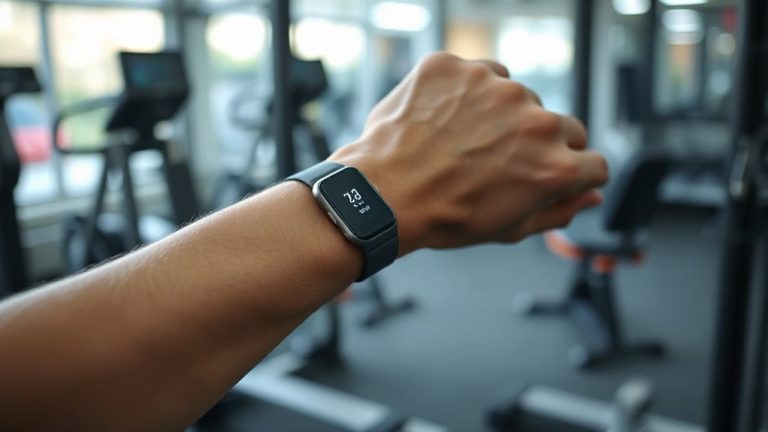
While you’re recovering from an intense workout, your body sends subtle physiological signals-and modern wearables are now designed to catch them. These devices track muscle oxygenation using near-infrared spectroscopy, measuring how much oxygen your muscles are using versus delivering. When levels stay low, it suggests delayed recovery. At the same time, electrical impedance sensors monitor fluid shifts in tissue, indicating inflammation or swelling common after strenuous effort. Together, these metrics give real-time insight into muscle repair. Most high-end wearables integrate this data seamlessly, though accuracy can vary based on fit and skin contact. While not medical-grade, they offer practical feedback for training adjustment. You’re not just guessing how your body feels-you’re seeing patterns backed by biometrics. This tech excels in consistency, helping athletes fine-tune rest periods. Still, it works best when paired with subjective feedback, like soreness levels, creating a fuller recovery picture.
What Biometrics Reveal Your True Recovery Status
How do you really know when your body’s ready to go hard again? It’s not just about how you feel-biometrics give you the real story. Wearables track key indicators like muscle fatigue, heart rate variability, and hydration levels to assess your true recovery status. These metrics reveal imbalances you might otherwise ignore, helping prevent overtraining and injury. Incorporating tools like best massage guns can further enhance recovery by targeting muscle fatigue and improving circulation.
| Biometric | What It Reveals | Why It Matters |
|---|---|---|
| HRV | Nervous system recovery | Low HRV = incomplete recovery |
| Muscle Fatigue | Lactic acid buildup & fiber stress | High fatigue = need rest |
| Hydration Levels | Cellular function efficiency | Dehydration slows repair |
| Skin Temp | Inflammation markers | Elevated temp = ongoing strain |
| Respiration Rate | Metabolic recovery | High rate = body still working hard |
Ignoring these signs risks setbacks-your data doesn’t lie.
How Your Wearable Learns Your Body’s Recovery Rhythm
Most wearables today don’t just collect data-they adapt to you, learning your body’s unique recovery rhythm over time through repeated measurements and pattern recognition. Yours tracks subtle shifts in heart rate variability, activity intensity, and rest cycles, using machine learning to link these with your sleep patterns and hydration levels. Each night, it analyzes how deeply and consistently you sleep, while daily hydration inputs refine its predictions. Over weeks, the model grows more accurate, identifying when you’re truly recovered versus when you’re pushing through fatigue. It doesn’t assume-you might need more rest after leg day, or rebound faster when drinking enough water. These personalized correlations, drawn from continuous biometric trends, make the device smarter, not just more data-heavy. The result? A recovery rhythm profile tuned precisely to your physiology-not a generic algorithm.
Why Your Recovery Needs a Personal Touch
Because no two bodies recover the same way, your wearable’s ability to customize recovery insights makes all the difference in avoiding overtraining and optimizing performance. Your recovery isn’t just about yesterday’s workout-it’s shaped by genetic factors like muscle fiber composition and inflammation response, which vary widely between individuals. These inherited traits influence how quickly your muscles repair, and generic recovery timelines often miss the mark. Meanwhile, lifestyle habits such as sleep quality, nutrition, and stress levels directly impact biometric trends your device tracks. A wearable that learns from your daily patterns can adjust its predictions, offering guidance that aligns with your real-world routine. Without this personal touch, even advanced sensors provide incomplete advice. Ultimately, accurate muscle repair forecasting depends on combining hard data with the nuances of your biology and behavior-something only adaptive, personalized algorithms can deliver effectively. Top recovery gear like compression therapy devices can enhance these biometric trends when integrated with smart wearables.
How to Know When to Push: or Pause: Based on Data
Your wearable’s personalized recovery insights set the stage for smarter decisions, but knowing when to push or pause hinges on interpreting the right signals at the right time. When your training load spikes faster than recovery can keep up, the device flags elevated injury risk based on heart rate variability, muscle oxygen levels, and movement inefficiencies. You’re likely safe to push when recovery scores are high and fatigue metrics stay low-even with heavy training load. But if the data shows declining trends in muscle repair rate or rising resting heart rate, it’s a sign to pause. These biometrics, analyzed through machine learning, don’t just track effort-they reveal your body’s response to it. Ignoring these cues increases injury risk, especially during intense cycles. Smart athletes use this feedback to adjust timing, intensity, or rest-not guesswork. The real value? Data-driven decisions that balance progress with protection.
What Makes a Smart Muscle Recovery Wearable Worth It
While sleek design and app integration matter, what truly makes a smart muscle recovery wearable worth it lies in its ability to deliver accurate, actionable biometrics over time. You need consistent data on muscle oxygenation, heart rate variability, and recovery scores-metrics that guide real training decisions. Long-term use hinges on battery life and design comfort, both critical yet often overlooked. A device that lasts only a day forces constant charging, disrupting data continuity. Bulky or rigid materials cause irritation, especially post-workout. Consider these essentials:
| Feature | Why It Matters |
|---|---|
| Battery life | Guarantees multi-day tracking without gaps |
| Design comfort | Promotes all-day wear and compliance |
| Sensor accuracy | Delivers reliable muscle recovery data |
| Data trends | Reveals progress over weeks, not moments |
| App usability | Simplifies interpreting recovery needs |
You’ll get the most value when tech fades into daily routine-silent, accurate, and ready.
On a final note
Your wearable doesn’t just track data-it learns your recovery patterns using machine learning that adapts to your biometrics like HRV, resting heart rate, and sleep quality. These devices turn trends into actionable insights, helping you decide when to train hard or back off. While not flawless, high-quality recovery wearables offer personalized, science-backed guidance that generic fitness gear can’t match, making them a smart investment for serious athletes and active users alike.