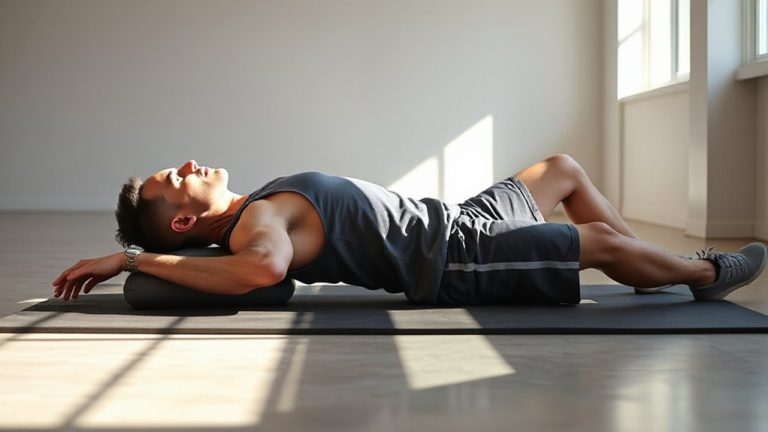
Foam Rolling the Tibialis Anterior: Releasing the Front of the Shin
You can foam roll your tibialis anterior by placing a medium-density roller just above the ankle and slowly rolling up toward the knee, staying along the outer shin. Keep pressure firm but not painful, avoiding the bony ridge of the tibia. Do this for 30–60 seconds per leg, ideally post-workout, to improve dorsiflexion and reduce shin tightness. Rolling too hard or too fast risks bruising, so listen to your body-warmth and release are good; sharp pain isn’t. There’s more to get right for lasting relief and better recovery.
Notable Insights
- Locate the tibialis anterior along the front of the shin, just beneath the skin and beside the shinbone.
- Use a foam roller on the lower leg, rolling slowly from ankle to knee with firm, controlled pressure.
- Apply gentle pressure to avoid bruising, especially over sensitive or bony areas.
- Roll for 30–60 seconds per leg, focusing on tender spots for 20–30 seconds to release tension.
- Perform 3–4 times weekly post-workout to improve flexibility and prevent shin discomfort.
Find Your Tibialis Anterior: Location Made Easy
Muscle location matters-especially when it’s the tibialis anterior you’re trying to treat. To begin, you need a solid grasp of anatomy basics: this muscle runs along the front of your shin, connecting your tibia to your foot. It’s the one that flexes your ankle and helps prevent foot drop. You’re not using foam rolling correctly if you can’t pinpoint it first. Proper muscle identification makes all the difference-don’t confuse it with nearby tendons or the lateral fibularis muscles. Press gently along the outer edge of your shin; the tibialis anterior lies closer to the skin and feels firmer. When you find it, you’ll recognize the tightness, especially after runs or intense workouts. Reliable fitness recovery starts here. Knowing exactly where the muscle sits guarantees your foam rolling is effective, not just guesswork. Good technique begins with accurate location. Using the right best foam rollers can enhance effectiveness and comfort during self-myofascial release.
Foam Roll Your Shin: Step by Step
Now that you’ve pinpointed the tibialis anterior along the front of your shin, you’re ready to start rolling. Position your foam roller under your lower leg, just above the ankle, and support your weight with your hands. Slowly roll upward toward the knee, maintaining proper pressure-firm enough to feel release, not pain. Limit rolling duration to 30–60 seconds per leg to avoid irritation. Focus on smooth, controlled motions, pausing slightly on tight spots for deeper release. Consistency matters more than intensity. Using a vibrating foam roller can enhance muscle relaxation and improve circulation during your shin recovery routine.
| Sensation | Likely Cause | Recommended Action |
|---|---|---|
| Mild discomfort | Muscle tightness | Continue with proper pressure |
| Sharp pain | Excessive pressure | Ease off immediately |
| Warmth and relief | Blood flow increase | Ideal outcome of rolling duration |
Don’t Hurt Your Shins: Avoid These Rolling Errors
A common mistake when foam rolling the tibialis anterior is applying too much pressure, which can lead to bruising or increased sensitivity rather than relief. You might think more rolling pressure equals faster results, but that’s not always true-excessive force irritates the muscle and can worsen shin discomfort. Instead, use moderate, controlled pressure to allow the tissue to release gradually. Roll slowly, pausing on tender spots for 20–30 seconds, rather than grinding aggressively over them. Avoid bony areas; focus only on the fleshy part of the shin to prevent unnecessary strain. Using a softer foam roller can help regulate pressure and reduce the risk of injury. Proper technique matters more than intensity-your goal is recovery, not punishment. By respecting your body’s limits, you’ll get better long-term results and keep your shins healthy and functional.
How Often Should You Roll for Relief?
You’ve probably felt that tight pull along the front of your shin after a long run or intense lower-leg workout, and while rolling can ease the tension, knowing how much is actually helpful keeps you from doing more harm than good. For Frequency benefits, aim to foam roll your tibialis anterior 3 to 4 times per week-daily use isn’t necessary and may irritate the tissue. Each session should last about 1 to 2 minutes per leg, applying gentle, controlled pressure. Timing tips suggest rolling post-workout or during cooldowns when muscles are warm and more responsive. Avoid aggressive rolling first thing in the morning or on cold muscles, as this increases soreness risk. Consistent, moderate use delivers better long-term results than sporadic, intense efforts. Quality matters: choose a medium-density roller for balance between support and comfort. Overuse diminishes returns, so listen to your body and adjust based on recovery needs.
Why Releasing Your Tibialis Anterior Matters
Tightness in the tibialis anterior isn’t just discomfort-it’s a potential gateway to dysfunction. Left untreated, it can disrupt gait, reduce dorsiflexion, and increase strain on connective tissues. Prioritizing release supports shin splint prevention and enhances muscle recovery optimization. Foam rolling improves blood flow, reduces adhesions, and restores mobility-key for athletes and active individuals. Using quality fitness recovery gear guarantees consistent results without excessive effort. For even deeper targeted relief, incorporating a best massage gun can complement foam rolling by delivering percussive therapy to stubborn muscle tightness.
| Benefit | Mechanism | Practical Outcome |
|---|---|---|
| Shin splint prevention | Reduces overuse stress | Fewer lower leg injuries |
| Improved dorsiflexion | Releases muscle tension | Better squat and stride depth |
| Muscle recovery optimization | Enhances circulation | Faster return to training |
| Joint stability | Balances anterior/posterior tension | Reduced ankle strain |
| Movement efficiency | Restores natural gait | Lower fatigue during activity |
Consistent use of a dense foam roller promotes long-term lower leg health and performance.
On a final note
You’ve likely felt tightness along the front of your shin, and foam rolling the tibialis anterior can offer real relief. When done correctly, it improves mobility, reduces tension, and supports recovery. Avoid aggressive pressure or rolling too fast-control and consistency matter. Used wisely, foam rolling enhances your recovery routine. This simple, cost-effective tool delivers measurable benefits, especially when paired with proper form and frequency.