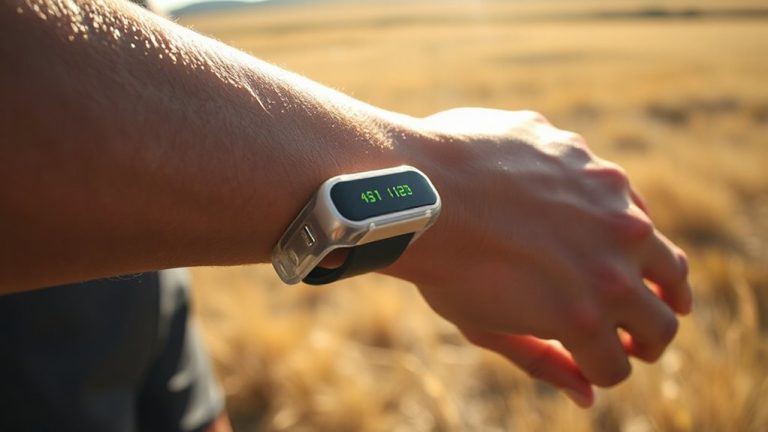
How Blood Flow Restriction (BFR) Bands Enhance Recovery Without Increasing Muscle Stress
You use BFR bands to enhance recovery by lightly restricting venous blood flow while keeping arterial inflow intact. This builds metabolic stress with just 20–30% of your usual load, sparking muscle repair without joint strain. It’s ideal when healing or avoiding heavy lifting. Clinical studies back its effectiveness for strength retention and faster recovery. You’ll see real results with proper pressure and placement-stick around to discover who benefits most and how to apply them correctly.
Notable Insights
- BFR bands restrict venous blood flow while maintaining arterial inflow, creating metabolic stress without heavy mechanical load.
- They enable muscle adaptation using 20–30% of one-rep max, minimizing strain on joints and tissues.
- The hypoxic environment stimulates cellular regeneration and accelerates recovery with low-intensity exercise.
- Enhanced microcirculation improves oxygen and nutrient delivery, supporting tissue repair without added stress.
- BFR integrates safely into early rehabilitation, promoting active recovery while reducing injury and fatigue risks.
What Is Blood Flow Restriction (BFR) and How Does It Work?
Blood flow restriction (BFR) training, at its core, is a method that uses specialized bands to partially limit venous return while maintaining arterial inflow during exercise or recovery. You achieve this through calibrated venous occlusion-enough to slow blood outflow but not stop it. Arterial throttling is avoided so oxygenated blood still reaches working muscles. This creates a hypoxic environment that triggers metabolic stress without heavy loading. You’ll notice rapid fatigue with light loads, which is ideal when joint strain must be minimized. BFR bands, when properly fitted and pressure-regulated, offer a controlled way to stimulate muscle adaptation. Though the mechanism seems counterintuitive, studies support its safety and efficacy when used correctly. The gear’s precision matters-poor design risks excessive occlusion or inconsistent pressure. For recovery, this means you get physiological benefits without added mechanical stress, making BFR a smart addition to evidence-based rehab or performance routines.
Why Low-Stress Recovery Matters for Athletes and Patients
While heavy training pushes physiological limits, you can’t overlook the value of recovery that doesn’t add further strain-especially when healing or maintaining performance over time. Low-stress recovery supports tissue regeneration without taxing the musculoskeletal system, making it ideal during injury rehab or off-season. You benefit from active recovery that boosts circulation, clears metabolic waste, and preserves muscle engagement-minus the joint load. This balance is essential for long-term athletic performance and patient mobility. Below is how different recovery methods compare in key areas:
| Method | Joint Stress | Promotes Tissue Regeneration |
|---|---|---|
| Heavy Resistance | High | Moderate |
| Passive Rest | None | Low |
| Active Recovery | Low | High |
| BFR Training | Minimal | High |
Active recovery methods like BFR enhance tissue repair while reducing injury risk-making smart recovery as strategic as the workout itself.
How BFR Bands Speed Healing With Light Loads
You’ve seen how low-impact recovery protects joints while supporting tissue repair, but now consider a method that actively accelerates healing without demanding intense effort: Blood Flow Restriction (BFR) bands. By applying calibrated pressure to limbs, these bands create a controlled reduction in venous return while maintaining arterial flow. This triggers a significant microcirculation boost, enhancing oxygen and nutrient delivery to damaged tissues. Even with light loads-just 20–30% of your max-you stimulate metabolic stress that promotes muscle adaptation. Research shows this environment amplifies cellular regeneration, speeding up recovery timelines. Unlike traditional rehab, BFR doesn’t rely on mechanical strain, making it safer during early healing phases. The bands are lightweight, portable, and simple to apply, though correct pressure is essential-too much can impair tissue function. Used properly, BFR offers a science-backed edge in recovery, combining practical design with measurable physiological benefits for lasting performance support.
Who Benefits Most From BFR Recovery Therapy
Who really stands to gain the most from BFR recovery therapy? You do-if you’re managing chronic inflammation or dealing with joint instability. These conditions often limit your ability to perform heavy resistance training, yet you still need effective muscle stimulation. BFR therapy lets you use light loads while still triggering meaningful physiological responses. It reduces strain on vulnerable joints, making it ideal when movement is painful or risky. Athletes recovering from injury, older adults, and rehab patients frequently see faster recovery with less discomfort. The controlled pressure from BFR bands improves circulation without aggravating inflamed tissues. You maintain strength and endurance without compounding stress. Clinical evidence supports its safety and efficiency across diverse populations. If traditional training aggravates your condition, BFR offers a smarter, low-impact alternative-helping you stay active, recover faster, and avoid setbacks tied to overuse or structural weakness.
How BFR Triggers Muscle Repair Without Heavy Lifting
When you restrict blood flow during low-intensity exercise, you create a metabolic environment in the muscles that mimics what happens with heavy lifting-without actually lifting heavy. This metabolic stress boosts metabolic signaling, activating pathways that promote muscle adaptation and repair. You’re not tearing fibers through mechanical load, but the hypoxia and metabolite buildup trick your body into initiating cellular regeneration. Studies show this process increases growth hormone release and satellite cell activity, essential for recovery. BFR lets you maintain or rebuild strength when heavy training isn’t possible, making it smart recovery fitness gear. It’s efficient-low joint stress, high physiological return. While not a full replacement for load-based training, it’s a potent supplement. Used correctly, BFR supports tissue repair through controlled, science-backed mechanisms, offering a practical edge in rehabilitation and maintenance phases where traditional resistance isn’t feasible or safe. Top-rated recovery bands for faster muscle relief combine durability and precise pressure to optimize these effects.
Safe BFR Band Application: Pressure, Placement, and Timing
Applying blood flow restriction (BFR) bands properly is just as important as understanding their physiological benefits-without correct technique, the risks outweigh the rewards. You should place the bands at the top of your arms or legs, ensuring they’re snug but not overly tight-aim for about 40–50% limb occlusion pressure. Too much pressure risks nerve safety and compromises skin integrity, especially over bony areas or where nerves are superficial. Use wider bands (5–10 cm) to evenly distribute force and reduce tissue damage. Limit sessions to 15–20 minutes to avoid vascular complications. Always monitor for numbness, tingling, or discoloration-these signal poor application. High-quality, adjustable bands with calibrated tension offer better control, supporting safe, repeatable use. When applied correctly, BFR enhances recovery while minimizing strain on connective tissues and nerves-making precision in pressure, placement, and timing non-negotiable for effective, low-risk results.
Adding BFR to Your Daily Recovery Routine
Though recovery is often seen as passive, incorporating blood flow restriction (BFR) bands into your daily routine actively enhances physiological repair-especially when used during low-intensity movement or post-workout cooldowns. Consistent use can improve hydration levels and support better sleep quality by reducing muscle fatigue. For best results, pair BFR with mobility drills or walking for 15–20 minutes daily. Maximum recovery isn’t just about gear-it’s about timing, consistency, and bodily signals.
| Factor | Benefit |
|---|---|
| Low-Intensity Exercise | Promotes circulation without strain |
| Hydration Levels | Enhance nutrient delivery and waste removal |
| Sleep Quality | Improves recovery efficiency and hormonal balance |
Used correctly, BFR bands are more than fitness gear-they’re recovery tools that complement lifestyle habits, making daily repair more effective without taxing the body.
On a final note
You’re getting more out of recovery with BFR bands because they boost circulation and stimulate repair, even under light loads. They’re designed to partially restrict venous flow-not arterial-so muscles get a metabolic challenge without strain. When applied correctly, at 50–80% limb occlusion pressure, they enhance protein synthesis and reduce atrophy. For injured athletes or those in maintenance phases, these bands offer a smart, evidence-backed edge in recovery gear, blending medical precision with practical daily use.