A 20-Minute Full-Body Mobility Routine for Weekend Athletes
You’ll start with a 5-minute dynamic warm-up, using slow joint circles and controlled movements to prime your ankles, wrists, and spine. Then, hit tight hips and hamstrings with 90/90 switches and forward folds to improve alignment and stride. Open stiff shoulders using banded dislocations and thoracic rotations, enhancing upper back mobility. Finish with diaphragmatic breathing and light core activation to support recovery and control. This routine works better with consistent use, especially when paired with smart gear like mobility bands or foam rollers-there’s more to how each piece maximizes your movement readiness.
Notable Insights
- Start with a 5-minute dynamic warm-up including joint circles, ankle dorsiflexion holds, and wrist rotations to prepare for movement.
- Loosen tight hips and hamstrings using 90/90 switches, seated forward folds, and kneeling lunges for better alignment and stride efficiency.
- Improve shoulder and upper back mobility with banded dislocations, all-fours thoracic rotations, and foam rolling to counteract poor posture.
- Finish with diaphragmatic breathing and gentle core engagement to enhance recovery, control, and nervous system balance.
- Perform the full routine post-activity or before Sunday workouts, keeping it under 20 minutes with consistent, controlled movements.
Do a 5-Minute Mobility Warm-Up
While you might be keen to dive into a full workout, starting with a 5-minute mobility warm-up markedly improves joint readiness and movement quality, setting a strong foundation for better performance and recovery. You’ll notice sharper control during dynamic movements when you address key areas early. Focus on ankle flexibility through slow circles and dorsiflexion holds-this primes your lower limbs for squatting and stepping patterns. Pair that with deliberate wrist rotation, especially if you lift or support weight through your hands; it lubricates the small joints and reduces strain risk. A well-designed warm-up like this doesn’t rely on gear, though using a foam roller or mobility band can enhance results slightly. Still, consistency matters more than tools. Over time, these five minutes reduce wear on connective tissues and improve long-term joint health, making them non-negotiable for smart training. Choosing the right foam roller density can significantly impact the effectiveness of your myofascial release during warm-up or recovery.
Loosen Tight Hips & Hamstrings Fast
If you’re spending hours sitting, your hips and hamstrings are likely tightening without you even noticing, so attacking stiffness there makes a real difference in both movement ease and injury prevention. Improving hip alignment reduces strain on your lower back, while increasing hamstring length enhances stride efficiency and joint coordination. Use targeted stretches like the 90/90 hip switch and seated forward fold to achieve lasting changes. Consistency matters more than intensity-daily minor gains beat sporadic deep pulls. Below are two effective moves and their primary benefits:
| Movement | Benefit |
|---|---|
| 90/90 Hip Switch | Enhances hip alignment |
| Seated Forward Fold | Improves hamstring length |
| Kneeling Lunge | Releases hip flexors |
These exercises require no gear, but a thin mat improves comfort during floor work. Over time, you’ll notice smoother shifts between movements and better overall control.
Open Stiff Shoulders & Upper Back
You’ve just loosened your hips and hamstrings, and now it’s time to address another common trouble spot: tight shoulders and an unyielding upper back. Poor posture and repetitive motions often limit shoulder rotation and reduce thoracic extension, impairing overhead reach and increasing injury risk. You’ll want to actively open these areas now. Start with banded shoulder dislocations-this gently improves shoulder rotation by encouraging joint capsule mobility. Pair it with thoracic spine rotations on all fours, which enhance segmental movement in your upper back. Follow with foam rolling along your thoracic spine to release stiffness and restore natural curvature. These moves, done consistently, improve alignment and enable safer lifting and throwing mechanics. A mobility ball can help target stubborn knots near your shoulder blades. You don’t need expensive gear-bands and foam rollers offer reliable performance. The results? Better form, greater range, and fewer aches after weekend play.
Finish With Breathing & Control
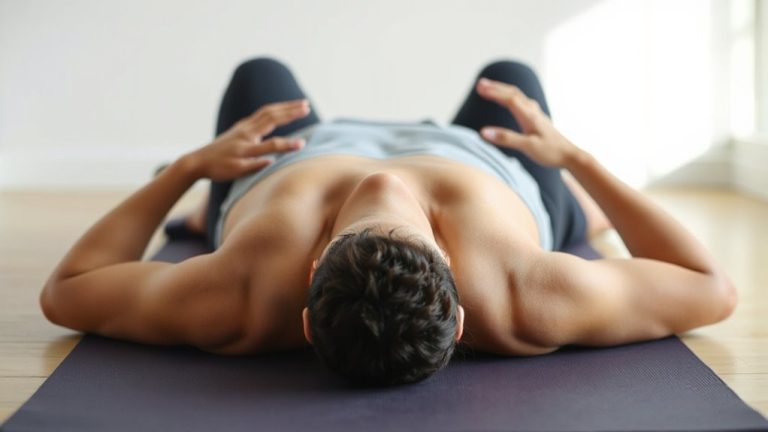
How often do you actually pause to reflect on how your breath influences movement and recovery? Not often enough, right? Wrapping up your mobility routine with diaphragmatic breathing isn’t just calming-it’s functional. By consciously drawing air deep into your belly, you activate the diaphragm and promote better oxygen exchange, which aids muscle recovery. Pair this with gentle core engagement and you’re reinforcing neuromuscular control, setting a stable base for everyday movement. This combo helps shift your nervous system from active to restorative, lowering heart rate and reducing tension. Think of it as recalibrating your body’s internal cues. Unlike recovery gadgets or expensive fitness gear, breath work costs nothing and delivers measurable benefits: improved posture, reduced injury risk, and sharper movement awareness. It’s not a luxury-it’s foundational. Skip it, and you’re missing a key pillar of long-term mobility.
Build a Routine That Fits Your Weekend
Your weekend mobility routine’s effectiveness hinges not on complexity, but on consistency and smart design. You don’t need expensive fitness gear-just enough space and intention. Anchor your routine around weekend flexibility and active recovery to enhance performance and reduce soreness. Begin with dynamic stretches, then incorporate foam rolling for myofascial release-ideal after Saturday’s workout. Include joint circles, cat-cow, and lunges with a twist to mobilize major segments. If you’ve used resistance bands or a mobility wheel, make certain movements stay controlled to avoid overstretching. Time it right: 20 minutes post-activity or before Sunday’s warm-up sustains joint health. This blend of movement quality and recovery focus supports long-term resilience. Weekend flexibility isn’t just about loose muscles-it’s about prepared, responsive tissue. With regular practice, you’ll notice quicker recovery, improved range, and fewer niggles. Keep it simple, repeat often, and let active recovery do the work. For enhanced results, consider using one of the Top Recovery Tools recommended by experts.
On a final note
This routine cuts stiffness quickly and boosts movement quality, making it ideal for weekend athletes. Pair it with a foam roller or mobility ball for deeper release-durable gear enhances long-term consistency. While not a substitute for sport-specific warm-ups, it supports recovery and joint health effectively. Done regularly, you’ll notice better control and range, especially under load. Practical, no-equipment needed, and easy to modify, it’s a smart addition to active lifestyles.