Functional Strength Development for Alpine Skiers to Handle High-G Forces
You need functional strength to handle the high-G forces that challenge your balance and edge control on steep turns. Strong quads, glutes, and core muscles keep your joints stable and reduce injury risk during rapid direction changes. Exercises like leg presses, planks, and wobble board drills build the dynamic stability and neuromuscular coordination alpine skiing demands. Proper recovery with foam rollers and compression gear maintains tissue quality and supports consistent training. A well-structured program prepares your body not just for power, but for precision under pressure-discover how to apply these principles effectively in your offseason routine.
Notable Insights
- Build functional leg and core strength to maintain joint alignment and control under high-G forces during turns.
- Train glutes and quads equally to avoid imbalances and reduce knee stress in high-load skiing conditions.
- Enhance core stability with plank variations and stability ball exercises to resist rotational forces on uneven terrain.
- Improve proprioception and balance using wobble boards and single-leg drills to optimize performance on icy slopes.
- Apply progressive overload with proper form to develop neuromuscular resilience and prevent overuse injuries.
How G-Forces Affect Alpine Skiing Control
While carving down a steep slope at high speed, you’re not just fighting gravity-you’re contending with g-forces that can exceed twice your body weight, dramatically influencing your balance and edge control. These forces arise from centripetal force pulling you toward the arc’s center during turns, demanding strong engagement from your legs and core. Your body resists shifting too quickly-this inertial resistance makes precise movements harder, especially on icy or variable terrain. Without adequate functional strength, you’ll struggle to maintain clean edge angles and consistent pressure on the ski. You’ll notice this when your line wobbles or your edges wash out mid-turn. Effective strength training helps you manage these loads more efficiently, improving stability and reducing fatigue over long runs. Though gear like compression wear may support muscle recovery post-ride, it won’t compensate for poor force management mid-turn. Real control comes from disciplined physical preparation.
Why Functional Strength Reduces Injury Risk
Because alpine skiing places intense, unpredictable demands on your body, building functional strength isn’t just about performance-it’s a critical defense against injury. You rely on proper joint alignment to handle sudden shifts in direction and pressure, especially when carving at speed or landing after a jump. When your muscles work together efficiently, you maintain stability and reduce strain on ligaments and tendons. Functional strength trains muscle coordination in ways that mimic real ski movements, so your body reacts correctly under stress. This dynamic control helps prevent common injuries like knee sprains or lower back strain. Unlike isolated exercises, functional training prepares your neuromuscular system for the uneven terrain and high-G forces you actually face on the mountain. It builds resilience not by brute force, but by smarter, more adaptive movement. That’s why skiers who train functionally often report fewer overuse injuries and quicker recovery between runs.
Quads, Glutes, and Core: Muscles That Fight High-G Stress
When gravity pushes down and snow pushes back, your quads, glutes, and core aren’t just working-they’re under fire. Quad dominance can overburden the knees if not balanced with proper glute activation, especially during high-G turns. Your glutes stabilize the pelvis, while the quads absorb shock and drive edge engagement. Meanwhile, the core links these forces efficiently. Training these muscles functionally means you’re not just strong-you’re resilient. Incorporating a leg press machine into your routine can enhance quad and glute strength in a controlled, load-bearing movement that mimics alpine forces.
| Muscle Group | Primary Role | Ski-Specific Benefit |
|---|---|---|
| Quads | Knee extension | Sustains flex and rebound |
| Glutes | Hip extension | Powers turn initiation |
| Core | Trunk stabilization | Transfers force between upper/lower |
Without coordinated quad and glute engagement, performance drops and injury risk climbs. Prioritize glute activation in your routines to offset quad dominance and guarantee balanced, durable strength for alpine demands.
Core Stability Moves for Edge Control
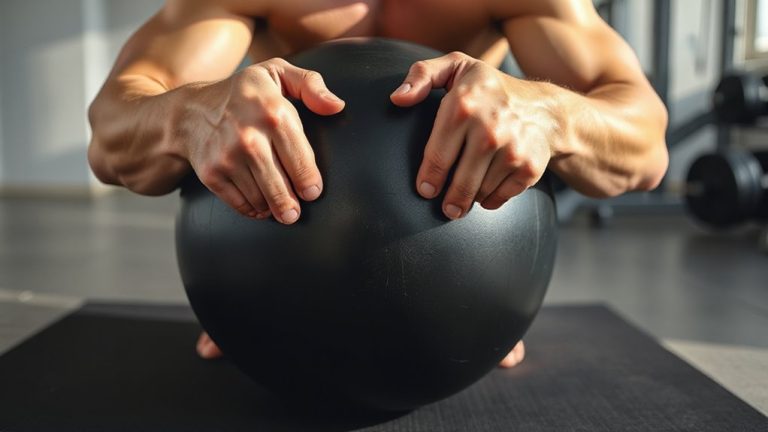
If you’ve ever felt your edges slip out during a tight carve, chances are your core wasn’t fully engaged to maintain balance and tension through the turn. A stable core acts as the link between upper and lower body, ensuring precise edge control under high-G loads. To build this stability, plank variations-like side planks and forearm-to-shoulder taps-train your torso to resist rotation and maintain alignment. These moves mimic the lateral forces experienced on steep turns, strengthening deep abdominal layers. Stability ball rolls further challenge your control, forcing continuous micro-adjustments in your abs and lower back. Unlike static planks, they introduce dynamic instability, closely simulating the shifting terrain under skis. Used consistently, these drills condition your core to respond instantly, keeping your skis locked in. They’re practical, equipment-efficient, and essential for functional on-snow performance. For those looking to enhance core development, integrating a best stomach exercise machine can provide targeted resistance training to build deeper strength.
Power Skier Legs: Strength Drills for Carving
Strong legs aren’t just about power-they’re the foundation of precise, controlled carving on any alpine terrain. You need strength that responds instantly to changing snow and angles, especially during explosive pivoting at high speeds. Drills like weighted squat-to-reaches and lateral bounds build the fast-twitch response essential for clean, aggressive turns. They also train dynamic deceleration-the ability to absorb force as you shift edges, reducing strain on joints and improving turn consistency. Incorporating plyometric lunges and box jumps further conditions your legs to generate power while maintaining stability under load. These movements mimic real skiing demands, bridging gym work to slope performance. Quality gear-compression sleeves and responsive training shoes-supports joint feedback and muscle recovery, letting you train harder with less downtime. When done consistently, these drills don’t just build muscle; they build ski-specific resilience, turning raw strength into refined edge control and smoother, more powerful carves. For enhanced muscle support and faster recovery, consider wearing best compression sleeves during and after training sessions.
Ski-Specific Balance Drills for Icy Terrain
You’ve built power in your legs, trained fast-twitch response, and sharpened your ability to drive through aggressive turns-now it’s time to test that strength where it matters most: underfoot, on ice-glazed slopes that offer little forgiveness. Ski-specific balance drills bridge raw strength and real-world control. Focus on ankle mobility-tight ankles blunt edge precision, especially on hardpack. Try single-leg drop squats onto a 6-inch platform, absorbing impact quietly to reinforce joint stability. Include proprioception training with wobble board circuits: 30-second blindfolded stands, then small clockwise/counter-clockwise tilts. These mimic unpredictable ice vibrations, forcing micro-adjustments. Add lateral hops over thin poles to integrate dynamic balance. Perform three sets, three times weekly during preseason. Quality matters-sharp landings and controlled posture trump reps. These drills condition your nervous system to trust feedback from icy surfaces, enhancing edge grip and turn consistency when it counts.
How to Build Functional Strength Into Your Offseason
While building raw packed power matters, translating that into functional strength demands a strategic offseason approach that mirrors the demands of alpine terrain. You need movements that engage multiple joints and mimic skiing’s dynamic loads. Start with plyometric training-think box jumps and depth drops-to sharpen explosive power and neuromuscular control under fatigue. These drills condition your body to absorb high-G forces during rapid directional changes. Pair them with rotational exercises like medicine ball throws and landmine presses to build core stability and torso control, essential for maintaining balance on icy slopes. Unlike isolated lifts, these movements train coordination and timing across muscle groups. Use progressive overload but prioritize form to avoid injury. Recovery is key-invest in quality foam rollers and compression gear to manage sore游戏副本ness and maintain training consistency. Done right, your offseason prep turns strength into ski-ready resilience.
On a final note
You’ve seen how functional strength directly combats high-G forces and boosts control on steep, icy runs. Building power in your quads, glutes, and core isn’t just about performance-it’s injury prevention. With targeted off-season training, balance drills, and core stability work, you’re equipping your body for real ski demands. Recovery gear like compression tools and foam rollers helps maintain gains, ensuring consistent, effective training all year.