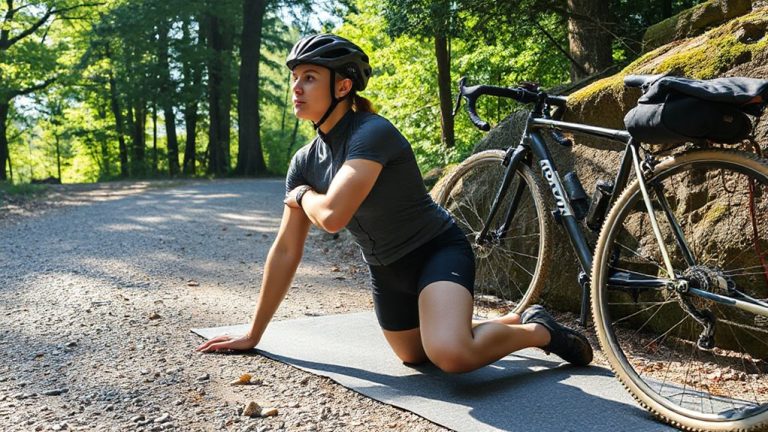
Prehabilitation Focus on Hip External Rotators to Prevent IT Band Syndrome
You need strong hip external rotators to prevent IT band syndrome because weak ones let your femur roll inward, cranking tension on the band and grinding it against your knee. Foam rolling helps short-term, but real protection comes from activating and strengthening the muscles that stabilize your pelvis. Build rotator endurance with banded moves and unilateral work-your stride runs smoother, with less lateral drag and joint stress when these muscles fire right. Keep going to discover the exact prehab sequence that primes resilience.
Notable Insights
- Strengthening hip external rotators improves pelvic stability and reduces IT band tension during movement.
- Weak external rotators lead to inward femur rotation, increasing strain on the IT band.
- Targeted prehab exercises like clamshells and banded side steps activate and strengthen hip rotators.
- Strong rotators enhance glute activation, promoting proper knee alignment and reducing lateral knee stress.
- Consistent weekly prehab with rotation-focused exercises improves muscle balance and prevents IT band syndrome.
What Is IT Band Syndrome & Why Hip Strength Matters
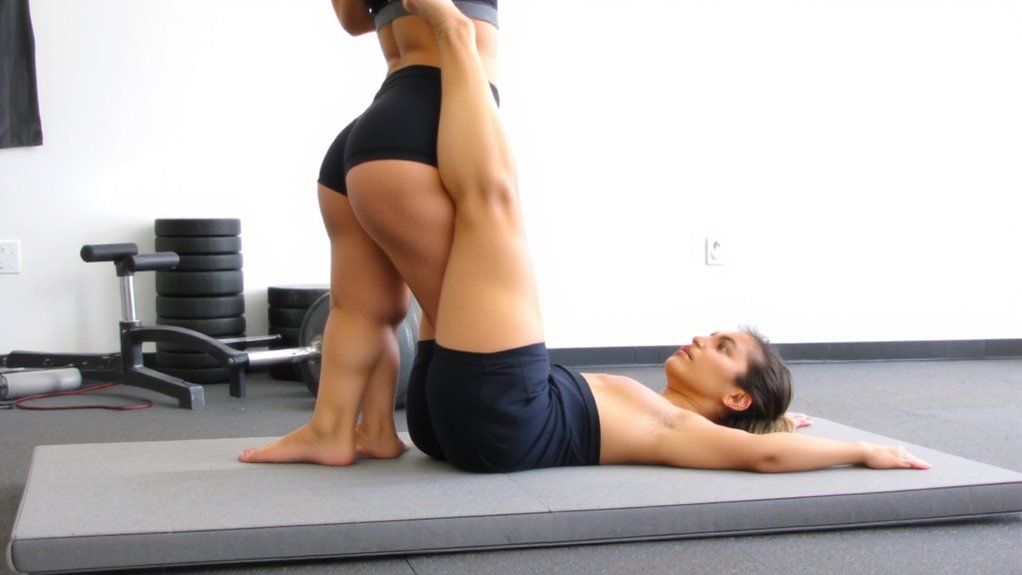
Picture your IT band as a stubborn guy wire on a tall radio tower-tight, essential, and prone to trouble if the supporting framework is weak. The iliotibial band, a thick fascial strip running from hip to knee, stabilizes your leg during movement. When overworked or improperly supported, it rubs excessively over the femoral condyle, triggering inflammation and stubborn lateral knee pain. You’ve likely felt it-that sharp ache just outside the knee after miles of running or repetitive motion. While foam rollers and recovery gear offer temporary relief, they don’t address root causes. Research consistently shows that proximal strength, especially around the hip, dictates IT band function. Without adequate hip stability, the band endures abnormal tension, diminishing recovery efficiency. Relying solely on fitness recovery tools without strengthening creates a cycle of dependence. Real prehab means building resilient support so your iliotibial band works *with* your body-not against it.
Why Hip External Rotators Matter for Knee Health
You’ve probably overlooked them, but your hip external rotators are doing far more than you realize-especially when it comes to protecting your knees. These muscles play a critical role in maintaining hip stability during dynamic movements like running or climbing stairs. Without proper control, your pelvis can drop, forcing your knee inward and increasing joint stress. That’s where muscle synergy comes in-your external rotators work together with glutes and deep hip stabilizers to align your leg properly. Think of them as conductors of coordination, ensuring forces travel efficiently up and down your kinetic chain. Strong, responsive rotators mean less strain on the knee joint and smoother, more resilient movement. Fitness recovery tools like foam rollers and resistance bands can enhance their function, but consistency in targeted training matters most. When your rotators perform well, your knees benefit substantially, even during high-intensity routines.
How Weak Rotators Contribute to IT Band Pain?

While you might not feel it directly, weak hip external rotators can set off a chain reaction that leads straight to IT band pain. When these muscles are underactive, a muscle imbalance develops between them and the stronger hip adductors and internal rotators. This imbalance pulls your femur inward during movement, creating joint instability at the knee. As a result, the IT band compensates by working overtime to stabilize your leg, increasing tension where it rubs over the lateral femoral epicondyle. Over time, this friction and overload cause inflammation and pain. Runners and active individuals often overlook these deep stabilizers, focusing instead on larger muscle groups. But neglecting rotator strength undermines knee alignment and reduces movement efficiency. Prehab strategies that target these small muscles with precise resistance exercises improve joint control, reduce strain on the IT band, and support long-term resilience. Proper recovery gear, like targeted massage tools, can aid in maintaining tissue quality.
How External Rotators Affect Running Mechanics?
When your hip external rotators lack strength, your running mechanics suffer in subtle but significant ways. Weakness here often leads to poor glute activation, meaning other muscles compensate during your stride. This imbalance can pull the iliotibial (IT) band taut, increasing friction and irritation. Without adequate pelvic stability, your hips may drop on the non-weight-bearing side-known as Trendelenburg gait-altering joint alignment and placing excess stress on the knee. Proper external rotator function helps maintain neutral hip positioning, supporting smoother leg cycling and reducing lateral drag on the IT band. You’ll notice better control during downhill running or fatigue, where mechanics break down fastest. Strong rotators don’t just boost efficiency; they enhance injury resilience. Investing in this stability reshapes how forces travel through your legs, making every mile safer. It’s not just about power-it’s about precision in motion.
5 Prehab Exercises to Strengthen Hip Rotators
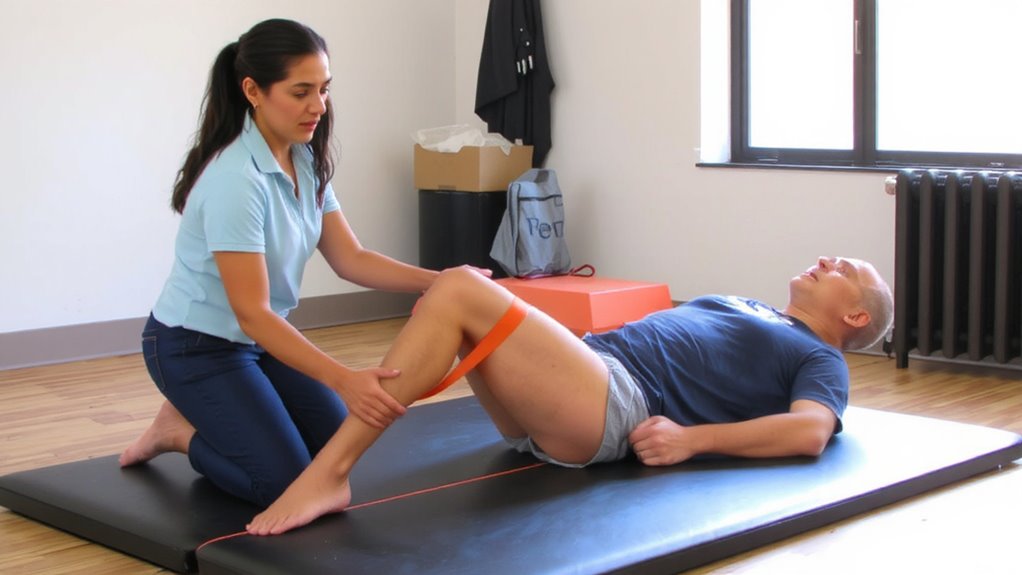
A runner’s ability to prevent IT band syndrome often hinges on the subtle strength of the hip external rotators, and targeting them with purpose-driven prehab exercises makes all the difference. You’ll want to focus on glute medius activation to stabilize the pelvis during stride-weakness here often leads to excessive internal rotation and IT band friction. Resisted hip abduction using a resistance band just above the knees is highly effective, engaging the glute medius and minimus while improving control. Try side-lying leg lifts and clamshells with slow, controlled movement to guarantee proper muscle recruitment. These exercises, when done consistently, build endurance in the rotators, reducing strain on the IT band. Fitness gear like latex bands or adjustable cable machines enhance resistance precision, allowing progressive overload. Over time, this strengthens the hip’s dynamic support system, improving alignment and decreasing injury risk during long runs or high-mileage weeks.
Activate Rotators Before Every Workout
You’ve already built strength in your hip external rotators through targeted prehab, but that work pays off best when paired with activation before each run. Neural activation primes your nervous system, helping recruit the right muscles efficiently. This builds muscle memory over time, making proper mechanics feel natural. Use these movements as part of your warm-up-each one short, effective, and movement-specific.
| Exercise | Reps | Purpose |
|---|---|---|
| Clamshells | 15 | Stimulate glute medius |
| Banded Side Steps | 10 | Enhance lateral control |
| Fire Hydrants | 12 | Improve range engagement |
| Single-Leg Bridges | 10 | Activate posterior chain |
| Hip Abduction Hold | 20s | Boost neural connection |
These exercises don’t bulk up tissue-they tune your control. Quality matters more than quantity, so focus on precise form. Doing them consistently enhances neuromuscular efficiency, directly supporting joint stability and reducing strain on the IT band during activity.
Build a Weekly Prehab Routine
While isolated activation exercises prime key muscles before a run, building a consistent weekly prehab routine guarantees those gains translate into lasting joint resilience and movement efficiency. You should aim for three to four sessions weekly, each starting with foam rolling to release tension in the glutes, TFL, and IT band-this improves tissue quality and supports smoother hip mobility. Follow with targeted work for the hip external rotators, like clamshells and banded lateral walks, to reinforce muscular balance. Don’t overlook posture alignment; incorporate exercises such as dead bugs and bird dogs to stabilize your core and pelvis. Over time, this routine enhances neuromuscular control and reduces strain on the IT band. Using simple gear like resistance bands and a foam roller makes the program sustainable. Consistency beats intensity here-the real benefit lies in regular, mindful execution, not maximal effort.
On a final note
You’re now equipped with the knowledge and tools to prevent IT band syndrome by targeting the root cause: weak hip external rotators. Strengthening these muscles stabilizes your pelvis, aligns your knees, and improves running mechanics. Prehab exercises, when consistently applied, enhance resilience and recovery. While fitness gear like foam rollers help manage symptoms, they can’t replace proper strength work. Focus on function, not just recovery-your joints will thank you over time.