Child’s Pose Extension With Wide-Knee Adjustment for Pregnant Athlete Recovery
This modified Child’s Pose with wide-knee adjustment supports your pelvic alignment and eases lower back tension as your belly grows. You’ll find relief through spinal decompression while the wide stance creates space, enhancing comfort and balance. Use a cushioned mat and bolster for added support, and pair the stretch with diaphragmatic breathing to boost circulation and engage your core. Perform it post-workout to aid recovery-consistency sharpens results, and there’s more to optimize in your routine.
Notable Insights
- Use a wide-knee Child’s Pose to accommodate the growing belly and support pelvic alignment during pregnancy.
- Position knees wider than hips and sit back gently to avoid spinal compression and lower back strain.
- Place a bolster or pillows under the chest to reduce upper body tension and enhance spinal decompression.
- Integrate diaphragmatic breathing to improve oxygen flow, support core stability, and promote relaxation.
- Practice 3–5 times weekly for 1–3 minutes post-workout to aid muscle recovery and reduce pregnancy-related swelling.
Why This Stretch Works for Pregnant Athletes
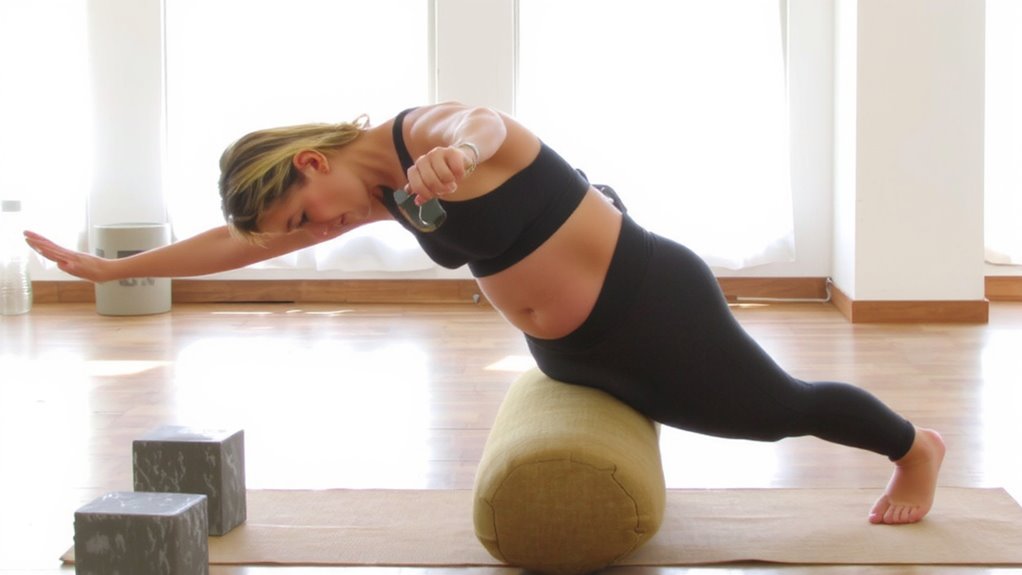
While your body goes through significant changes during pregnancy, maintaining mobility and recovery becomes more critical than ever-especially if you’re staying active. Child’s pose works because it gently supports pelvic alignment while reducing tension in your lower back and hips. As your center of gravity shifts, this stretch helps counteract postural imbalances caused by increased lumbar curvature. The wide-knee variation, in particular, provides essential abdominal support by creating space for your growing belly, minimizing strain. Unlike rigid recovery tools, this modification adapts naturally to your changing form, requiring no equipment. It’s effective post-workout, aiding muscle relaxation and circulation. While some fitness gear promises support, few deliver like mindful, body-aware stretches. You don’t need high-end accessories-just proper form-to achieve meaningful recovery. This pose leverages gravity and breath to restore balance, making it a reliable, accessible choice for pregnant athletes seeking sustainable recovery.
How Wider Knees Boost Comfort & Safety
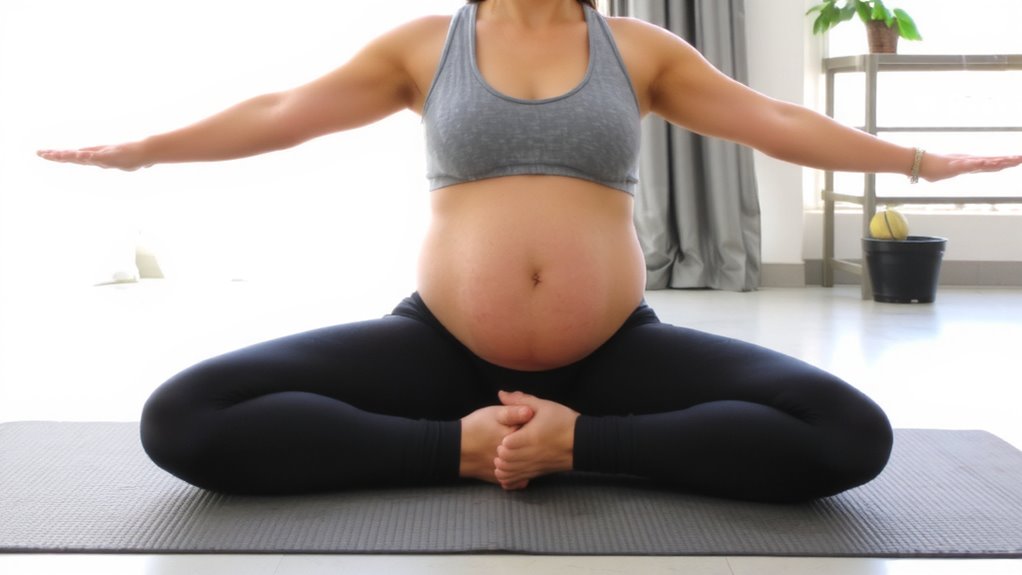
You can feel the difference a small adjustment makes, especially when your body is changing by the week. Spreading your knees wider in Child’s Pose creates essential space for your growing belly, allowing deeper relaxation without strain. This modification supports proper pelvic alignment, reducing lower back tension that’s common during pregnancy. With more room to settle, your torso naturally shifts forward, promoting spinal decompression and relieving pressure along the vertebrae. You’ll notice improved comfort almost immediately, making sustained holds both safe and effective. For pregnant athletes, this alignment isn’t just soothing-it’s functional, aiding recovery by restoring posture and easing muscular fatigue. Unlike rigid fitness gear that restricts motion, this natural adjustment works with your body’s biomechanics. It requires no accessories, yet delivers performance comparable to supported recovery tools. The simplicity enhances consistency, a key factor in effective prenatal fitness routines.
Step-by-Step: Modified Child’s Pose for Prenatal Recovery
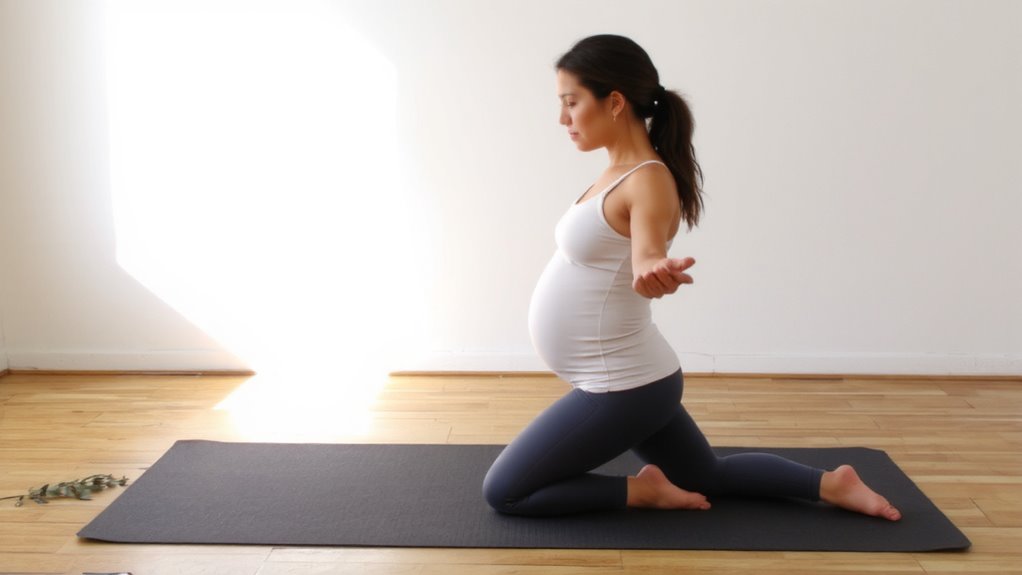
Since your body’s center of gravity shifts considerably during pregnancy, adapting foundational recovery poses like Child’s Pose becomes essential for maintaining both comfort and alignment. Start on hands and knees, then widen your knees beyond hip-width to accommodate your belly. Sit back onto your heels while leaning forward, letting your torso sink between your thighs. Use props usage strategically-a cushioned yoga mat offers joint support, while a bolster or stacked pillows under your chest reduces spinal strain. If balance feels off, invite partner support by having someone gently stabilize your hips. This not only enhances stability but also deepens relaxation. Your arms can extend forward or rest alongside your body, whichever eases shoulder tension more. Keep your neck long and forehead grounded. The modified pose relieves lower back pressure common in late pregnancy. Consistent practice improves mobility and recovery efficiency.
Use Diaphragmatic Breathing to Enhance Recovery
How often do you truly breathe into your body’s deepest core during recovery? With diaphragmatic breathing, you’re not just relaxing-you’re actively supporting recovery. As you settle into your modified Child’s Pose, focus on breath awareness: inhale deeply through your nose, letting your diaphragm expand fully, not just your chest. This deep breath massages internal organs and increases oxygen flow to tired muscles. Exhale slowly, releasing built-up tension. Proper breath awareness enhances pelvic alignment by engaging your transverse abdominis, which stabilizes your core without strain. For pregnant athletes, this technique improves circulation and reduces swelling, especially when paired with supportive prenatal gear like recovery belts or maternity support bands. Unlike shallow breathing, diaphragmatic breathing optimizes recovery efficiency. You’ll notice improved endurance and reduced fatigue over time. It’s not just about rest-it’s about working recovery smarter.
Avoid These Form Errors That Strain Your Back
Proper alignment in Child’s Pose supports recovery, but subtle form errors can undermine its benefits and place unnecessary strain on the lower back. Sitting back too far onto your heels increases spinal compression, especially as your center of gravity shifts during pregnancy. Instead, keep your hips aligned over your knees to reduce pelvic tension and maintain a neutral spine. Collapsing your chest or rounding your shoulders often worsens compression, so engage your core slightly and broaden across the collarbones. If your forehead doesn’t comfortably reach the mat, use a padded cushion-it’s a small adjustment that improves spinal alignment. Avoid widening your knees excessively without supporting the hips, as this can pull on the lower back. Using a supportive maternity pillow or yoga bolster isn’t just comfortable-it’s functional, helping sustain proper form. These corrections aren’t optional extras; they’re essential for effective, safe recovery in this pose. For additional support during post-workout recovery, consider using a high-density foam roller to release tension in the hips and lower back without compromising spinal alignment.
When to Do This Stretch
When should you actually do Child’s Pose to get the most out of your recovery as a pregnant athlete? Timing frequency matters-it’s best after workouts or during moments of tension, when your muscles are warm and more responsive. Aim for 3–5 sessions weekly, adjusting based on fatigue and training load. Stretch duration should be 1 to 3 minutes per session, long enough to encourage myofascial release without risking circulatory stagnation. This duration supports parasympathetic activation, helping lower heart rate and reduce cortisol. Unlike passive stretches done cold, performing Child’s Pose with proper timing frequency enhances joint mobility and eases lower back strain common in pregnancy. It integrates well with recovery routines, especially when paired with breathwork. Though minimal in demand, its effectiveness depends on consistency and mindful execution-key traits in athlete recovery protocols. Don’t rush it; let each session build cumulative resilience.
Adapt This Pose Safely Each Trimester
As your pregnancy progresses, adapting Child’s Pose becomes essential to maintain both comfort and effectiveness in your recovery routine. In the first trimester, you can often maintain your standard form, but watch for early signs of discomfort due to rising relaxin levels-these hormonal changes loosen ligaments and affect pelvic alignment. By the second trimester, widen your knees considerably to accommodate your growing belly and place a bolster under your chest for support. This adjustment preserves spinal neutrality and reduces strain. In the third trimester, sitting back onto a thickly folded blanket or wedge cushion helps tilt the pelvis forward, counteracting the anterior shift caused by increased abdominal weight. Hormonal changes continue to influence joint stability, so avoid sinking too deeply into the pose. Proper alignment doesn’t just increase safety-it boosts recovery by promoting circulation and reducing lower back tension. Consistent, mindful adaptation guarantees this restorative stretch remains beneficial throughout pregnancy.
On a final note
You’ll find this modified Child’s Pose effective for prenatal recovery, especially with wider knees that accommodate your growing belly and reduce lower back strain. The pose, when paired with diaphragmatic breathing, supports nervous system regulation and pelvic floor relaxation. It’s safe across trimesters and integrates well into post-workout routines. Always maintain neutral spine alignment. This adjustment proves practical and biomechanically sound, making it a reliable recovery tool for pregnant athletes seeking comfort without sacrificing form.