Prehabilitation Protocol for ACL Injury Reduction in Female Soccer Athletes
You’ll reduce your ACL injury risk by nearly 50% with a prehab protocol focused on dynamic warm-ups, glute and hamstring strengthening, and plyometric training. Activate key muscles daily with leg swings and lunges, then build knee stability using Nordic curls and single-leg deadlifts. Practice soft, controlled landings on jumps to retrain force absorption. These moves counter female-specific risks like valgus alignment and ligament laxity. Consistency turns prevention into habit-and habit keeps you on the field.
Notable Insights
- Perform dynamic warm-ups daily to enhance neuromuscular activation and ankle mobility for cutting and jumping.
- Strengthen glutes and hamstrings with exercises like Nordic curls and single-leg deadlifts to improve knee alignment.
- Train plyometric skills with an emphasis on soft, controlled landings to reduce knee joint stress.
- Integrate prehab routines daily to reinforce proper movement patterns and maintain neuromuscular control under fatigue.
- Address female-specific risks with evidence-based programs that reduce ACL injury by up to 50%.
Start With a Dynamic Warm-Up to Activate Key Muscles
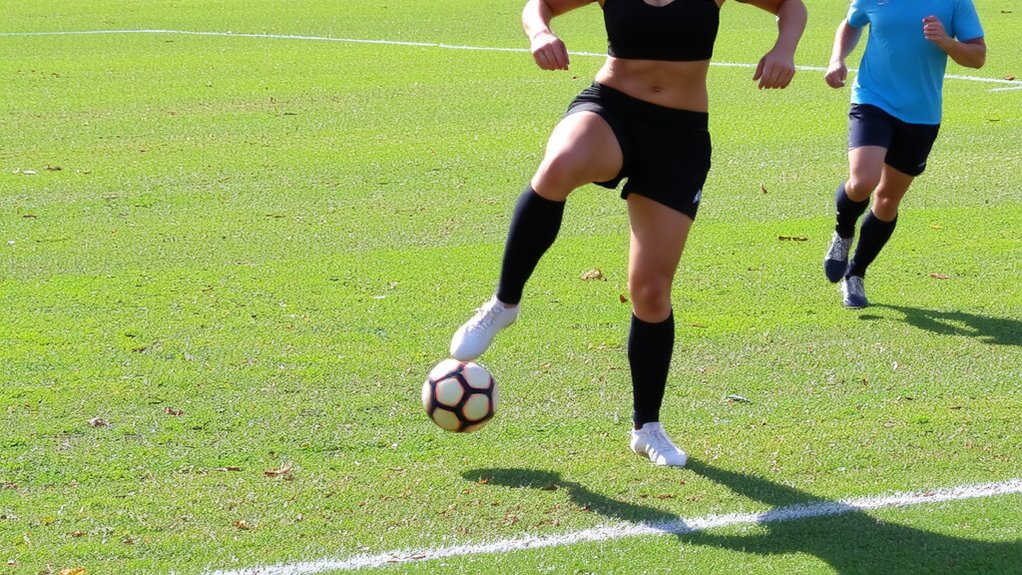
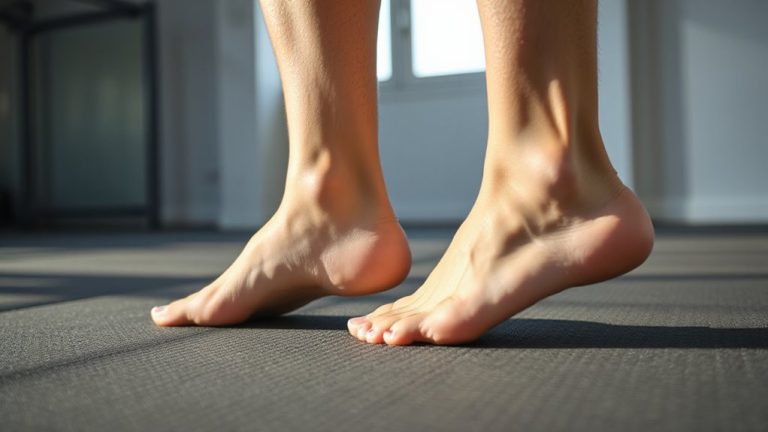
While you might be tempted to jump straight into drills or sprints, starting with a dynamic warm-up greatly boosts your readiness by activating the key muscles used in cutting, pivoting, and jumping-movements that place high demand on the ACL. You’ll benefit from improved ankle mobility, which enhances joint responsiveness and reduces strain during sudden directional changes. Core activation is equally essential; a strong, engaged midsection stabilizes your pelvis, improving balance and force distribution through the lower limbs. Dynamic exercises like leg swings, walking lunges with a twist, and high knees prepare your neuromuscular system more effectively than static stretches. Unlike passive recovery methods or reliance on fitness gear like braces or sleeves, which offer limited preventive value, a proper warm-up addresses dysfunction before it starts. This approach isn’t just practical-it’s evidence-based, enhancing performance while reducing injury risk efficiently and consistently.
Strengthen Glutes and Hamstrings for Knee Stability
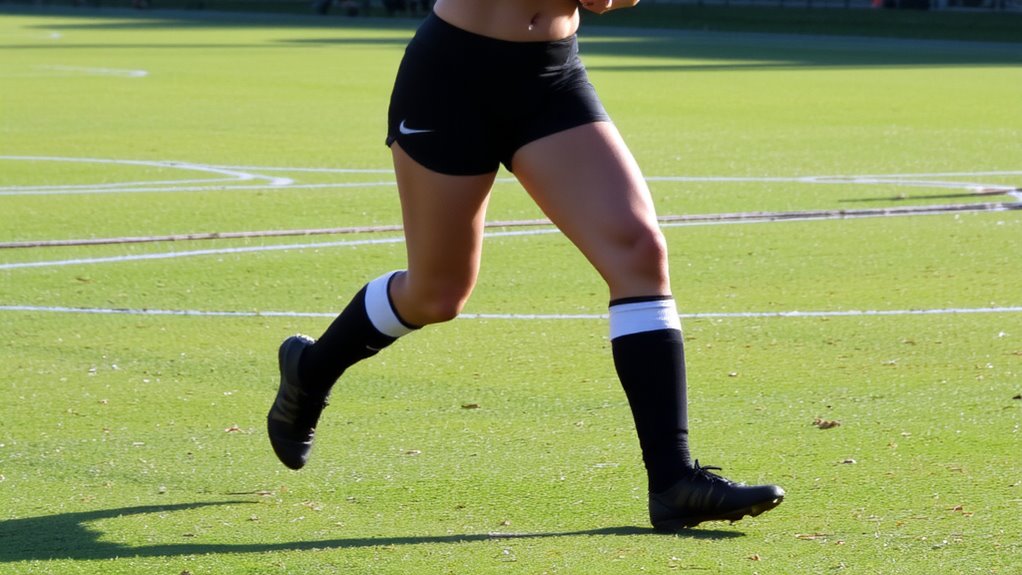
You’ve already primed your body with a dynamic warm-up, waking up the muscles and sharpening neuromuscular responsiveness ahead of demanding movements. Now, focus on strengthening your glutes and hamstrings to enhance knee stability-key for reducing ACL injury risk. Strong glutes guarantee proper pelvic and femoral alignment during cutting and pivoting, making glute activation a non-negotiable part of your routine. Weakness here often leads to knee valgus, a major risk factor. Equally important is hamstring endurance; it counters the quadriceps’ pull during deceleration, reducing anterior tibial shear force on the ACL. Use exercises like Nordic curls, glute bridges, and single-leg deadlifts to build both capacity and control. Consistent training improves neuromuscular efficiency and joint protection, especially late in games when fatigue sets in. Prioritize form and progressive overload to see real adaptation. This isn’t just strength-it’s functional resilience. For those looking to supplement their training, consider using a leg press machine to safely build lower body strength.
Train Safe Landing With Jump and Plyometric Drills
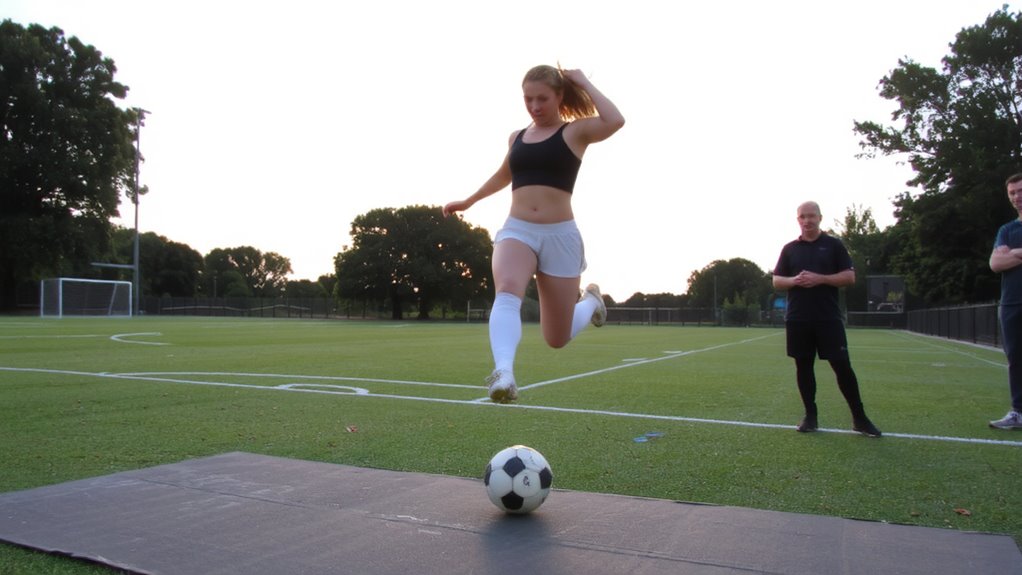
When performed correctly, jump and plyometric drills don’t just build power-they retrain your neuromuscular system to absorb force safely, which is critical for ACL injury prevention. Proper landing mechanics reduce strain on the knee joint, especially when you maintain alignment and control. To get the most out of these drills, make sure your soft tissue is warm and your joint mobility is ideal before starting. Incorporating a sturdy plyo box can enhance the effectiveness and safety of your box jump training.
| Drill Type | Focus Area | Benefit |
|---|---|---|
| Box Jumps | Landing Stability | Improves joint control |
| Lateral Bounds | Hip-Knee Alignment | Enhances neuromuscular sync |
| Tuck Jumps | Core Engagement | Boosts coordination |
| Single-Leg Hops | Balance & Strength | Builds unilateral power |
| Depth Jumps | Force Absorption | Trains safe deceleration |
Cue soft landings-quiet feet, bent knees, hips back. These drills work best when your body’s prepared and movement quality comes first.
Integrate Prehab Into Every Practice Session
Building solid landing mechanics through jump and plyometric drills sets the foundation, but those gains only stick if they’re woven into your routine consistently. That’s why you’ve got to integrate prehab into every practice session-treating it as non-negotiable as warm-ups or drills. These short, focused routines boost neuromuscular control, helping your body react efficiently under pressure. When done daily, they reinforce proper movement patterns and support long-term injury prevention. Think of prehab as preventive maintenance: just like gear needs tuning, your body needs consistent input to stay sharp and resilient. Including dynamic balance work, controlled landings, and activation exercises primes your nervous system and muscles alike. It’s not extra work-it’s smarter preparation. Over time, this consistency enhances performance while markedly lowering ACL injury risk, especially during high-intensity moments. Make it habitual, and you’ll see measurable gains in stability, confidence, and readiness.
Why Women Are More at Risk for ACL Tears?
While biology isn’t destiny, it does play a significant role in why female athletes face a higher risk of ACL tears compared to their male counterparts-often sustaining injuries at two to eight times the rate in similar sports. Your anatomical differences, like a wider pelvis and narrower femoral notch, can increase stress on the ACL during cutting and landing. These structural traits affect knee alignment and reduce space for the ligament, raising injury vulnerability. Hormonal fluctuations, particularly in estrogen during the menstrual cycle, may also influence ligament laxity, making your ACL less resistant to sudden forces. Though gear like braces or specialized footwear can offer some support, they can’t fully offset these biological factors. Recovery and prevention ultimately rely more on targeted prehab-corrective exercises, neuromuscular training, and strength work-than on equipment alone. Understanding these risks helps you train smarter and more safely.
How Research Prevents ACL Injuries in Women
Science isn’t magic, but it’s the closest thing you’ve got when it comes to dodging ACL injuries on the field. Research helps you train smarter by addressing your unique risks-like hormonal fluctuations and anatomical alignment. Studies show that tracking menstrual cycles can guide safer training windows, reducing strain during high-risk phases. Improved anatomical alignment through neuromuscular drills lowers injury rates markedly. Programs built on this evidence boost stability, coordination, and joint awareness.
| Emotion | Fact | Impact on You |
|---|---|---|
| Fear | 6x higher ACL tear rate in women | You deserve better protection |
| Hope | 50% injury reduction with prehab | You can stay in the game |
| Frustration | Hormonal fluctuations affect ligament strength | You’re not imagining it |
| Empowerment | Proper alignment cuts risk | You have control |
| Pride | Consistent training prevents tears | You’re building resilience |
On a final note
You can substantially lower your ACL injury risk by committing to a consistent prehab routine. Strengthening glutes and hamstrings, mastering safe landing mechanics, and activating muscles dynamically before activity all improve knee stability. Women face higher ACL injury rates due to biomechanical and hormonal factors, but targeted training helps counteract them. Integrating these evidence-backed strategies into regular practice isn’t just effective-it’s essential for long-term performance and joint health.