The Role of Ginger Supplementation in Reducing Exercise-Induced Inflammatory Response
You can reduce exercise-induced inflammation with ginger supplementation, thanks to bioactive compounds like gingerols that inhibit COX-2 and lower pro-inflammatory cytokines. Studies show it modestly decreases muscle soreness and supports faster strength recovery when taken daily. For best results, consume 1–3 grams of fresh or powdered ginger before or after workouts. While not a standalone fix, it complements recovery tools like compression gear. There’s more to explore on how timing and form affect its impact.
Notable Insights
- Ginger supplementation reduces exercise-induced inflammation through bioactive compounds like gingerols and shogaols.
- It inhibits COX-2 enzymes and lowers pro-inflammatory cytokine levels after intense physical activity.
- Daily intake of 1–3 grams of ginger optimally supports anti-inflammatory and antioxidant recovery processes.
- Ginger enhances recovery by modulating oxidative stress and improving adaptation to exercise-induced muscle damage.
- Effects vary among individuals; best used as part of a broader recovery strategy, not as a standalone solution.
Does Ginger Help With Exercise Recovery?
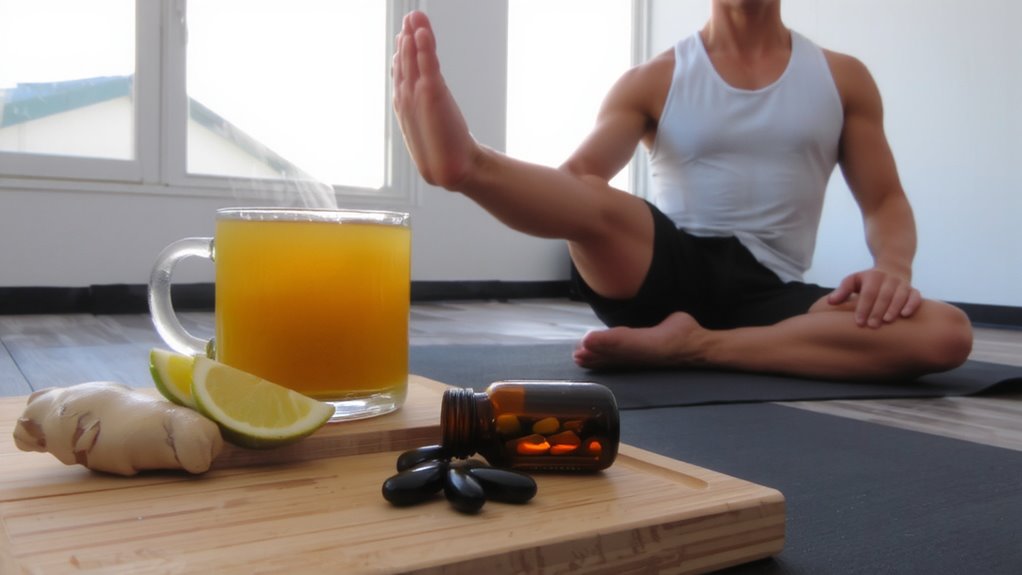
How well could ginger actually ease the soreness that follows a tough workout? Research suggests you might benefit from its natural compounds when recovering. Ginger aroma therapy, often used in post-exercise diffusers, may help relax your senses and mentally reduce perceived pain. Its warming scent doesn’t heal muscles directly, but it can support a calming recovery environment. Then there’s the ginger color impact-its vibrant yellow-orange hue, commonly seen in supplements and creams, signals high levels of bioactive compounds like gingerols. While color alone doesn’t determine effectiveness, it helps you visually identify potent, fresh preparations. When paired with proper fitness recovery gear-like compression wear or foam rollers-ginger-based aids can fit well into your routine. Though not a magic fix, consistent use may improve how quickly you feel ready for your next session.
How Ginger Reduces Muscle Inflammation

While you might not expect a kitchen spice to play a role in post-workout recovery, ginger actively combats muscle inflammation through its concentrated bioactive compounds, particularly gingerols and shogaols. These ginger compounds engage key anti inflammatory pathways, such as inhibiting COX-2 and suppressing pro-inflammatory cytokines. Your body responds to intense exercise with oxidative stress, but regular ginger intake modulates this response at the cellular level. Unlike passive recovery tools, ginger works internally-offering a biochemical edge similar to how compression gear improves circulation.
| Mechanism | Effect on Muscle Recovery |
|---|---|
| Ginger compounds | Block inflammatory triggers |
| Anti inflammatory pathways | Reduce swelling and soreness |
| Daily supplementation | Enhances adaptation to stress |
It’s not a quick fix, but an integrated strategy-much like choosing proper footwear or hydration systems.
What Science Says About Ginger and Recovery

You’ve likely heard athletes swear by ginger for sore muscles, but what does the evidence actually say about its role in recovery? Studies suggest ginger supplementation can modestly reduce muscle soreness and speed strength recovery, thanks to its anti-inflammatory and antioxidant properties. The active compounds, like gingerols, work best when ginger bioavailability is optimized-something enhanced by proper preparation and timing. You’ll also benefit from antioxidant synergy, as ginger compounds team up with your body’s natural defenses to neutralize exercise-induced free radicals. While not a miracle cure, consistent use appears to support faster, smoother recovery, especially after intense training. However, results vary-some people respond better than others-so it’s smart to treat ginger as one tool among many. Recovery isn’t just about supplements; quality sleep, nutrition, and gear like compression wear still matter just as much.
Best Ways to Take Ginger After Workouts
Since maximizing recovery hinges on both timing and bioavailability, the way you consume ginger after a workout can influence its effectiveness. For rapid absorption, opt for forms that deliver active compounds quickly. Fresh ginger retains the highest concentration of gingerols, making it ideal in post-workout ginger smoothie recipes or steeped as ginger tea variations. Blending ginger into smoothies enhances bioavailability while providing hydration and nutrients. Tea offers a soothing alternative, especially when combined with turmeric or lemon.
| Method | Effectiveness for Recovery |
|---|---|
| Fresh ginger | High (maximal gingerols) |
| Ginger tea | Moderate to high |
| Powdered supplement | Moderate (convenient) |
| Ginger smoothie | High (nutrient pairing) |
| Topical oil | Low (limited evidence) |
Choose ginger tea variations with honey or cinnamon to improve palatability and effect.
Safe Dosage and Side Effects to Know
Generally, ginger is safe when used appropriately, but you’ll need to mind the dosage to avoid unwanted side effects. Most studies suggest a daily intake of 1 to 3 grams of ginger root, especially when targeting exercise-induced inflammation. Taking more than 5 grams daily may lead to heartburn, diarrhea, or gastric discomfort. Dosage timing matters-consuming ginger 30 to 60 minutes before or after workouts appears to optimize its anti-inflammatory effects. Be cautious with ginger interactions, particularly if you’re on blood thinners or diabetes medication, as it may enhance their effects and cause complications. While fresh, powdered, or supplemented forms are effective, consistency in use and form supports better outcomes in fitness recovery. Always consult your healthcare provider before starting supplementation, especially with pre-existing conditions. Monitoring how your body responds guarantees you benefit from ginger without adverse reactions.
On a final note
You’ll find ginger supplementation can moderately reduce exercise-induced inflammation, supporting faster recovery when used consistently. Studies suggest it eases muscle soreness by inhibiting inflammatory pathways, though results vary among individuals. Combined with smart training and proper recovery gear-like compression wear or foam rollers-ginger adds a natural edge. Stick to 1–2 grams daily, preferably post-workout, to avoid mild GI side effects. It’s no magic fix, but as part of a balanced recovery plan, it works.