Yoga Nidra Audio Guide Specifically Designed for Post-Race Physical Exhaustion
You can use a yoga nidra audio guide designed for post-race exhaustion to actively reset your nervous system and accelerate recovery. These sessions guide you through deep breathing and body scanning while lying down, reducing cortisol and boosting blood flow to tired muscles. Unlike passive rest, this practice promotes parasympathetic dominance, enhancing repair. For best results, use it within two hours post-race. A well-structured guide complements your recovery gear and primes the body for deeper restoration. Choosing the right one makes all the difference-what to look for comes next.
Notable Insights
- Designed for use within two hours post-race to maximize recovery from physical exhaustion.
- Features guided body scanning to release tension in overworked muscles like calves and quads.
- Incorporates slow, rhythmic breathing to lower cortisol and activate the parasympathetic nervous system.
- Structured to maintain awareness while inducing deep rest, enhancing recovery beyond passive sleep.
- Optimized for evening use, aligning with natural melatonin release and synergizing with recovery tools.
How to Use Yoga Nidra After a Race
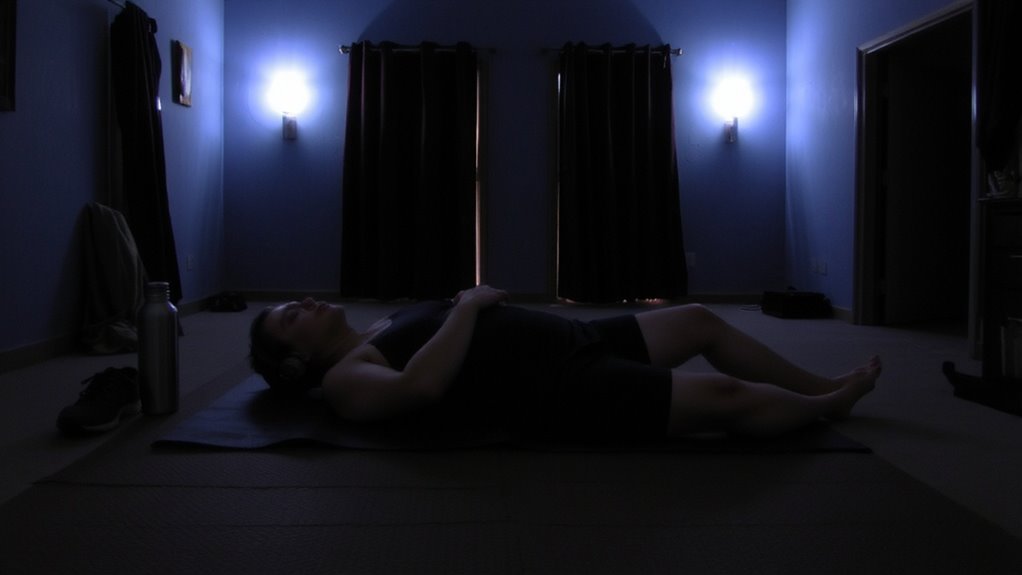
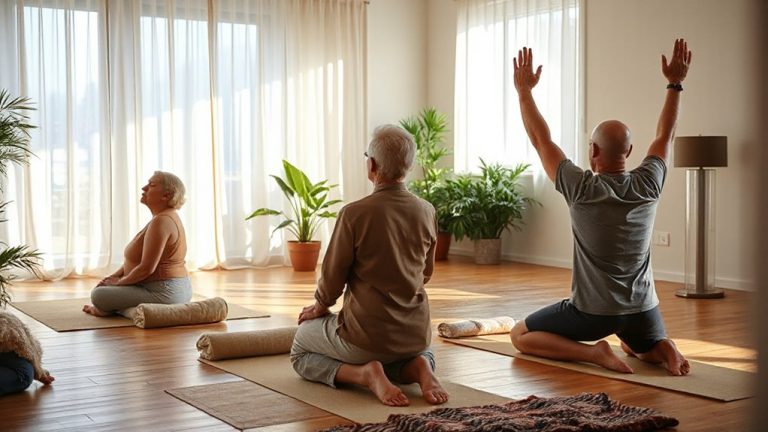
After pushing your body to its limits during a race, your muscles need more than just rest-they need targeted recovery, and yoga nidra offers a structured way to support that process. You can use it immediately post-race or within 24 hours to enhance muscle relaxation and reduce soreness. Begin by lying down in a quiet space, using a yoga mat or recovery foam pad for comfort. Focus on deep breathing techniques-slow inhales, extended exhales-to signal your nervous system to shift into repair mode. These techniques help lower cortisol and improve oxygen flow to fatigued tissues. Unlike passive rest, yoga nidra actively guides your mind through body scans and intentional relaxation, making it more effective than sitting or sleeping. High-quality audio guides specifically designed for athletes integrate timed pauses and cues that align with post-race physiology. When paired with proper hydration and recovery gear like compression wear, yoga nidra becomes a critical part of a smart cooldown strategy.
What Happens in a Post-Race Yoga Nidra Session
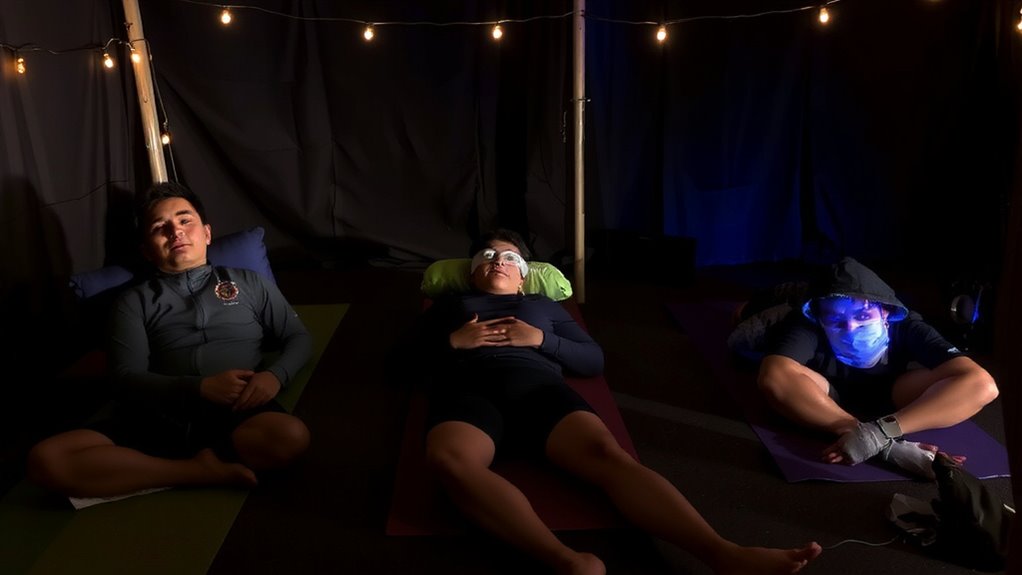
What exactly unfolds during a post-race yoga nidra session, and how does it differ from regular rest or sleep? You’re guided into a state between wakefulness and sleep, where recovery accelerates. The instructor leads you through body scanning, helping you mentally check in from toes to scalp, releasing pockets of tension you might not even realize you’re holding. This isn’t passive rest-your awareness actively moves through each region, inviting deep relaxation where muscles have fatigued. Breath awareness follows, syncing your inhales and exhales to a steady rhythm, calming the nervous system. Unlike ordinary sleep, yoga nidra promotes parasympathetic dominance quickly, enhancing repair. You’re not just resting-you’re directing recovery with precision. Combined, body scanning and breath awareness offer a structured, effective means to restore balance, reduce inflammation, and prepare your body for the next physical demand.
Best Time to Use Yoga Nidra for Recovery
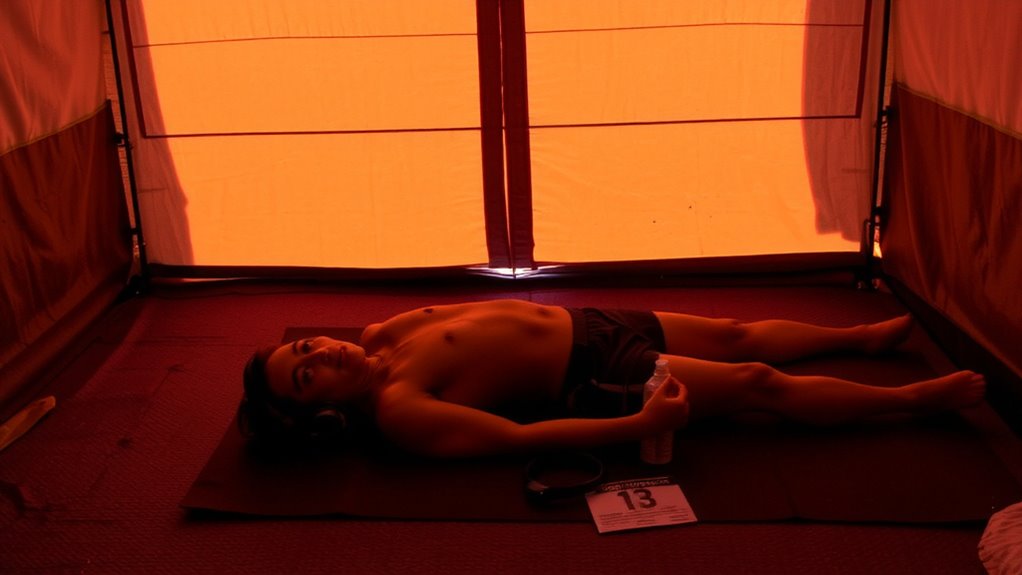
You’re already familiar with how yoga nidra guides your body and mind into a state of deep, active rest, distinct from ordinary sleep by maintaining awareness while promoting parasympathetic activation. For post-race recovery, timing matters. Using yoga nidra in the early morning can prepare your system for the day by gently resetting nervous function, though it may lack the immediate physical downtime needed after intense effort. Late evening, however, is often ideal-your body’s natural circadian dip enhances relaxation, deepening yoga nidra’s restorative effects. This timing aligns with reduced cortisol and increased melatonin, supporting tissue repair and mental recovery. While fitness gear like recovery boots or compression wear targets muscles mechanically, yoga nidra works synergistically by calming neural pathways. You’ll maximize results when you pair mindful recovery tools with physiological rhythms. Late evening practice consistently delivers stronger outcomes for exhausted runners.
Why Yoga Nidra Speeds Up Runner Recovery
While your muscles may be the most obvious target after a hard race, it’s your nervous system that plays the lead role in recovery-and that’s where yoga nidra delivers real results. You’re not just resting; you’re triggering a deep nervous system reset that shifts your body from fight-or-flight to repair-and-recover mode. This state boosts muscle regeneration by increasing blood flow and reducing cortisol levels, creating ideal internal conditions for healing. Unlike passive rest, yoga nidra guides your mind through structured relaxation, enhancing parasympathetic activity more effectively than standard downtime. It doesn’t require special gear or setup-just a quiet space and headphones. Combined with proper hydration and nutrition, it complements your recovery stack by addressing stress at the neurological level. The result? Faster bounce-back, reduced soreness, and improved readiness for your next run-all through a scientifically backed mental practice.
How Runners Can Get More From Yoga Nidra
Taking the nervous system reset offered by yoga nidra as a starting point, runners can enhance recovery even further by optimizing how, when, and why they practice. Using breath awareness, you can deepen relaxation and signal safety to the body, improving parasympathetic response after intense effort. Pair this with systematic body scanning to detect residual tension, especially in overworked calves, quads, or shoulders. Performing yoga nidra within two hours post-race appears most effective, aligning with peak recovery windows when cellular repair mechanisms activate. An audio guide eliminates distractions, letting you stay supine without effort. Though fitness gear like recovery boots or compression aids target physiology, yoga nidra works upstream-modulating nervous output, reducing perceived fatigue, and improving sleep onset. You don’t need extrasensory focus; just consistent attention to breath awareness and body scanning. Combined with sound training practices, it becomes a low-effort, high-return recovery habit.
On a final note
You’ll recover faster with yoga nidra because it actively calms your nervous system and reduces cortisol. Unlike basic rest, this guided practice induces deep physiological repair, helping muscles rebound after intense effort. Used post-race, it complements recovery gear like compression boots or foam rollers by addressing mental fatigue too. For runners, consistency matters-just 20 minutes of yoga nidra can outperform passive rest, making it a smart, science-backed addition to any recovery routine.